

From Temporary to Transformative
Together, pop-ups and adaptive retail spaces represent flexible, experience-driven retail that adapts quickly to changing demand. In this day and age, consumers are increasingly drawn to experiences over transactions and pop-ups bring the excitement, while adaptive retail provides the infrastructure to support ongoing change. Over the next four pages, we offer a glimpse into this world and what it offers customers
Retail pop-ups and adaptive retail spaces represent a major shift in how brands connect with customers, moving away from static stores toward flexible, experience-driven formats. Pop-ups are temporary retail activations – lasting from a single day to several months – used to launch products, test markets or create buzz. Their appeal lies in exclusivity, urgency and the ability to generate immersive brand experiences without the commitment of long-term leases. Adaptive retail spaces, on the other hand, are permanent environments designed for flexibility. Through modular layouts, interchangeable displays and integrated technology, these spaces can be continually reconfigured to meet changing consumer needs, host events, or showcase rotating brands. Together, they embody agility in retail: pop-ups bring energy and innovation, while adaptive spaces provide the infrastructure that allows brands to evolve quickly. Both models share key benefits, including reduced risk, sustainable reuse of space, stronger customer engagement and seamless integration with digital and omni-channel strategies. For example, a department store might dedicate an adaptive zone to seasonal pop-up brands, or a sneaker company might launch a temporary shop in a modular venue with digital storytelling. In essence, pop-ups are the tactic for short-term excitement, while adaptive spaces represent the long-term strategy of future-ready retail.
In addition, adaptive reuse of retail spaces is transforming how we think about commercial real estate, with underperforming or vacant retail locations being repurposed into community assets like healthcare facilities, educational hubs, residential units and even logistics centres. This trend offers economic and social advantages, saving on construction costs, reducing environmental impact and creating jobs while addressing community needs.
In an article entitled ‘7 Trends Shaping the Future of Retail Real Estate’ by Mary Kate McGrath, she explains that the era of e-commerce is here and as a result, many defunct big-box stores and malls remain vacant or underutilised. Innovative developers are reimagining struggling retail assets as mixed-use, residential or light industrial properties. The strategy, known as adaptive reuse, is most commonly used in the push to convert abandoned post-pandemic office space into residential units. However, adapting underutilised retail spaces is also a sustainable, creative solution to the declining demand for in-store shopping.
Closer to home, across the UK, retail destinations are evolving from single-purpose retail hubs into adaptive, multi-use environments that can evolve in step with consumer demands. By blending food, entertainment, leisure and retail and by designing spaces that are flexible, destinations can be created that remain relevant, resilient and capable of driving long-term growth. This is the viewpoint of Kitty Vaughan, Head of UK Leisure & F&B at Pradera Lateral and you can read more about their upcoming adaptive retail project Freight Island later.
For example, High Line Nine is a premier events venue located in Chelsea, steps from Manhattan’s iconic High Line. Offering interconnected, versatile spaces with state-of-the-art sound, it provides a dynamic and upscale atmosphere for everything from intimate receptions to large corporate events or fashion shows, ensuring memorable and personalised experiences. With square footage ranging from 500 to 1,200sq ft, 12’0” to 13’7” ceilings and skylit art walls soaring up to 22’, the venue provides an impressive, light-filled atmosphere. Natural light floods each space through skylights and monumental windows, while Erco Optec lighting ensures every detail shines. With individual gallery HVAC control and fully customisable layouts, High Line Nine is ideal for intimate receptions, corporate events and fashion shows. Earlier this year, it was home to COVERGIRL, who partnered with the High Line Nine gallery for a pop-up event. The gallery was transformed into a winter wonderland-themed space to launch a new product, featuring activations like an ice block photo booth and a “Find Your Lip Shade” station. The event was designed to be an immersive and interactive experience for attendees, stopping passers-by in their tracks.
A recent example of adaptive retail spaces are the boom in music pop-up shops, which are gaining popularity because they offer a unique, immersive experience for fans and a valuable way for artists to connect with their audience. These temporary retail spaces, often located near concert venues, provide exclusive merchandise, limited-edition items and a chance to interact with the artist or their brand in a more personal way. This trend is fuelled by a desire for unique experiences, a shift in consumer behaviour towards brand consciousness and the power of social media to amplify the buzz around these events. The return of Oasis and their first tour in years has been a major example of this. They also launched these pop-up sites in the US as they embarked on their American leg of the tour after multiple sold out shows and retail spaces in the UK.


JW Pei, a Los Angeles-based fashion label, has opened its first New York City store in SoHo. The store, located at 42 Crosby Street, also marks the brand’s first foray into the ready-to-wear category with the debut of its Spring/Summer 2025 collection. The pop-up store opened on 6 June and will be open until December. The new pop-up marks a major milestone for the brand as it makes its NYC retail debut and enters the ready-to-wear category for the first time. In addition to the main collection, limited-edition drops and exclusive colourways will be released exclusively at the NYC location, with announcements made via JW Pei’s social channels.
ASOS, the British online fashion retailer, opened its first-ever US pop-up store in New York City’s SoHo neighbourhood. The pop-up, located at 120 Wooster Street, was called “Summer, Styled by ASOS” and showcased the brand’s Summer 25 collection for both men and women, alongside accessories. The two-storey space opened on Friday 13 June and remained open until 22 June. ASOS saw this pop-up as a way to bring its trend-led fashion to life in the US and used it as a test-and-learn opportunity to explore future retail experiences in other US cities.
Coach is once again pushing the boundaries of experiential retail with the relaunch of Coach Airways 2.0, an extraordinary fashion pop-up housed inside a retrofitted Boeing 747 at Freeport A’Famosa Outlet in Alor Gajah, Malaysia. Originally recognised by the Malaysia Book of Records as the country’s first fashion retail concept set within an actual aircraft, the newly upgraded experience signals the brand’s commitment to imaginative storytelling and next-gen luxury. Unveiled in June 2025, the revamped Coach Airways boasts a striking new aesthetic that fuses aviation nostalgia with contemporary design. From the moment visitors step aboard, they’re transported into a curated universe of bold interiors, vibrant cabin displays and a fully refreshed cockpit, reimagined as part showroom, part fantasy escape. Every detail is a nod to both Coach’s heritage and its forward-facing spirit. At the heart of the experience is a sense of playful sophistication, underscored by cameos from Rexy, Coach’s signature dinosaur mascot, who makes charming appearances throughout the installation. The updated interiors offer a mix of Instagrammable moments and tactile luxury, inviting guests to explore the brand’s latest collections in a way that feels both nostalgic and cutting-edge.
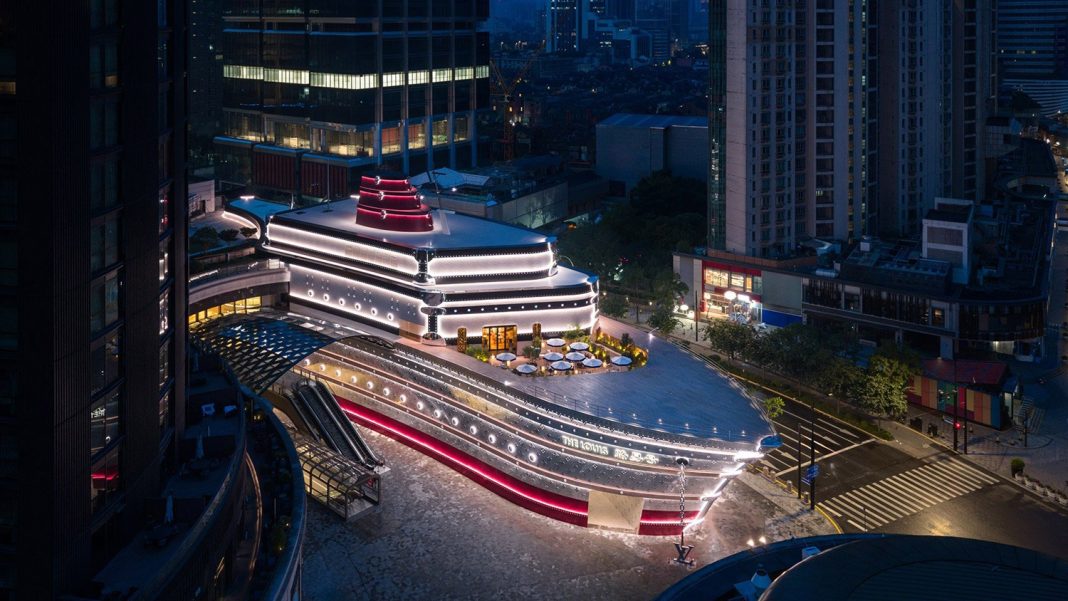
As for a world-class example of an adaptive retail space, look no further than The Louis from luxury fashion brand Louis Vuitton, a boat-shaped concept shop in Shanghai, with upper levels designed to resemble its classic trunks. The new shop is located at the front plaza of HKRI Taikoo Hui, a shopping mall in central Shanghai. The main body of the ship is wrapped in a metallic monogram, with a silvery anchor shaped like the LV logo dropped from the front of the ship to the ground. The ship’s upper levels were designed to look like Louis Vuitton’s historical trunks, stacked in different sizes. An outdoor terrace is located in a sunken area of the deck and features parasols to create a seaside atmosphere. According to Louis Vuitton’s in-house design team, the boat shape pays homage to Shanghai’s port culture as the “Gateway to the East”, while also nodding to the brand’s history of crafting trunks for transoceanic voyages. It was designed to “create a new cultural landmark” within Shanghai’s central business district. The shop comprises three floors. The first two floors are dedicated to an exhibition that showcases the brand’s culture and history, with a cafe sitting at the top. The exhibition ends with a gift shop, where a selection of leather goods, accessories, shoes and travel items is available for purchase.


Completely redesigned last year by the architect Peter Marino, the CHANEL boutique in Saint-Tropez, located in the heart of the iconic Villa La Mistralée, again reopened its doors for the summer season. A veritable invitation to sit back and relax, this boutique, designed to resemble a holiday home, evokes both the spirit of Saint-Tropez and the décor of La Pausa, Gabrielle Chanel’s legendary villa in Roquebrune-Cap-Martin. This year, the pool house, surrounded by a verdant Mediterranean garden, has been redecorated in a relaxed, pop style, in the colours of the House’s summer collections: pink and apricot-painted wooden walls, waxed concrete floors, big screens, as well as raffia and rope details. Striped poufs and cushions with black piping echo the contrasting braid and the swimsuits to be found in the CHANEL Coco Beach 2025 collection.
The French fashion house Jacquemus kicked off the summer season of 2025 with the opening of a pop-up in Ibiza. The temporary shop opened its doors on the island until the end of the season, in the idyllic Cala Jondal. The label also set up a unique “beach club” on the fine sands and in front of the blue, crystal-clear Mediterranean waters. Jacquemus found a space fully aligned with its own DNA in this gastronomic corner of Ibiza. It had an atmosphere imbued with the purest Mediterranean essence, materialised through a menu that is an element of the fusion between the blue Mediterranean waters, the fine white sands and the green of the pine forests that surround Casa Jondal.
Zara’s Ski pop-up in Verbier transforms the traditional retail experience into an immersive winter escape, blending fashion, functionality and sensory design. Conceptualised and produced by Profirst, the space is designed to evoke the feeling of stepping inside an igloo-inspired snow cave, with a deep blue floor, snow-white falls and a luminous ceiling that mimics the natural textures and tones of an alpine landscape. This striking environment serves as the perfect backdrop for Zara’s exclusive Ski Collection, featuring stylish, high-performance winter wear for men, women and children. Beyond its visually compelling aesthetic, the pop-up delivers a multi-sensory experience that extends beyond shopping. An all-day hot chocolate bar adds warmth and hospitality, encouraging visitors to linger and engage with the space. By merging experiential retail with seasonal storytelling, Zara’s Verbier pop-up exemplifies how brands can create immersive, destination-worthy retail spaces that captivate customers and bring collections to life in an unforgettable way.
Lone Design Club (LDC), the pioneering retail platform championing independent, conscious fashion and lifestyle brands, returns to the capital with a new retail pop-up inside the iconic Battersea Power Station. Marking its longest pop-up to date and its first London location in over a year, Battersea Power Station is a five month residency following 18 months of building Revolving Spaces, LDC’s new proptech platform. Designed to unlock physical retail for fashion and lifestyle brands, Revolving Spaces helps landlords activate underused space on high streets across the UK with curated, flexible concepts. LDC’s mission extends far beyond simply opening stores. As the incubation arm of its wider ecosystem, it scouts and supports the next wave of standout brands to enter physical retail.
At Eldon Square, the opportunity was recognised to create a destination that could adapt to shifting consumer patterns while making a lasting contribution to Newcastle’s culture and economy. Beyond standard retail hours, the potential was seen to build on Newcastle’s vibrant evening economy, transforming a part of the city into a hub of activity, day and night. The vision is now taking shape with the arrival of Freight Island, a 60,000sq ft space on the roof of Eldon Square. Designed with agility in mind, it will feature street food kitchens from around the world, a high-end restaurant, a central bar with retractable roof and a stand-alone music and events venue. Its flexible layout will allow for seasonal activations, pop-up concerts, touring shows and corporate events, ensuring the space can continually evolve to meet changing audience needs. Its arrival signals a growing shift in the retail and leisure sector, one where adaptive, experience-led spaces are key to attracting visitors, encouraging longer dwell times and ensuring city-centre destinations can thrive for years to come.
The Frankie Shop held a pop-up shop at Mina Zayed Port in Abu Dhabi, marking its first retail presence in the Middle East. The pop-up, which ran from 18 April to 1 May, featured an exclusive Abu Dhabi collection with 50 exclusive designs and other pieces. In addition to fashion, the pop-up plays host to a line-up of lifestyle and design collaborations that blend fashion, art and culture. This included a 48 Collagen Café, offering specialty coffee and drinks, with LED masks also available; a special illustration by Tulip Hazbar, paying tribute to Abu Dhabi through the lens of The Frankie Shop; hanging palm tree carpets, designed in collaboration with regional creative Cheb Moha; a curated selection of Karen Wazen sunglasses, presented with customised pouches from The Frankie Shop. The pop-up also included styling sessions with The Frankie Shop’s Founder, Gaëlle Drevet and fashion influencer Bettina Looney.
An activation which ran until 4 May this year was a unique one where food and beauty came together as Charlotte Tilbury and EL&N opened a pop-up at Dubai Festival City Mall. At the Charlotte Tilbury and EL&N pop-up, guests were able to try out the new Pillow Talk Beauty Soulmates products. The trolley comes in bright pink with cute slogans – for example, “Darlings, all you need is love and pillow talk”. The Tilbury Treat was available and guests were able to enjoy a one-hour makeover and a mini perfume. Guests could also indulge in the limited-edition menu, which was inspired by the new collection.