

From European Heritage to Global Gateway Cities
Luxury retail is undergoing a profound transformation – evolving from a network of iconic streets into a connected ecosystem of global gateway cities. As brands recalibrate following years of accelerated growth, the emphasis has shifted towards experience, scarcity and strategic presence. From Dior’s immersive flagships to Louis Vuitton’s expanding universe and Dubai’s experiential destinations, luxury is no longer defined by geography, but by how seamlessly it connects culture, consumer and place.
Luxury retail today is no longer defined by where it exists – but by how it connects. Over the past few decades, the sector has adapted to shifting consumer behaviours, technological advancements and global economic changes. Traditionally, luxury goods were exclusive high-quality items sold in physical boutiques or high-end department stores, with a clear focus on craftsmanship, exclusivity and personalised service. This model was built around in-person experiences, where consumers often visited prestigious locations to make their purchases.

However, the rise of e-commerce and digital platforms has disrupted this conventional model. The internet has democratised access to luxury products, allowing brands to reach a global audience without the need for a physical store. Online shopping has led to a shift in how luxury goods are marketed, with brands now using social media and influencer partnerships to engage with younger, tech-savvy consumers who prioritise convenience and immediacy. Virtual experiences, such as augmented reality (AR) try-ons or online fashion shows, have also become key tools for bridging the gap between traditional luxury and modern expectations.
Another major shift in luxury retail has been the focus on sustainability and ethical consumption. As younger consumers increasingly value social responsibility, luxury brands have responded by integrating eco-friendly materials, supporting fair trade practices and reducing their environmental impact. This shift aligns with a broader trend where consumers seek brands that reflect their personal values, particularly in the realm of fashion.
Moreover, the role of luxury retail is no longer limited to selling products; it has become about curating an experience. Pop-up shops, exclusive events and personalised services have become vital in enhancing customer relationships, offering something beyond the product itself.
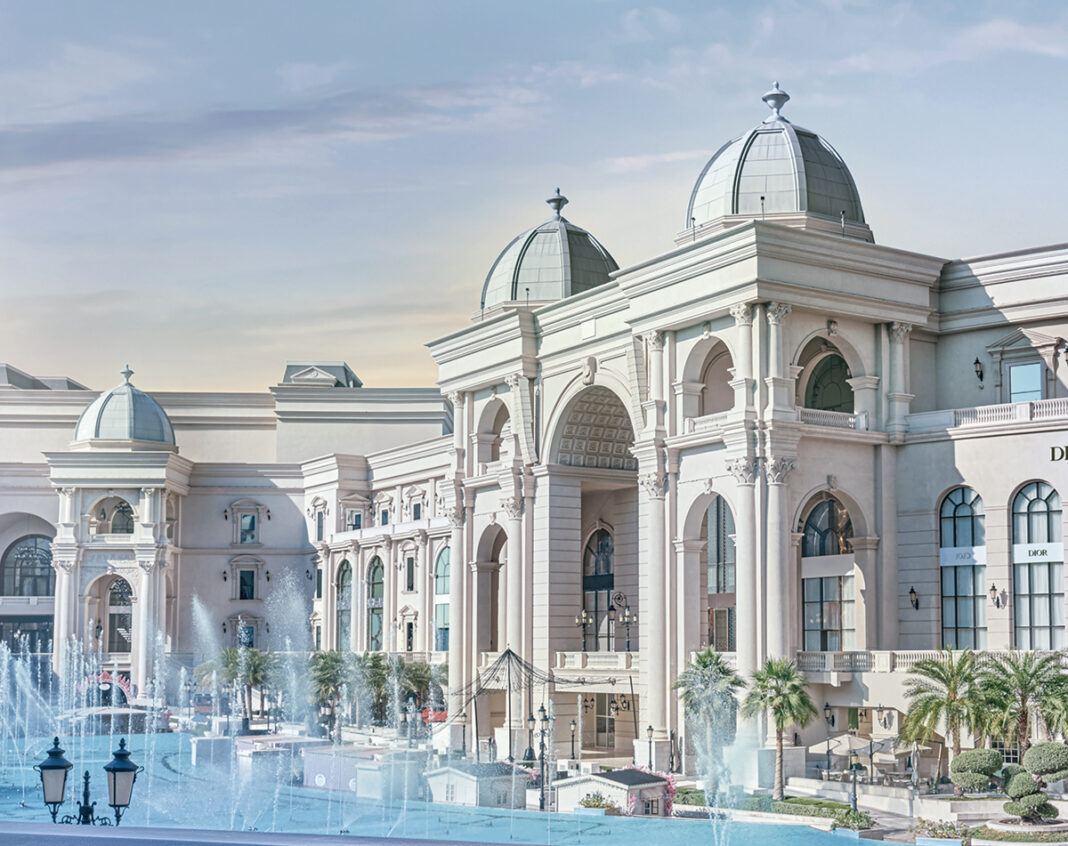
This is also evident across shopping centres, mixed-use destinations and even hotels. For example, Place Vendôme Qatar is a $1.3bn, 1.15 million square metre Parisian-inspired luxury destination in Lusail, featuring over 560 high-end retail stores, including a dedicated luxury wing. Opened in April 2022, it offers five-star hospitality, a central water canal and iconic daily fountain/laser shows.
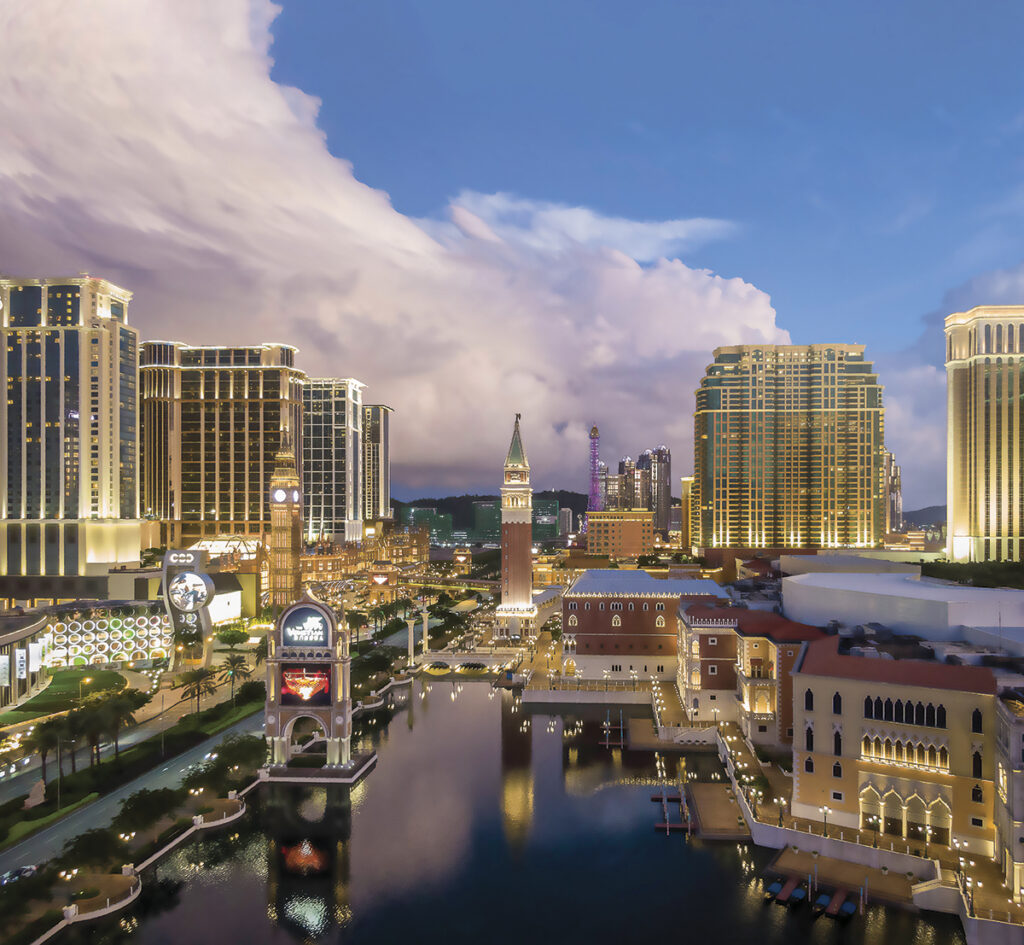
Meanwhile, Sands Shoppes Macao is the largest network of interconnected malls in Macao with approximately 850 retail stores and a total of 2.2 million square feet of opulent retail space. As a prime retail destination in Asia’s most exciting city, it comprises: Shoppes at Venetian, which captures the unparalleled sensory experience of the legendary city of Venice; Shoppes at Four Seasons, with a focus on luxury and elegance; Shoppes at Parisian, oozing French sophistication with cutting-edge boutiques appealing to a youthful demographic and Shoppes at Londoner, which charms its luxury clientele with a full British heritage experience. The sheer scale of each, along with an extraordinary selection of world-renowned luxury fashion brands, translates into an impressive retail destination that attracts fashion enthusiasts and collectors from around the world.Meanwhile in the UK, The Londoner in London is the world’s first super boutique hotel where guests can discover five-star luxury hotel accommodation, innovative wellness and curated dining in Leicester Square. The site features 350 bedrooms and suites, six concept eateries and bars and three guest-only parlour rooms at The Residence.
From the historic boulevards of Paris and Milan to the dynamic avenues of New York, Dubai and Tokyo, the world’s most influential luxury destinations are converging into a single, interconnected system. In this new reality, brands are no longer expanding in the traditional sense; they are orchestrating presence – carefully selecting locations, curating environments and shaping experiences that resonate across borders. This is not a market in decline; it is a market in refinement.
Following the exceptional growth of the post-pandemic years, the sector has entered a more measured phase. In Europe, growth is estimated by GlobalData to have slowed to just 0.5 per cent in 2025, reflecting a more cautious and selective consumer landscape. Yet beneath this moderation lies a deeper structural shift. Luxury is becoming more intentional, more immersive and more dependent on the physical store than at any point in recent history.
The store, once considered vulnerable in the face of digital acceleration, has re-emerged as the most powerful expression of brand identity. Physical retail remains a critical channel for engagement, storytelling and long-term brand equity.
“Luxury retail has shifted from expansion to precision – from being everywhere to being exactly where it matters.”

In this new era, the store is no longer a place to transact – it is a place to experience. Luxury environments are being reimagined as immersive, multi-sensory destinations where architecture, art, hospitality and retail converge. These spaces are designed not only to attract customers, but to hold their attention, to deepen their connection with the brand and to create moments that extend beyond the visit itself.
Few brands have embraced this transformation as completely as Dior. Across Paris, London and New York and beyond, Dior’s flagship stores have become destinations in their own right – spaces where customers move seamlessly between retail, exhibition and private client environments. These are not simply stores; they are curated universes, designed to immerse visitors in the brand’s heritage and vision.
Similarly, Louis Vuitton continues to expand the boundaries of what luxury retail can be. Its multi-level maisons, often incorporating hospitality, cultural programming and new product categories, reflect a strategy built on scale and diversification. The introduction of La Beauté Louis Vuitton concepts in global gateway cities such as Dubai signals a clear ambition: to create a broader, more immersive luxury ecosystem that engages consumers across multiple touchpoints.
Chanel, meanwhile, is reinforcing its presence through a different lens – expanding its network of fragrance and beauty boutiques. These spaces offer a more accessible yet highly curated entry point into the brand, combining sensory engagement with strong storytelling. They are not secondary to fashion; they are integral to the brand’s global strategy.
“Luxury brands are no longer designing stores – they are building ecosystems.”
This evolution is not confined to Europe. It is playing out across a network of global gateway cities that are redefining the structure of the luxury retail market.
These cities, like New York, Los Angeles, Dubai, Tokyo, Seoul and Europe’s established capitals – function as the primary nodes of global luxury consumption. They attract international tourism, high-net-worth individuals and significant investment, creating environments where demand is both concentrated and highly competitive.
Yet across all these markets, one factor remains constant: scarcity. The availability of prime retail space is extremely limited. Vacancy rates across key luxury streets remain at or near historic lows, whether on Via Montenapoleone in Milan, Avenue Montaigne in Paris, Fifth Avenue and Madison Avenue in New York, Ginza in Tokyo or Fashion Avenue in Dubai.
This scarcity is not simply a constraint – it is a defining feature of the sector. It drives rental growth, intensifies competition and reinforces the importance of location as a strategic asset. Brands are no longer seeking presence alone; they are seeking precision – carefully selecting locations that align with their identity, audience and long-term ambitions.
“In a world of global luxury, the right address still carries more weight than any digital platform.”
In Europe, this principle is deeply rooted in heritage. Streets such as Bond Street, Avenue Montaigne and Via Montenapoleone continue to define the global luxury landscape. These locations offer more than visibility, they offer authenticity, history and cultural relevance.
For Hermès, this alignment is essential. The brand’s approach to retail is characterised by restraint, craftsmanship and discretion. Its stores are designed to reflect these values, prioritising quality over scale and presence over prominence. In an increasingly competitive environment, Hermès demonstrates that luxury is not about being seen everywhere; it is about being seen in the right places, in the right way.
Prada offers a different perspective. Through bold architectural statements and carefully curated interiors, Prada’s flagship stores serve as expressions of both heritage and innovation. The brand’s investment in large-scale retail environments reflects a commitment to creating spaces that are not only functional, but culturally significant.
Across the Atlantic, the US presents a more dynamic and performance-driven landscape. In New York, Madison Avenue has re-established itself as one of Manhattan’s leading luxury corridors, with rents increasing by eight per cent year-on-year in 2025. This resurgence reflects strong leasing activity and renewed confidence in the market. At the same time, the city is investing heavily in its future.
The “Future of Fifth” initiative, a $400M redevelopment project will transform Fifth Avenue into a pedestrian-focused boulevard, enhancing the public realm and reinforcing its status as a global luxury destination. This investment highlights a critical shift: luxury retail is no longer confined to stores; it is integrated into the broader urban experience.
On the West Coast, Rodeo Drive continues to command global prestige, with rents reaching record highs despite more modest growth. Even in markets facing broader challenges, luxury retail remains resilient, supported by strong brand demand and limited availability.

“Luxury retail is no longer just about stores – it is about shaping the cities in which they exist.”
If the US represents reinvention, the Middle East represents acceleration. Dubai has rapidly established itself as one of the world’s most influential luxury retail destinations. At the heart of this transformation is Fashion Avenue at Dubai Mall – a space that has redefined the concept of a luxury environment. Designed as a “luxury architectural experience”, Fashion Avenue combines high-end finishes, integrated art and premium customer environments to create a destination that is both visually striking and highly functional. But its true strength lies in its ability to evolve.
Through events, activations and flexible programming, the destination creates a constantly changing experience that encourages repeat visits and sustained engagement. This approach has delivered exceptional results, with prime rents increasing by 15 per cent in 2025 – one of the strongest performances globally. Dubai’s success is closely linked to its role as a global tourism hub.
Luxury retail is increasingly driven by international travel, with high-spending visitors from China, the Middle East and the US playing a critical role. By 2030, tourist arrivals to Europe alone are expected to exceed pre-pandemic levels by 40 per cent, underscoring the importance of global mobility in shaping retail demand.
“Tourism has become the invisible engine of global luxury retail.”
In Asia, luxury retail is defined by precision, innovation and scale. Cities such as Tokyo and Seoul are setting new benchmarks for execution, with strong demand driving rental growth of 10 per cent in Ginza and 13 per cent in Omotesando in 2025. These markets are characterised by meticulous attention to detail, from store design to customer service. Here, the flagship store is elevated to an art form.
Tiffany & Co.’s flagship in Ginza, its largest in Asia, reflects the brand’s commitment to creating immersive, high-impact environments in key global markets. Similarly, Damiani’s multi-level flagship in Seoul demonstrates how jewellery brands are investing in experiential retail to engage a sophisticated clientele.
Hard luxury, particularly jewellery and watches, continues to outperform, driven by its intrinsic value, investment appeal and strong emotional resonance.
Events are also playing an increasingly important role. Dubai Watch Week, for example, has become a global platform for haute horlogerie, bringing together over 90 brands in an immersive setting that blends retail, culture and craftsmanship. These events extend the luxury experience beyond the store, creating moments that resonate across markets.
“Luxury retail is no longer static – it is an evolving, event-led ecosystem.”
Another key dimension of this evolution is the rise of beauty and fragrance. Luxury brands are investing heavily in standalone concepts that offer more accessible and sensory-driven experiences. In Dubai Mall, more than 20 stores are now dedicated to this category, including concepts from Louis Vuitton, Chanel and Dolce & Gabbana.
In the US, brands such as Amouage and Parfums de Marly are expanding their presence, recognising the potential of this category to drive repeat engagement and broaden their customer base. These developments highlight a broader trend: luxury is becoming more layered. It is no longer defined solely by high-value, infrequent purchases. It is increasingly about ongoing engagement – through products, experiences and environments that encourage consumers to interact with brands more regularly.
Across all regions, one principle remains unchanged. Location still matters, perhaps more than ever. Despite the rise of digital commerce and the increasing complexity of the global retail landscape, prime locations continue to command premium rents. Supply remains constrained, demand remains strong and the importance of being in the right place has only intensified. Whether on Bond Street, Fifth Avenue, Ginza or Fashion Avenue, location remains the foundation of luxury retail success.
Looking ahead, the market is expected to grow steadily, with annual growth of around three per cent through to 2030. However, this growth will be concentrated in the world’s most influential gateway cities. For brands, this presents both an opportunity and a challenge.
The opportunity lies in the ability to connect with a global audience, to create experiences that resonate across cultures and to build a presence in the world’s most important markets. The challenge lies in execution. In a market defined by scarcity, rising expectations and intense competition, success will depend not on how many stores brands open, but on how effectively those stores perform.
Luxury retail has always been about aspiration. Today, it is about precision, experience and connection. From Dior’s immersive environments to Louis Vuitton’s expanding ecosystem, from Chanel’s sensory retail concepts to Hermès’ disciplined presence, the industry is being reshaped in real time. Luxury retail is no longer just about where you shop. It is about how that place makes you feel and how that feeling travels with you, across cities, across continents and across the world.
This article references insights from Cushman & Wakefield’s ‘European Luxury Retail Report 2026’.
To explore the full report, visit:
