
Growing Beyond Borders
From iconic luxury brands entering emerging markets to newly launched companies finding success in every corner of the globe, franchising and expansion strategies have become essential tools for businesses aiming to scale rapidly and sustainably. Over the coming pages, RLI takes a look at the importance of these concepts and highlights a selection of companies who are taking their growth to new levels.
Key topics for brands around the world who are looking to grow their business, expansion refers to a company’s direct growth into new markets or locations, whereas franchising is a specific method of expansion where the franchisor licenses its established business model and brand to independent franchisees who operate the locations at their own cost and risk. Key differentials include the financial burden, which remains with the franchisor in direct expansion but is shifted to the franchisee in franchising; the degree of operational control, higher in direct expansion and more limited in franchising and the speed of growth, typically faster through franchising due to shared investment.
Expansion in retail typically refers to opening new company-owned stores, either regionally or internationally. This approach allows a business to maintain full control over operations, brand standards, customer experience and pricing. Expansion requires significant capital investment, as the company bears the cost of new premises, staffing, supply chains and marketing. While risk is higher, so too are the potential rewards, since all profits flow back to the business. Expansion works well for retailers with strong financial resources and a desire for consistency across all outlets.
Franchising, by contrast, is a model where independent operators (franchisees) invest in and run outlets under the brand’s name, following established guidelines. The franchisor provides training, support and systems, while the franchisee commits capital and day-to-day management. This reduces the financial burden on the brand, enabling rapid growth with less direct investment. However, franchising comes with trade-offs: the franchisor cedes some operational control and maintaining uniform standards across independently managed stores can be challenging. Revenue also comes through royalties and fees rather than direct store profits.
The key difference lies in ownership and control. Expansion keeps ownership centralised with the retailer, maximising profit but demanding higher resources. Franchising distributes ownership, lowering costs and risk for the brand but relying on franchisees for consistent delivery.
In practice, many successful retailers adopt a hybrid strategy – expanding in key markets where control is essential while franchising in regions where local knowledge and investment are critical. The choice ultimately depends on a retailer’s growth ambitions, financial strength and appetite for risk.
Examples of Expansion & Franchising
U.S. Polo Assn. is focusing on significant global expansion, targeting 1,500 retail stores by 2030 and is aiming to double its 2024 record sales of $2.5bn in the short term. The expansion includes new strategic markets such as Argentina, Australia, Brazil, Poland and Thailand, with a particular focus on growth in India. The strategy integrates both brick-and-mortar retail expansion, with enhanced store concepts and strong growth in its e-commerce and digital platforms, which have also seen success. In addition to the markets mentioned above, the company also announced earlier this year its first retail store in Germany alongside its brand partners Incom S.p.a. and Modevertrieb Sarnacchiaro GmbH (MVS). The store, situated in the heart of Berlin is at the premier Alexa Mall at Alexanderplatz and marks the beginning of a strategic retail rollout across the country, which solidifies the multi-billion-dollar brand’s global presence in Germany.
McDonald’s is one of the largest international franchise players and continues to open locations outside of the US and Canada. The company is currently undertaking its fastest growth period by aiming to open 10,000 new restaurants globally by 2027, expanding to a total of 50,000 locations and boosting its digital presence by growing its active loyalty user base to 250 million and loyalty sales to $45bn. This ambitious expansion, which includes substantial capital expenditures, will feature significant growth in key international markets like China and is supported by technological advancements like AI and automated restaurants to increase efficiency and customer engagement.


After launching its sixth and seventh retail stores in the US this year, the tech giant Google, as part of its ongoing expansion, is poised for its inaugural physical sites outside the US, with India emerging as the focal point of this expansion. The upcoming Google stores are designed not just to sell products but also to create an immersive brand experience that resonates with consumers. By targeting the luxury segment, Google aims to enhance its competitive edge against Apple and other established players in the market. India represents one of the fastest-growing markets for smartphones globally, with around 712 million smartphone users. This burgeoning consumer base presents immense opportunities for tech companies looking to expand their footprint.
The globally-renowned company Nike’s international expansion has been a strategic process focused on global localisation, leveraging outsourced manufacturing, investing in technology and automation and adopting a localisation strategy that adapts its marketing, products and branding to resonate with local cultures and consumers worldwide. This approach, which includes tailoring designs and using local influencers, has solidified its global dominance, with a significant portion of its revenue now coming from international markets. Nike’s current expansion focuses on its direct-to-consumer (DTC) strategy, deepening customer connections through digital and physical retail, investing in specific growth areas like the women’s segment, running, the Jordan brand and expanding into key markets through strategic partnerships and a stronger focus on brand marketing.
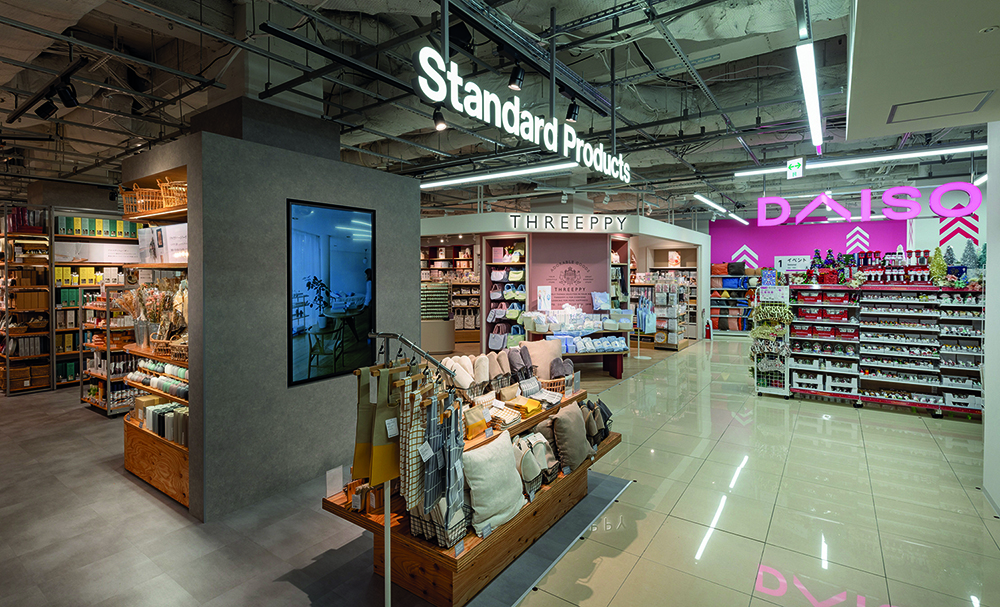
Headquartered in Higashihiroshima, Daiso Industries Company Limited is focusing on global and product-focused expansion, with plans to open numerous new stores in markets like the US (1,000 by 2030) and India (50 new sites in five years), alongside efforts to strengthen local product development using raw materials and expand its online presence. Meanwhile, the business plans to open additional stores in Brunei Darussalam and Guam, by 2026 and 2028, respectively. The company is also investing in its supply chain by constructing a large automated warehouse in Malaysia, set to be completed in 2027, to support its international growth and increase resilience.
Canada Goose is actively expanding in Asia, with a focus on China and Japan, leveraging direct-to-consumer (DTC) sales and localised strategies like joint ventures and collaborations with local designers. The company is also broadening its product range beyond heavy parkas to include lighter-weight apparel and footwear for year-round relevance in diverse climates, which is particularly important for growth in the Asia-Pacific region. This expansion is driven by the success of its DTC model, which is a hallmark of luxury brands, allowing for deeper brand affinity and sustainable growth in key markets, according to Canada Goose US.
The unique Danish brand Flying Tiger Copenhagen is in the midst of a global expansion drive, driven by a strong 2024 performance. They have ambitious plans to open 1,000 new stores by the end of 2028. This expansion is supported by new capital, a new online presence and strategic partnerships. Key to this strategy is digitising the store opening process with platforms like ServiceNow, expanding omni-channel offerings and entering new international markets, which just this year alone have included Malaysia, Singapore, Canada and Thailand. This recent expansion across Asia, as well as sites in the Middle East, have marked a milestone for the company in what has been an incredible era for their international growth.
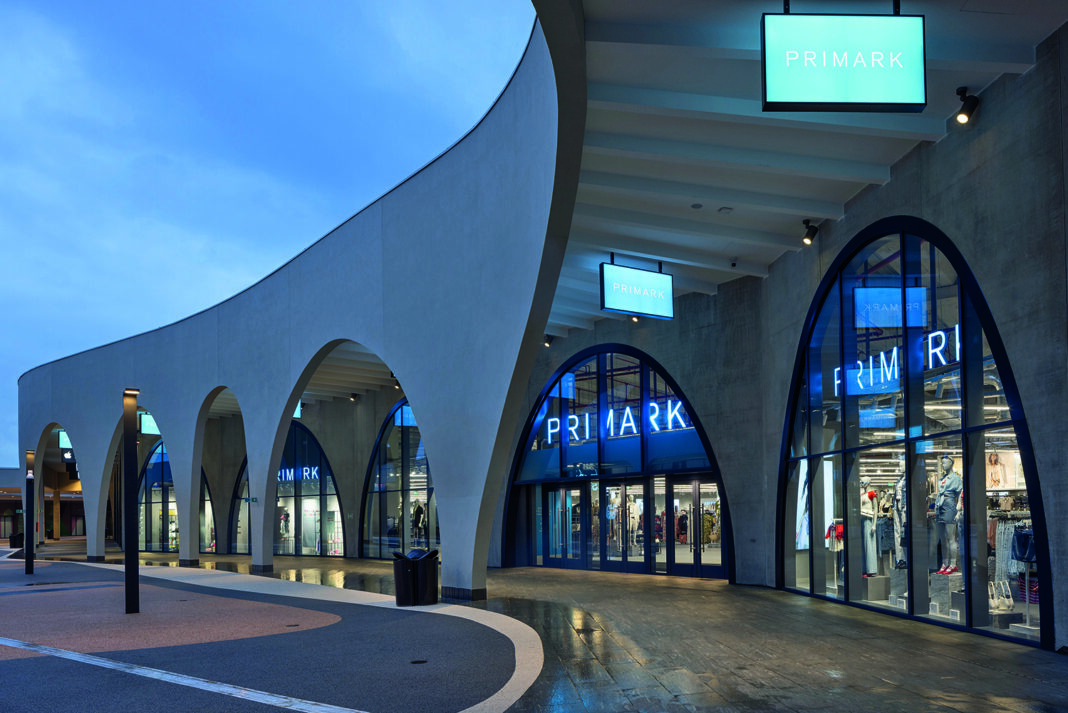
Even more Italian shoppers are set to enjoy a Primark store in their region, as the fashion retailer continues to expand across the country. Primark has announced a new €40M investment in five new stores in Italy: one each in Rome, Biella, Perugia and two in Naples, which will bring its Italian store footprint to 26. These new stores will also create 700 new jobs. Primark began its Italian story in 2016, opening its first store at the ‘Il Centro’ shopping centre, Arese, Milan. This announcement follows Primark’s €50M investment in Italy in November 2023, which included five new store openings in Turin, Livorno, Salerno, Cosenza and Genoa. A further new store in Parma was also announced that year. Primark’s investment in Italy is part of the retailer’s ambitious international growth plans to expand across new and existing markets. For example, the international fashion retailer will also open its first GCC stores this year, beginning with The Avenues Mall in Kuwait this month, followed by multiple Dubai locations in early 2026.
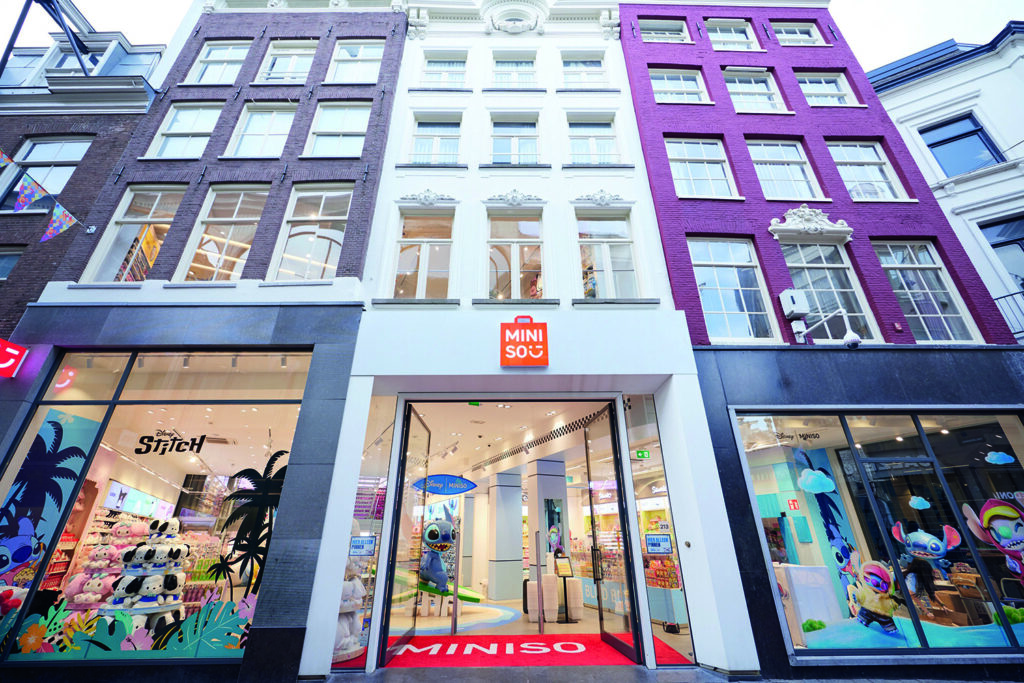
The global lifestyle brand MINISO is aggressively focused on global expansion, with plans to open 900-1,100 stores annually between 2024 and 2028, aiming for over 10,000 stores worldwide by 2027. The strategy involves targeting key markets in Europe and the US, leveraging its Intellectual Property (IP) strategy centred on popular entertainment franchises to drive “interest-driven consumption” among young shoppers. The company is investing in enhancing the in-store experience through innovative and immersive concepts to cater to growing demand for its unique, high-margin products. Back in August, the brand celebrated the opening of its first flagship store in Amsterdam, the Netherlands. With its refreshed brand image and retail environment, the new store marks both a major step in MINISO’s expanding presence in the Netherlands and the brand’s expansion across Europe as it further strengthens its presence in the market.
The Spanish, Barcelona-based brand Desigual’s international expansion focuses heavily on the Asian market, particularly China, with a joint venture with E-Shine with plans to open up to 60 physical stores and a significant online sales push, aiming for €40M in revenue by 2027. The brand also targets India for its digital growth potential and continues to expand its retail presence in other Asian countries like Japan, its fifth-largest market. In addition, last year they opened a flagship in Shanghai’s Lady Fashion Mall, between the renowned shopping areas of Middle Huahai Road and Xiantiandi, the flagship extends over 230sq m and offers Desigual’s full range of women’s apparel and accessories. Desigual also maintains a presence in established European markets and leverages online sales channels to support its growth strategy.
Frasers Group is significantly expanding internationally, primarily by increasing its Sports Direct retail presence, notably in Southeast Asia and India through a partnership with MAP Active, which will see Sports Direct launch over 350 stores across Indonesia, India, the Philippines, Thailand, Vietnam and Cambodia. For Australia and New Zealand, the company has signed a 25-year partnership with Accent Group and plans to open up to 100 Sports Direct stores across the two markets. The company is also establishing new Sports World stores in the Benelux region and opening Sports Direct and USC stores in Malta, leveraging local partnerships and infrastructure to drive its global growth strategy.
The fast-growing apparel and footwear brand New Balance is significantly expanding its presence in the Middle East and North Africa (MENA) with plans for around a dozen new stores in 2025 and a new omni-channel platform launching 1 January 2026. This growth is driven by strong regional demand for athletic and lifestyle wear and is supported by their Dubai-based subsidiary, established in 2019, along with local partnerships and increased direct-to-consumer efforts. The brand is focusing on key markets like Saudi Arabia, the UAE, Qatar and Morocco to meet the needs of the region’s young and dynamic population, as demand for premium athletic and lifestyle footwear across the region increases.
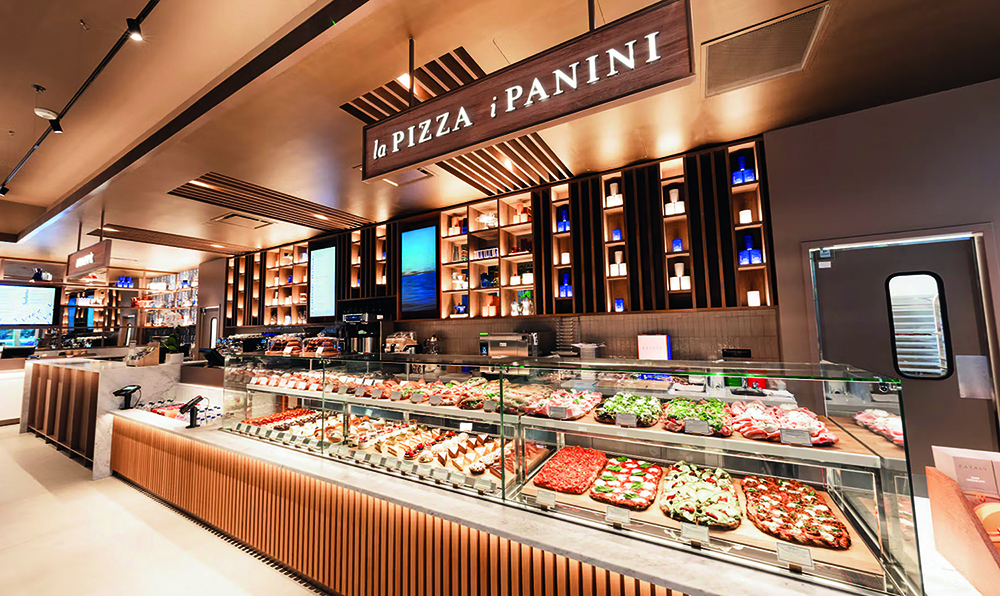
Italian marketplace Eataly is expanding its presence in the Middle East, with a particular focus on the Gulf Countries, with a €100M investment, aimed at opening 40 new stores, including airport locations and enhancing product distribution. This move follows Investindustrial’s acquisition of minority shares in Eataly’s US and German operations in 2023, as well as the Parisian store last December. Eataly is also growing its footprint, including further expansion in North America. In addition to its existing 13 stores, the Italian food chain will soon open four new locations in Philadelphia, Miami (two stores) and Toronto. The US will also be the first to see a new Eataly concept: Eataly Caffè. This new format will debut in four US airports and three French airports.