



The New Consumer
With consumer expectations continuing to evolve and the continued convergence of physical, digital and social commerce, this year is set to be a defining one for global retail. This forecast explores the forces and trends shaping retail & leisure, hospitality and the social & e-commerce sectors, examining how businesses are responding to economic uncertainty, technological acceleration and changing lifestyles.
As the global consumer landscape enters 2026, retail and its adjacent sectors are navigating a period of recalibration rather than recovery. The years of rapid disruption have given way to a more complex environment defined by cautious spending, evolving expectations and a renewed focus on value – not just in price, but in experience, relevance and connection. Across retail & leisure, hospitality and social commerce, the question is no longer how fast brands can grow, but how intelligently they can adapt.
Consumers are moving fluidly between physical and digital spaces, with social platforms increasingly shaping discovery, trust and purchasing decisions. At the same time, bricks-and-mortar destinations are being reimagined as social, cultural and experiential hubs, where convenience must coexist with inspiration and community. Leisure and hospitality operators are responding by blurring boundaries – merging retail, dining and entertainment to create spaces that offer reasons to linger, return and share.
Technology continues to play a defining role, but with a shift in emphasis. Rather than novelty, 2026 will reward solutions that meaningfully enhance operations, personalise engagement and support seamless omni-channel journeys. Data-driven insight, AI-enabled tools and frictionless fulfilment are becoming baseline expectations, while sustainability and ethical practices remain critical differentiators in brand choice and loyalty.
This global forecast brings together the key trends shaping the year ahead, offering a cross-sector perspective on where growth opportunities lie and where risks are emerging. From changing consumer behaviours to new commercial models and experiential strategies, it provides a roadmap for navigating a year in which resilience, relevance and creativity will define success.
Retail & Leisure Sector
An ever-moving behemoth, the retail and leisure sectors are constantly undergoing change, the incorporation of new trends and the implementation of new customer wants and needs.
Retail and leisure trends for 2026 centre on value-driven, personalised experiences powered by AI, with consumers seeking immersive “moments” over just products, driving demand for blended physical/digital journeys, sustainability and flexible payment options, all while brands focus on trust and efficiency through data and automation. Key areas include AI integration (personalisation, operations), experience economy (shoppertainment, cultural hubs), sustainable practices and omni-channel fulfilment.
Moji Oshisanya, Chief Commercial Officer at VoucherCodes.co.uk, shared with us her predictions for the retail industry over the next year: “Undoubtedly, our biggest prediction is that consumer confidence will continue to impact retail over the next year. People are still spending, but they’re far more particular about where their money goes. The retailers best placed to respond to this behavioural shift are those that are able to clearly communicate value – and importantly, value that encompasses more than just price. Consumers are looking to feel in control of their spending – and retailers can support this by offering tailored discounts, easy purchasing process and rewards for custom. Consumer shopping habits are also predicted to shape retail. Although online shopping is undoubtedly going to continue to grow in comparison to the high street – retailers shouldn’t neglect what physical retail still has to offer. The high street still delivers what screens can’t – the true experience of browsing and discovery. Those who combine the enjoyment of helpful service and in-person shopping, with digital tools like click-and-collect, or loyalty apps, will be able to ensure both experiences evolve to benefit one another.”
Meanwhile, Shelley E. Kohan, Senior Contributor at Forbes highlights that technological acceleration and a substantial change in consumer empowerment are reshaping how retailers and brands operate, communicate and survive in an increasingly volatile marketplace. This is explained in the article ‘The 5 Biggest Retail Trends For 2026’, which comments on some of the major factors the industry may experience this year. Kohan explains that emerging solutions in the analytics space are creating intelligent bridges between previously disconnected data environments. Previously, retailers have utilised AI for improving the shopper journey through agents that have become conversational chatbots and personalised search engines, producing recommendations for shoppers both online and in the physical store. The growth in AI-driven analytics will come from revenue-generating features like retail media networks, dynamic pricing models, assortment planning optimisation and collaborations with vendors across platforms.
Kohan’s article also touches on a much more grounded trend within the industry at the moment, the return-to-office mandate. She talks about how this has become almost a battleground between employers and the workforce for many companies. In today’s day and age, some companies that have mandated that employees return to the office may find that the younger generations would rather quit before returning to the typical five-day workweek in the office.
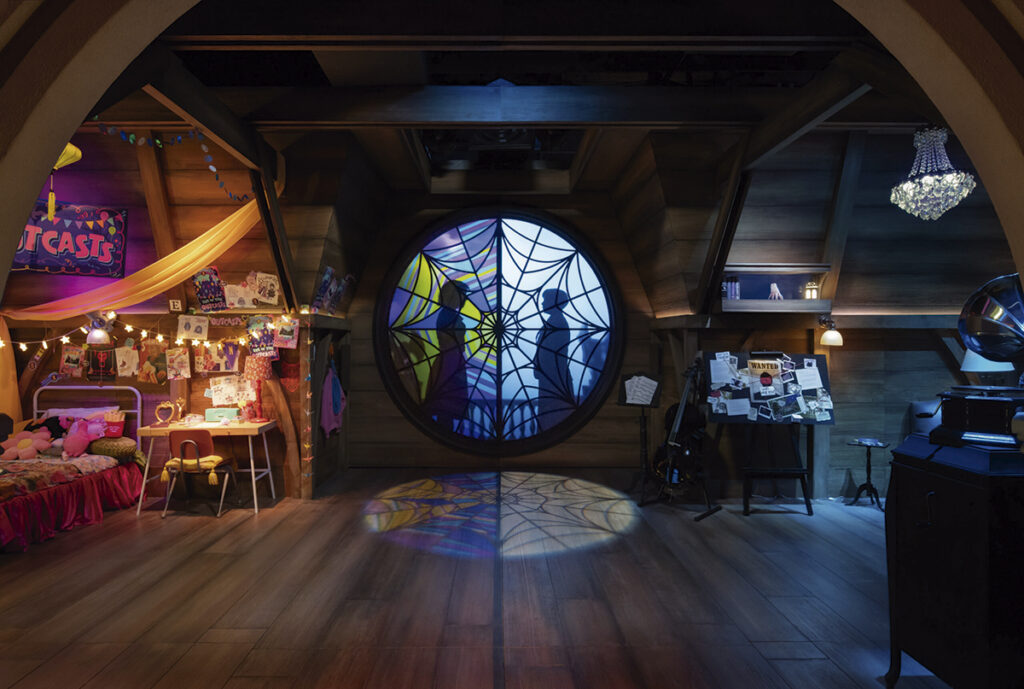
In a different article, Susan Reda, Vice President, Education Strategy highlights in her article: ’10 trends and predictions for retail in 2026’ on NRF.com that shopping mall traffic has been shifting upward throughout 2025 and that the data suggests, the same will happen this year. The article goes on to say that this optimism for 2026 stems from a convergence of mixed experiences that are transforming traditional retail shopping centres into destinations for entertainment, experience and socialisation. There will always be plenty of things to buy at the mall, but the emphasis retailers and brands are placing on creating multisensory destinations is creating buzz. An example of this is Netflix House, a first-of-its-kind environment that opened in December at King of Prussia mall in Pennsylvania, which epitomises where things are headed. The venue, which encompasses more than 100,000sq ft, brings some of Netflix’s most popular shows and movies to life – including “Stranger Things”, “KPop Demon Hunters”, “Wednesday” and the “Knives Out Mystery” franchise – through immersive décor, branded soundscapes and visual storytelling.
Key leisure trends for 2026 include this ‘experiential’ factor such as Netflix House, as consumer demand for immersive entertainment and unique activities continues to grow unabated. Alongside this, lifestyle integration is another core aspect, as people’s leisure choices today focus on well-being, comfort and integrating activities like fitness, art and culture into daily life. Through this, the enhancement of tech operations is another key element to be aware of, as automation and AI improve efficiency in areas such as booking, management and delivering personalised guest experiences.

Hospitality Sector
Key trends for the hospitality centre on balancing high-tech personalisation with authentic service, meeting rising guest demands for unique, purposeful and sustainable experiences, whilst managing economic pressures such as increased labour costs through efficiency, along with integrated technology. Travellers are seeking “why” trips (wellness, culture, nature), starting research on OTAs and expecting seamless digital journeys, pushing hotels to offer immersive design, consistent quality and strong ethical practices.
The EHL report entitled: ‘EHL Insight Report: Hospitality Outlook 2026’ explains that in the evolving experience economy, hospitality businesses have the opportunity to create meaningful, immersive moments for their guests through technology, storytelling and sensory experiences. From immersive journeys, culinary experiences to AR and VR, guests are seeking experiences that are memorable, immersive, personalised and meaningful. As guest expectations evolve, hospitality continues to lead this shift through human connection, creativity and innovation in order to create unique, memorable and immersive experiences for their guests.
The report also comments that regenerative hospitality marks a shift from merely reducing harm to actively creating positive impact, moving beyond sustainability’s net-zero goals toward net-positive outcomes that restore ecosystems and strengthen communities. Rooted in place- and people-based intelligence, this approach integrates environmental, social and cultural systems into hotel operations. Pioneering hospitality operators are applying these principles through local partnerships, biodiversity initiatives and wellness programs, offering a new vision of what sustainability can mean for the industry.
Finally, the report takes a look at how food has become a powerful expression of cultural identity, sustainability and societal values. Across hospitality, sustainability and innovation are driving a transformation in how food is sourced, prepared and experienced – from blockchain transparency to advanced cooking methods like sous-vide. These developments and innovations reveal how hospitality can lead a global movement toward more sustainable, tech-enabled and meaningful food experiences.
Wellness, fast becoming a major part of hospitality offerings, has evolved from luxury to necessity – and now, from intuition to evidence. The next wave of hospitality wellness design is science-backed and data-driven, using neuroscience, biometrics and environmental data to shape how guests feel, rest and recover. This is the viewpoint of WATG’s Advisory Team in their article: ‘Five Trends Shaping the Hospitality Landscape in 2026’. They go on to say that wellness used to be a room – the gym, the spa – places to withdraw. Today, it is the through-line of the entire guest journey and is becoming a performance metric. Properties are measuring the impact of light, air quality, acoustics and movement on guest mood, sleep and satisfaction. This shift – from wellness as an amenity to wellness as an operating system – is redefining what it means to feel good and proving that when guests thrive, so does business.
They conclude their point by saying that this year, hospitality’s competitive edge lies in precision, where data, design and human emotion intersect. The most successful destinations will be those that prove wellness works: not just as places to escape, but environments that measurably enhance how people feel, live and connect.
Social & E-Commerce Sector
Between 2023 and 2025, the number of social shoppers in the US grew from roughly 96 million to 104 million. By 2026, those numbers will soar even higher, with TikTok alone projected to have nearly 40 million buyers in the US. This growth isn’t surprising when you consider how people, especially younger audiences, discover products. Today, 43 per cent of Gen Z consumers start their online shopping searches on TikTok, surpassing even Google and Amazon. Social media has become the new mall, where product discovery, community engagement and purchasing all happen in one place.
This year, the social & e-commerce sectors are set to be defined by deep AI integration (agents, personalisation), explosive social commerce (TikTok Shop, live selling), a focus on seamless omni-channel experiences and rising demands for transparency and sustainability, shifting from pure transactions to relationship-driven, data-rich ecosystems with smarter logistics and redefined returns as competitive tools.
Social commerce has rapidly moved from experimental to mainstream, blurring the lines between discovery, engagement and purchase. Platforms like TikTok, Instagram and Pinterest now enable users to shop directly within feeds and short videos, with in-app checkout and shoppable tags becoming ubiquitous. In 2026, social commerce is expected to exceed $100bn in the US alone and grow as a dominant global channel, driven especially by Gen Z and mobile-first consumers.
Meanwhile, artificial intelligence is central to both social and e-commerce growth. AI-powered content creation, personalised recommendations, intelligent search and automation are no longer premium features – they’re now expected by customers. AI also fuels agentic commerce, where intelligent systems browse, compare and buy on behalf of users, changing how discovery works.
User-generated content, micro- and nano-influencers and live shopping formats are also rising in importance as trust drivers. Authentic short-form videos and creator-led content are key conversion drivers, often outperforming traditional ads with highly engaged audiences. The e-commerce sector is becoming truly omni-channel with AR product visualisation, live streams and interactive shopping experiences bridging physical and digital worlds. Voice commerce and visual search interfaces are gaining traction as alternative ways to discover and buy.
In 2026, expect social commerce to become fully normalised. Platforms like Instagram, TikTok and YouTube are continuing to refine in-app checkout options, allowing users to buy instantly without leaving their feeds.
In essence, 2026 is about connected, intelligent and transparent commerce where AI and social platforms blend seamlessly with robust operations, creating personalised, trustworthy and culturally relevant shopping journeys.
