



Designing Spaces with Soul
From February 22-26, around 1,900 exhibitors from over 50 countries will present the latest solutions and trends in shopfitting, retail technology, marketing, lighting, food service and more at the triannual EuroShop event taking place at the Messe Düsseldorf Exhibition Center in Düsseldorf, Germany. Ahead of the event, RLI highlights unique examples of global shopfitting and design – places where bold concepts, thoughtful craftsmanship and immersive details come together to create unforgettable retail experiences and a new standard for in-person shopping.
Shopping spaces are no longer merely transactional. Around the world, retailers are transforming stores into cultural destinations that invite discovery and delight. In terms of trade events, EuroShop is at the heart of this sector and is the world’s leading trade fair for the retail industry and takes place every three years in Düsseldorf. It brings together the international who’s who of retail, industry, architecture, design and technology, covering the entire retail value chain.
Across seven experience dimensions, EuroShop will showcase innovative solutions, forward-looking concepts and trends shaping the future of retail – from retail technology and shopfitting & store design to lighting, expo & event, food service equipment, energy management and retail marketing. With its high-calibre supporting programme, practical formats and strong international appeal, EuroShop serves as the central platform for exchange, inspiration and innovation in global retail.
In 2026, it will comprise seven stages, eight special areas, four new guided tours and numerous award ceremonies. Whether it’s presentations on stage, visionary special areas, or interactive guided tours, EuroShop offers an experience that goes far beyond traditional trade fair formats. All participants in the retail industry benefit from the forward-looking ideas, practical expertise and international exchange offered by the EuroShop program.
Ahead of the event, Silvio Kirchmair, CEO of umdasch The Store Makers (read more on the company in this month’s Cover Story), who are an exhibitor at the event, highlighted that EuroShop 2026 is all about colour, diversity and inspiration. “This is exactly what we want to show with our exhibition stand: retail is as multifaceted as the people who shape it and every industry has its own DNA.” Their stand will present solutions that transform brands into unique icons. In addition, it will show how they meet individual requirements with their expertise and tailor-made service packages. Visitors to the stand will experience how umdasch The Store Makers develops industry-specific concepts – from the premium segment to food retail. “And, of course, efficiency remains a key focus: we will be presenting digital tools, modular systems and one stop solutions. In short, our booth will be a festival of ideas – colourful, innovative and full of concepts that make brick-and-mortar retail fit for the challenging future.”
All of this leads us perfectly onto RLI’s Global Shopfitting and Design feature, where we take a look at a selection of standout examples of unique interiors put into practice in an ever-evolving sector.
Physical retail is undergoing a global transformation. While the last decade has been defined by the rapid rise of e-commerce, the world’s most forward-thinking brands have been investing in the store – not as a transactional space, but as an experience to be crafted. Shopfitting and design, once considered functional disciplines concerned with shelving, circulation and signage, have evolved into strategic tools that shape how customers feel, interact and ultimately buy.
Across global cities, the store has become a stage. In Tokyo, retail environments blur the boundaries between gallery and shop, using architectural forms and material experimentation to spark curiosity. In London and New York, brands are weaving digital layers into their physical spaces, transforming walls, mirrors and product displays into responsive surfaces that extend storytelling. Meanwhile, Scandinavian and Northern European retailers continue to champion restraint, creating serene, tactile interiors where craftsmanship, proportion and natural materials do the heavy lifting.
What unites these seemingly divergent approaches is a renewed understanding of the physical store as a touchpoint for identity, culture and emotion. In a saturated digital landscape, spaces that invite discovery, linger time and sensory engagement offer value impossible to replicate through a screen. For shopfitters, designers and retailers, this shift presents both challenge and opportunity: to design environments that work operationally, but also resonate on an experiential level.
Cult golfwear brand Malbon first opened a store in Los Angeles a little over two years ago and now it has upped the ante with a second outpost, also on Melrose Place. Situated across the street and launched at the end of last year, the store measures 167sq m and the interior design sees a renewed collaboration with local architecture and design studio 22RE and reinterprets elements of Hollywood Regency and Art Deco in an understated fashion. Captured by warm cherry wood panelling and fixtures and paired with an elegant all-white ceiling, the Malbon store features three distinct spatial zones that come with a gentle three-step rise and integrated ramp. Shoppers enter the premises in a living room space, the very heart of the store, featuring custom-made open shoe displays and bespoke metal clothing racks with spiral detailing that nod to the motion of a golf ball in play.
Also launched at the end of last year was Bulgari’s new store in the Miami Design District, influenced by the sunsets of Rome and Miami, it resulted in a range of orange hues being present throughout the Italian jewellery brand’s new unit. Created by Rome-based architect Massimo Adario and Bulgari’s in-house design team, the two-storey building occupies a prominent corner in the shopping area. The boutique encompasses 3,229sq ft and presents jewellery, watches, perfume and handbags on the ground floor, along with a salon for entertaining clients upstairs. Inside, bright orange accents appear in wall niches for highlighting individual products, as well as a focal ceiling installation formed from translucent acrylic batons arranged in a circle. This wavy-edged cylinder is also expressed on the upper level, accessed via a deep-teal staircase, where it creates a ring-shaped balustrade in the centre of the room. Floors are subtly patterned with palm fronds and walls are wrapped in woven textured materials that nod to Miami’s tropical landscape.
Launched in May after design work by Stone Island’s in-house team in collaboration with AMO, the brand’s SoHo flagship in New York has moved a block northward to 70 Greene Street and reflects a refreshed retail strategy for Stone Island. The collaborators approached the two-storey flagship as a riff on Stone Island’s philosophy of ‘lab’, or material innovation and ‘life’, meaning community. Upon entering the store, you are greeted by Stone Island’s core collection hanging from stainless steel rods. Some walls are clad in charred cork, lending an almost volcanic texture to the interiors, while others gleam in brushed stainless steel, giving the sensation of stepping aboard a spaceship. Video screens flash Stone Island’s material processes (the ‘lab’) while others display scenes of brand ambassadors and campaigns (the ‘life’).
Unveiled towards the end of last year, American studio Something Studios has overhauled US retail giant Target’s store in SoHo, New York, introducing a red tunnel based on the brand’s logo and displays that wrap around the building’s cast-iron columns. Phase one of the project involved refreshing the ground-level space, which is now open to shoppers, while phase two will tackle the basement next year. To appease both tourists and locals, the store was reimagined to invite curiosity and slower browsing, yet still be practical for sourcing essentials. From the store’s entrance, shoppers are guided into a red tunnel-like space based on the shape of Target’s bullseye logo. This enveloping structure is curated like a concept store, with products ranging across fashion, home, beauty and lifestyle merchandise based on moods or personalities that will be frequently rotated. The signature red hue extends over the curved walls and display niches and across the rubber floor and rounded central podiums where more goods are presented.
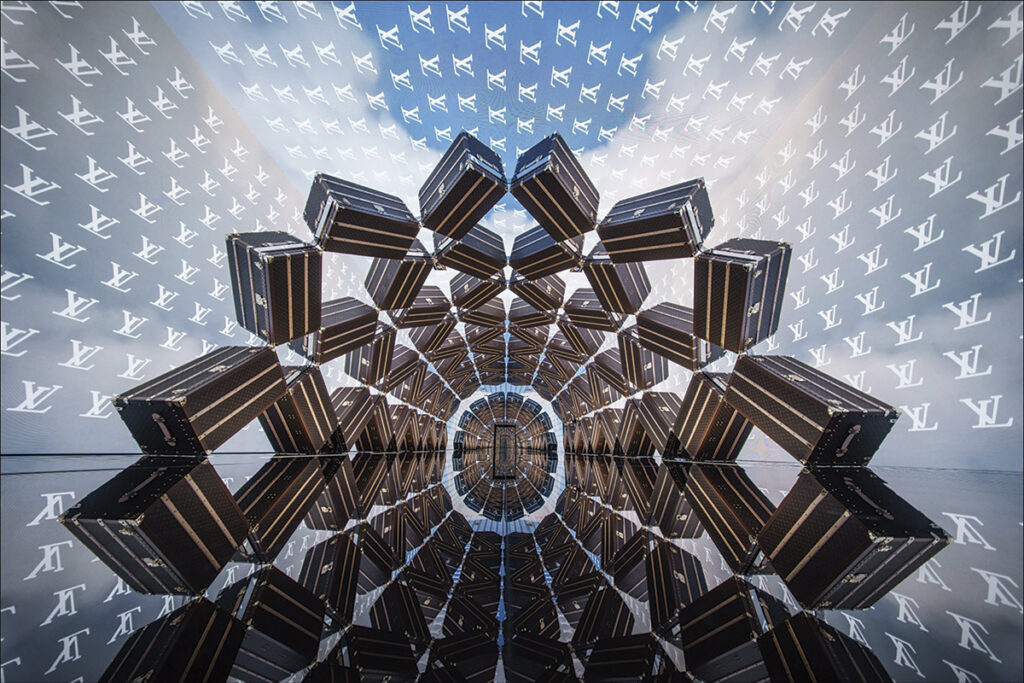
Back in June last year, the in-house design team of Louis Vuitton unveiled The Louis, a boat-shaped concept shop in Shanghai, with upper levels designed to resemble its classic trunks. The shop is located at the front plaza of HKRI Taikoo Hui, a shopping mall in central Shanghai. A boutique, café and last but not least, an exhibition space all rolled into one, this is anything but your normal store. The main body of the ship is wrapped in a metallic monogram, with a silvery anchor shaped like the LV logo dropped from the front of the ship to the ground. The ship’s upper levels were designed to look like Louis Vuitton’s historical trunks, stacked in different sizes. An outdoor terrace is located in a sunken area of the deck and features parasols to create a seaside atmosphere. The shop comprises three floors. The first two floors are dedicated to an exhibition that showcases the brand’s culture and history, with a cafe sitting at the top.
Following last year’s pop-up venture, the iconic Paris-based fashion house Schiaparelli, led by American creative director Daniel Roseberry, has this year secured a 158sq m unit at the Prince’s Building of Landmark in Hong Kong, one of the city’s preferred destinations for discerning fashion aficionados. Roseberry tapped Halleröd to create a fitting interior design and the result oozes sheer opulence. The space is more a salon than a retail space and consists of a sequence of interconnected rooms. The settings are dazzling, featuring a palette of lacquered wood, brushed metal, mirrored surfaces and marble motifs. The main room, which features a slightly vaulted ceiling adorned with many of the house’s signature Surrealist symbols and motifs, connects a gold-infused boudoir on one side and a homey private nook directly opposite.
Acne Studios’ three-level Aoyama flagship in Tokyo that opened in July blends minimalist architecture with playful textures. Designed by Co-Founder Jonny Johansson and Stockholm-based interior design company Halleroed, the glass-lined, garage-like space is clad in pink granite and filled with vibrant furnishings by the likes of Max Lamb and Benoit Lalloz. The store remains faithful to Acne Studios’ Scandi roots, but nods to Japan through details like candy-bright ceramics by Takuro Kuwata. Clean-lined, monolithic, flooded with light – and instantly recognisable as part of the Acne Studios cosmos – the new store spans a prime corner spot on Omotesando, a longtime architectural playground.
Recently opened in Tokyo was the second RINKAN store, which interestingly, is situated in the basement space, or B1 level, of the same building where the first shop opened its doors three and a half years ago. The new retail space once again sees a collaboration with architect Kenta Nagai of the negu, inc. practice in Tokyo. Carefully composed solid aluminium elements create a space where the rare bags seem infinitely multiplied. The visual drama reaches its peak at the very centre of the RINKAN retail space where an elongated display cabinet, crafted from natural stone and aluminium, is flanked on either side by glass-and-aluminium shelving units laden with coveted merchandise. Sleek and understated, the flooring of irregularly shaped cobble stones lends the setting a contrasting edge.
Back in December, the Melbourne-based tech performance wear brand MAAP has landed in Sydney. MAAP LaB Sydney has opened its doors in the city’s leafy Darlinghurst neighbourhood and occupies 243sq m on the ground floor of a redeveloped brick building. The interior design, created by Melbourne-based practice and longtime collaborator Clare Cousins Architects, once again features a clean and understated setting, featuring a monochrome backdrop and contrasting, bold electric blue volumes, captured by support pillars and two chunky storage and display units. An additional pop of colour is provided by the elongated sales counter and an adjacent seating facility. The bare ceiling, featuring retained original mouldings and a myriad of utility pipes, is overlaid by a row of suspended linear light fixtures which lend the setting a visual dynamic.
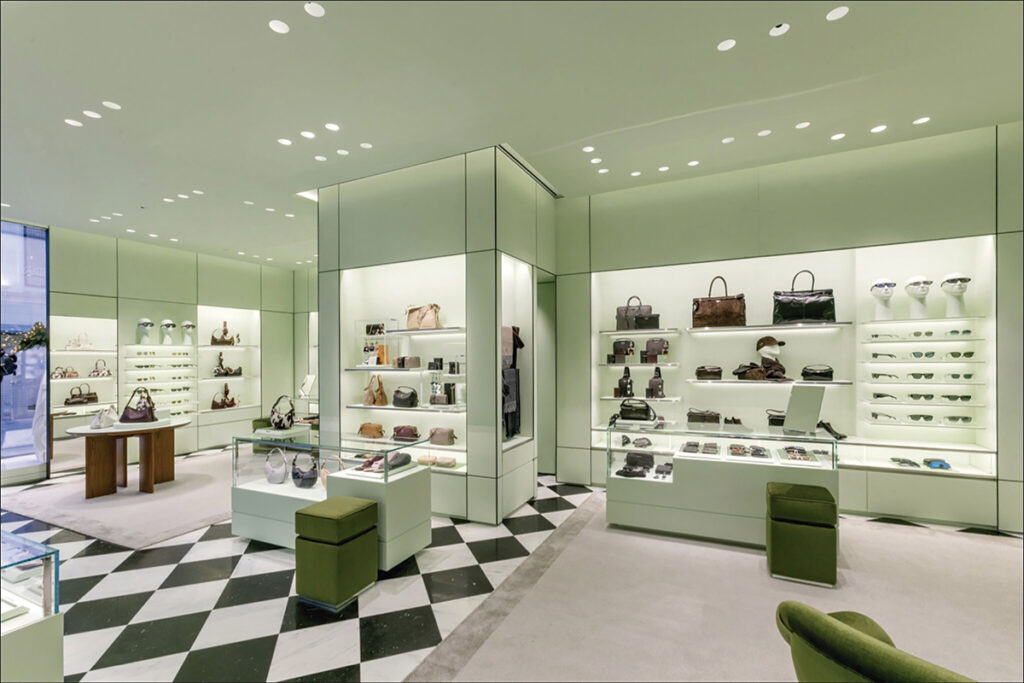
Situated in the heart of the city of Oslo, Norway, the Milan-based fashion house Prada has secured two floors on the premises of a historic four-storey, late 19th-century building by architect Kristian Biong, rubbing shoulders with the boutiques of a number of peers from fashion’s upper echelon. The interior design, created by Prada‘s in-house design team in the Lombard capital, sees all of the brand’s signature design codes, such as walls dipped in minty green, black-and-white chequered marble flooring and obviously, matching furniture pieces in velvet in a matching hue. The new Prada store carries men’s and women’s apparel, accessories, bags, small leather goods and the full range of shoes.
At Lisbon’s Vasco da Gama Shopping Center in Portugal, Bershka has debuted two contrasting yet interconnected retail spaces that test the flexibility of its evolving Module-Model shopfitting concept, developed in collaboration with El Departamento. The Lisbon stores reflect another shift in fast fashion retail, which sees high street brands making bold moves to experiment with and reinvent how physical stores deliver value. The project comprises two complementary stores totalling 410sq m. The larger, 310sq m space brings the Bershka Woman and Bershka Man collections together within a single interior, organised through a base display module that structures walls, fixtures and product zones. This repeated architectural element establishes continuity while allowing material and chromatic shifts to define the identity of each collection. Across the way, a smaller 100sq m store targets a younger, street-inspired audience. Here, the same modular system ventures into more experimental territory. Glossy lacquers, tiles and bold colour applications heighten contrast and energy, creating a fast-paced environment that mirrors the teen-focused collection it houses.
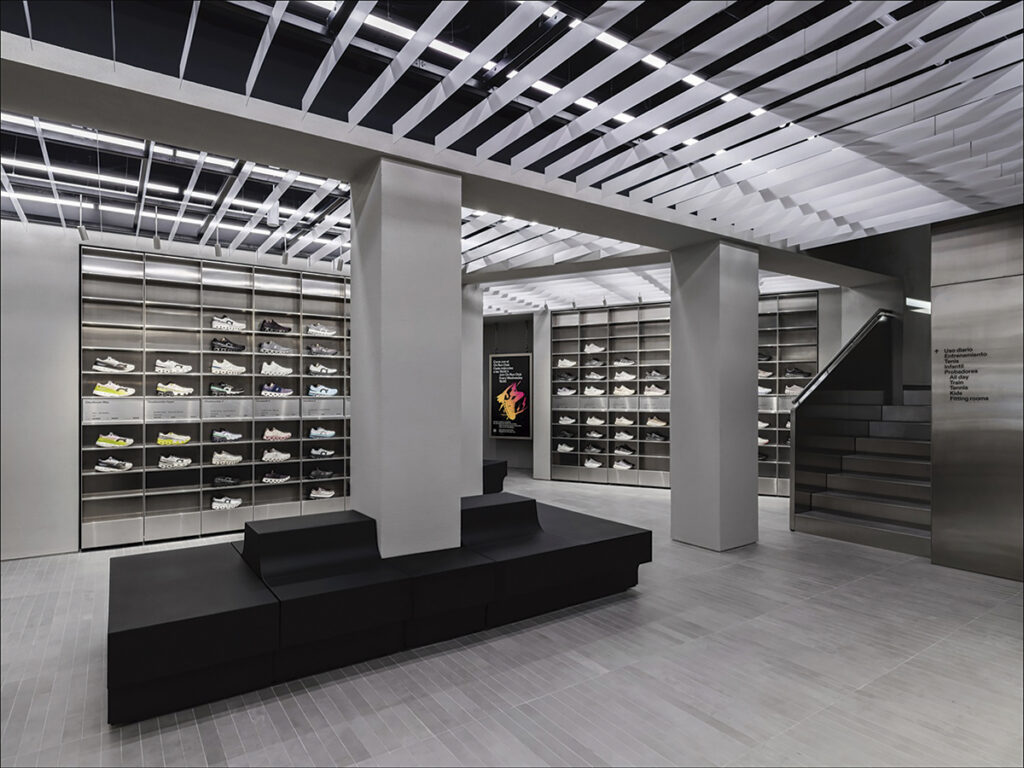
Swiss running shoe brand On has overseen an accelerated period of growth across its global retail network. This has continued in Madrid’s luxury downtown area of Salamanca. The retail space measures 250sq m and is spread across two floors of a residential structure with a classical façade. In stark contrast, but in compliance with On stores around the world, the interior design is clean and understated. Created in-house, the premises are a monochrome affair and see shiny metal shelving and display units and matching panelling lining the walls, paired with a louvered ceiling and flooring of narrow tiles. Sleek yet robust benches and display tables in black and terracotta break the grey-metallic colour palette. Lighting largely consists of ceiling-suspended light spots and skylights installed at specific display nooks. The new On store carries the full range of men’s and women’s shoes, apparel and accessories, in addition to the kids collection.
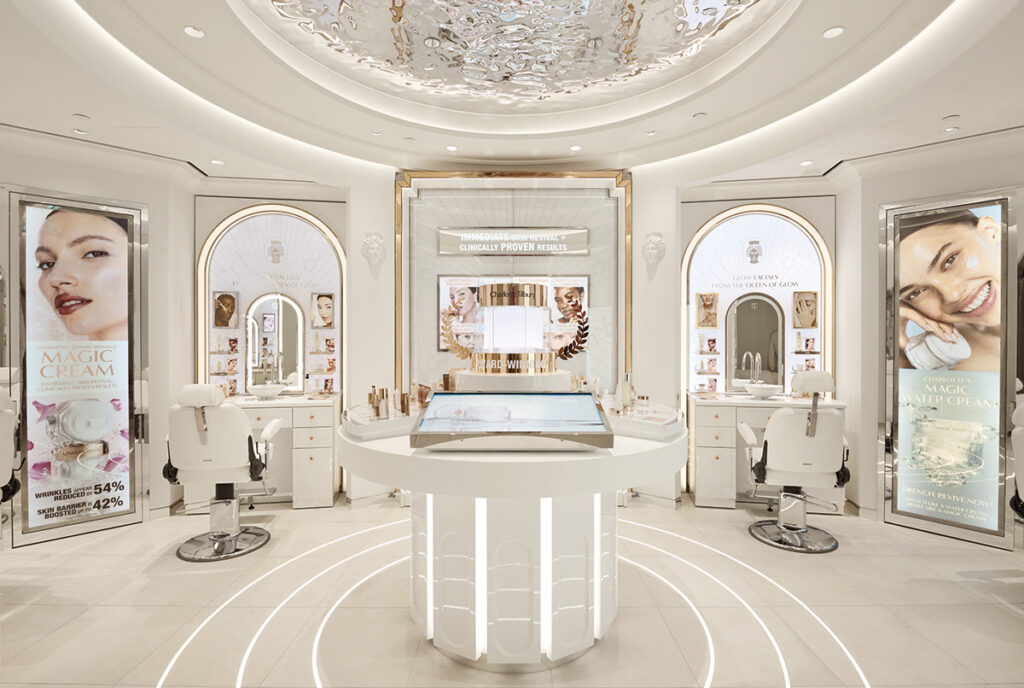
With the opening of her largest flagship store worldwide in London’s Covent Garden, British make-up icon Charlotte Tilbury has created a true beauty wonderland. Covering around 400sq m, luxurious design, an immersive brand experience and exclusive services merge to create an overall experience that redefines modern beauty retail. The project was realised in close collaboration between Charlotte Tilbury’s Global Store Design Team, Zebra Architects and umdasch The Store Makers as the executing shopfitting partner. From the initial idea to the final brushstroke, one thing was clear: this was not to be a classic store. The aim was to transfer the magic and energy of the Charlotte Tilbury brand into a space – a place where customers feel like they are in their own personal beauty fairy tale. The result is a ‘beauty wonderland’ that impressively combines award-winning products, multi-sensory experiences and iconic brand staging. A gently curving, pink rainbow runs through the store as a central design element, intuitively guiding visitors through the various experience areas. Each zone offers new moments of discovery – from glamorous product presentations to intimate retreats for individual consultations and exclusive treatments.
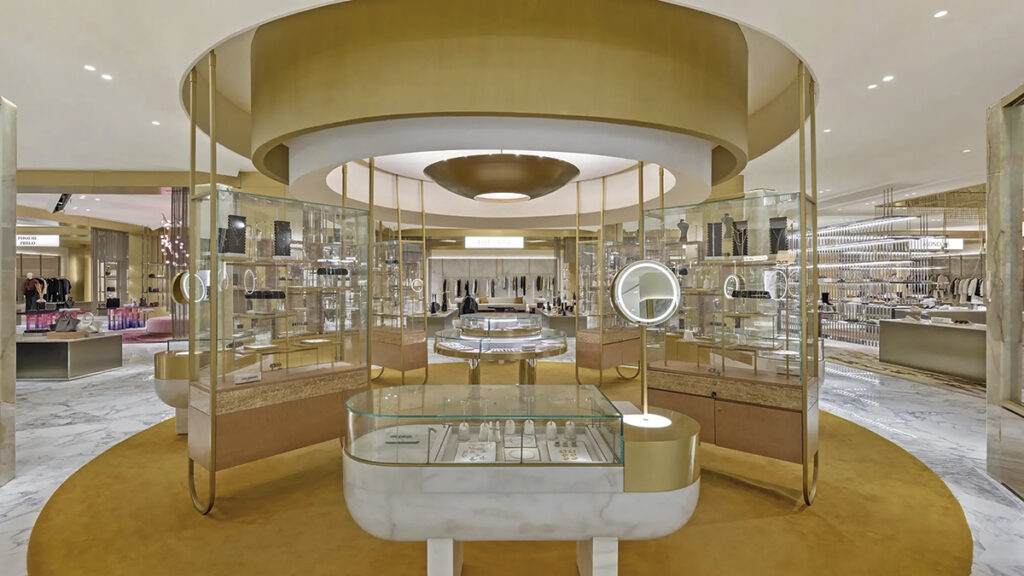
American fashion brand Kith has collaborated with Porto Architecture to create the interiors for its flagship store on London’s Regent Street, complete with a classic New York bistro. For Kith’s first standalone store in the UK, Founder Ronnie Fieg aimed to create a space that showcased the brand but was unique to London. It also includes the brand’s first restaurant, named Ronnie’s after its founder. Each of the store’s main spaces was defined by its own material and colour palette, with Kith’s crest integrated throughout the interiors along with satin brass trimmings. The store’s main entrance is flanked by a pair of original, curved glass windows that overlook the Kith Kids and Kith Treats spaces on either side. Both spaces are united by a custom fan mosaic, with the children’s areas arranged around an Estremoz marble seat and lit with cloud-like lamps. Kith Treats has a muted pastel palette with a Volakas marble-topped bar. The ground floor contains the bright Kith Women area and dark spaces for seasonal collections and jewellery. The Kith Women space combines an oak herringbone floor, Estremoz marble-lined walls, white oak millwork and Crystal Tiffany marble. In contrast, the other space combines dark herringbone floors, Belvedere marble walls and walnut millwork.
After completing the original Harvey Nichols store at The Avenues Kuwait, Havelock One returned last year to deliver its full turnkey refurbishment for Alshaya Group, with the store launching back in October. The store remained open throughout the works, so the shopfitter planned and phased the project carefully to allow trading to continue while construction progressed. The completed refurbishment refreshes the store while staying true to the Harvey Nichols identity. Their scope included the manufacture and fit-out of all key retail areas, including perimeter and mid-floor fixtures, fitting rooms, cash desks and the main façade. The façade and cosmetics counters were designed by Studio IV and feature thousands of metal petals, each placed by hand to create depth and movement as light passes across the surfaces. All fixtures were custom-built in Havelock One in-house facilities using timber, metal, stone and glass, with their Bahrain manufacturing teams working closely with their Kuwait-based fit-out specialists to deliver a high-quality finish across the store.
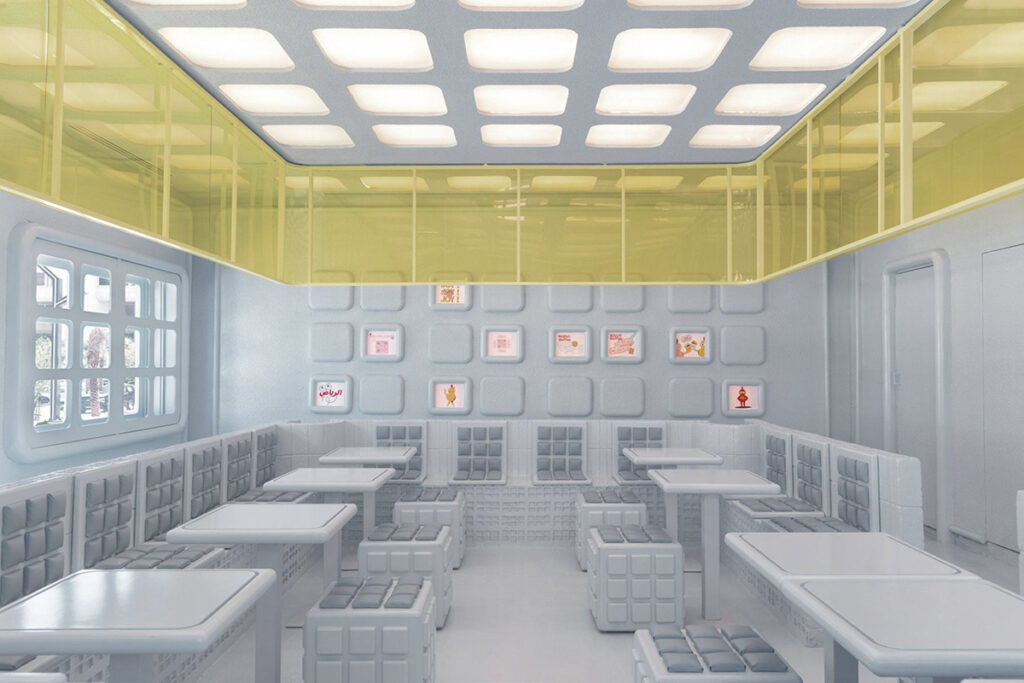
Unveiled back in April, Spanish studio Masquespacio designed the interior of the Novu Waffle restaurant in Riyadh, Saudi Arabia, to reference the appearance of waffles, with gridded patterns applied across the furniture and decor. Masquespacio was approached to develop a fun and immersive concept for Novu Waffle, which was looking to expand following the success of its initial takeaway-only shop. Located within a street-level unit that previously housed another restaurant, Novu Waffle welcomes customers with a facade displaying waffle-like gridded window frames. The waffle motif is repeated throughout the interior, with ceilings, walls, tables and stools all decorated with grids of squares in varying sizes. All of the furniture was custom-made to ensure a cohesive aesthetic. The restaurant’s seating area is surrounded by a low rectangular brick wall that also forms the base for benches arranged around its perimeter. Individual seats feature faux-leather cushions that extend onto the backrest.
