


In this issue’s Retail Insight, Marcus Briggs, Managing Director and Group Head of Leasing at Pradera, considers how the industry has long discussed the rise of leisure within retail as a necessary shift to keep destinations relevant and appealing, while building long-term value in leisure destinations.

Consumers actively choose places that offer experiences and activities, so landlords have responded with dining, entertainment and competitive socialising. But conversely, for a destination that leads with leisure, retail still provides a compelling complimentary offer that is integral to its overall success.
For leisure-led attractions, while experiential and activity brands provide the core motivation to visit, retail can complete the experience, encouraging people to explore further and giving them a reason to return more often. In its simplest format, this is the reason that most leisure attractions, from museums to theme parks, lead visitors through a shop at the end. After an enjoyable experience, people often want a tangible reminder of it to take home. Retail helps to extend the emotional connection beyond the moment.
An anchor leisure activity tends to drive more occasional visits, while complementary offers and the regular refresh that retail brands go through with new products and seasonal ranges, help to generate reasons for repeat visits. For owners and investors, that frequency matters. A headline attraction can create initial demand, but the long-term strength of a destination comes from converting that demand into repeat footfall and sustainable occupier performance. The objective is not simply to fill space or maximise rent unit by unit. It is to create a connected destination in which every operator strengthens the proposition as a whole.
Relevance is vital, as the leisure offer needn’t be matched too literally with a retail component, for example an electric karting venue does not automatically require a Formula One shop next door. The real skill is in understanding the customer: who they are, who accompanies them, what interests they share and how they want to spend the rest of their visit. The link is about demographics rather than categories, for example parents may want to shop, eat or work while their children take part in an activity.
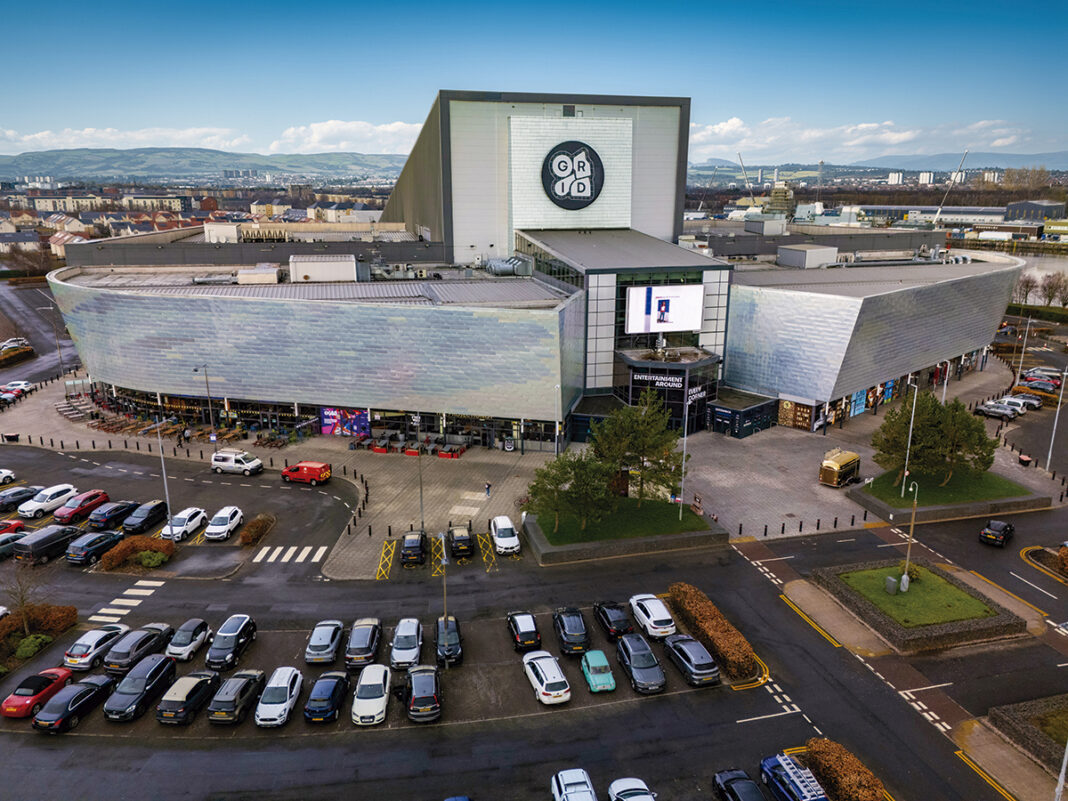
Critical mass is equally important. One retailer in isolation rarely creates a compelling shopping proposition, just as a single leisure operator cannot meet every customer need. Choice, comparison and complementary uses encourage visitors to move from one experience to another, stay for a meal and perhaps make a purchase. This is where curation becomes an investment discipline rather than simply a leasing exercise. Leisure-led destinations like GRID at Braehead demonstrate this cluster thinking, with diverse and complementary activities that visitors can enjoy during a single visit.
Achieving this requires collaboration as well as leasing strategy. Operators should share insight on booking patterns, peak times and customer profiles, then use events, wayfinding and joint promotions to connect the offer. Cross-visitation should be facilitated and monitored, not assumed simply because different offers occupy the same site. If you curate with the customer in mind, then footfall, loyalty and commercial performance are likely to follow.
Destination-scale thinking can also mean looking beyond the immediate offer. Visitors do not experience a place according to ownership boundaries or leasing plans; they experience it as a whole. GRID Braehead is a great example of how this can work in practice, with a diverse leisure offer and strategic commercialisation sitting alongside a surrounding retail environment and arena, creating a broader ecosystem of complementary uses. Average dwell time is over 90 minutes, rising further among key audience groups, while CACI research shows that those who stay longer spend more per visit. Together, these measures demonstrate the value of curating a connected destination around the customer, where complementary uses create more reasons to stay, spend and return.
Leisure-led schemes should not be completely single-purpose venues, nor should retail or F&B be bolted on at the end of the development process. They should be considered as a fundamental part of the attraction and customer journey. The objective is not brand consumption, but brand experience and a connected destination where every use adds another reason to stay, spend and come back.
Leisure creates the excitement and distinctiveness, while complementary offers can build on that excitement and encourage the customer towards exploration, frequency and a lasting relationship. Successful destinations will design and curate an offer specifically for the audience they want to appeal to and welcome them back again and again.
