

Riyadh’s Stage for Life, Culture and Connection
As one of Saudi Arabia’s flagship Vision 2030 projects, King Salman Park is at the heart of Riyadh’s transformation and once fully complete, will offer a world-class retail and F&B destination at the heart of a G20 city. Here, RLI meets up with George Tanasijevich, CEO of King Salman Park Foundation to learn more about this game-changing development.
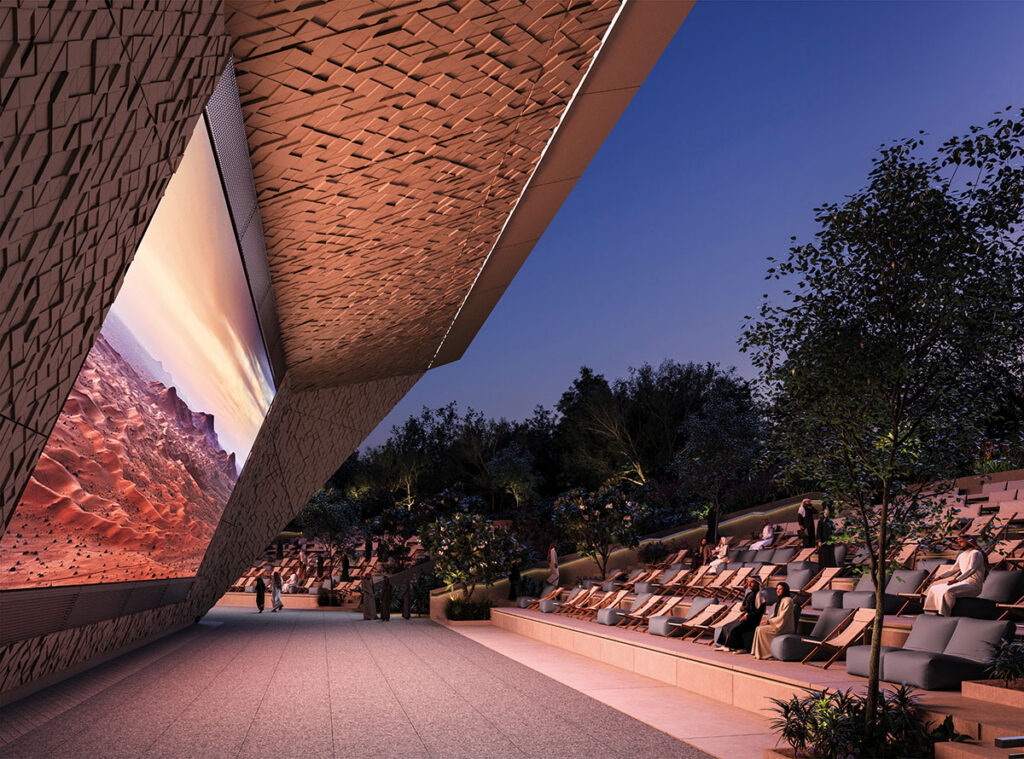
Advancing from vision to execution with exceptional momentum, today, more than 90 percent of King Salman Park’s construction packages are under contract, with over 13,000 workers currently delivering infrastructure, public realm enhancements and destination assets across the 17 sq km development.
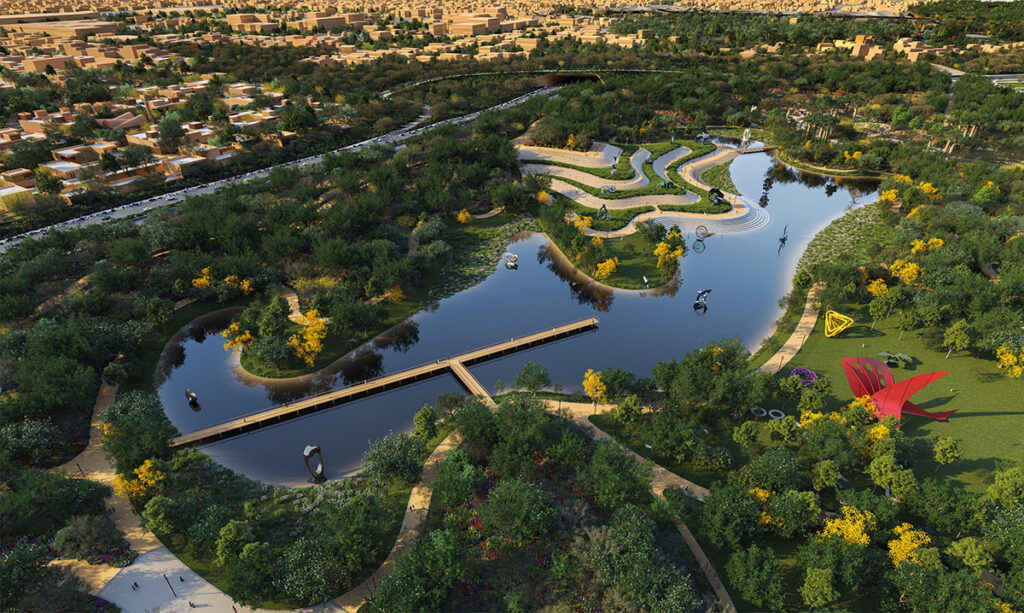
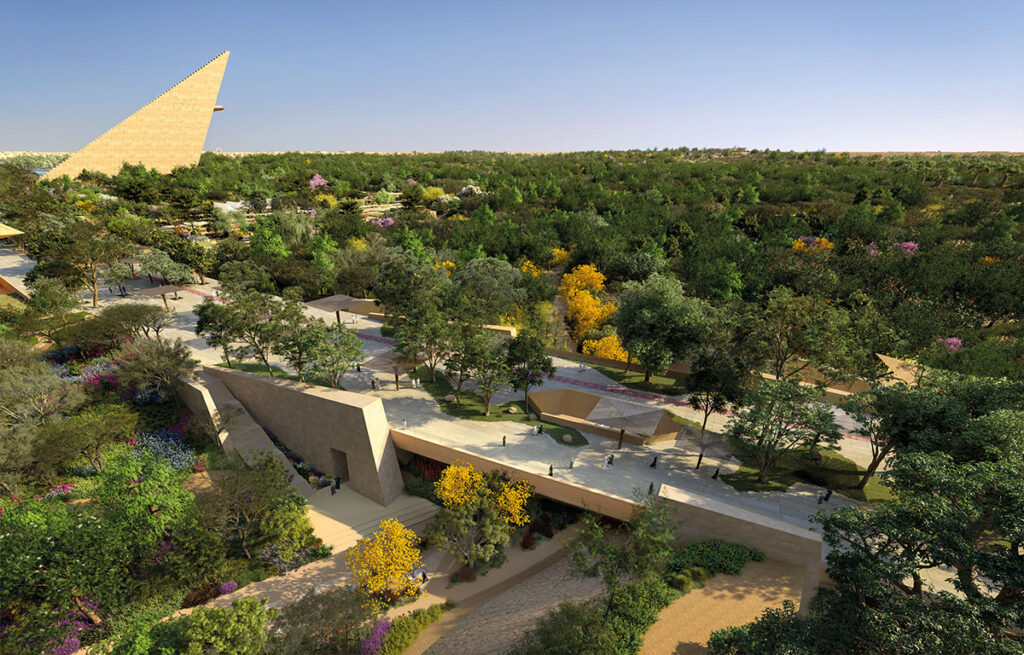
The Park’s masterplan is rooted in the natural topography of Riyadh, using earthworks, valleys and native vegetation to create immersive, shaded environments that are comfortable year-round. From botanical gardens and art installations to active trails and lakefront spaces, visitors can experience Riyadh’s desert landscape in entirely new ways, all within a setting that celebrates environment harmony and cultural expression.
By integrating expansive green space with cultural assets, smart mobility, sport and entertainment and a people-first design, the King Salman Park project directly supports national goals to improve the quality of life, attract international investment and establish the capital as a global lifestyle destination.
Reflecting growing interest from the private sector and the global development community, recently the Foundation launched its third mixed-use investment fund, a US$1bn partnership with Ajdan Real Estate and Sedco Capital to develop a vibrant new neighbourhood adjacent to the Royal Arts Complex.
“Our retail and F&B offerings will be delivered in phases across the Park, assets and the mixed-use districts and activated alongside early residential, hospitality and cultural zones,” explains George Tanasijevich, CEO of King Salman Park Foundation, which is responsible for the development and operation of one of the world’s ambitious urban regeneration projects. “The Park’s masterplan prioritises pedestrian flow, wellness and placemaking, creating high-visibility opportunities for international brands seeking to enter or expand in the Kingdom through immersive, experience-driven environments. The key elements of retail and F&B are being designed to be community-centric, lifestyle- driven and inclusive of global and local concepts.”
This vision emphasises a diverse range of experiences across multiple districts and the Park itself, offering everything from fine dining and boutique retail to everyday conveniences and family-friendly options. These offerings will be integrated into the Park, its key attractions as well as the large, walkable green neighbourhoods that reflect the Park’s broader goals around wellbeing, sustainability and placemaking.
According to Tanasijevich, the focus is on creating a haven that prioritises outdoor engagement, wellness and flexible space use, aligning with evolving consumer expectations and establishing a true day-to-night destination for both residents and visitors.
Being shaped as a hospitality destination in its own right, the Foundation is in active discussions with global operators to deliver a range of offerings, from five-star hotels, to wellness and boutique properties, all positioned within lifestyle districts anchored by culture, sports and green space.
The Park has been designed to be fully integrated into the public infrastructure of the city; five metro stations connect the Park to the city’s new metro network; the extensive city bus service will use 11 new entrance roads and the wide boulevard to access the eight hubs on the 30m wide highline pedestrian loop.
“In addition to the visitors to the Park, the mixed-use districts are promoted around the 15-minute city principle, which ensures that residents, workers and visitors can meet daily needs, from retail and recreation to mobility and wellness, within a short, walkable distance. A defining feature is “The Loop”, a 7.2km shaded pedestrian and cycling route that connects major destinations throughout the Park,” highlights Tanasijevich.
He continues by saying that this pedestrian-first approach, combined with green mobility infrastructure and car-free zones, supports daily movement, outdoor living and stronger social connections. As the city continues to grow and attract international attention, it is predicted that by the time the Park is fully operational, it will be attracting some 50 million visits a year.
The Foundation is currently in the process of awarding the first five mixed-use development packages, each designed to deliver residential-led neighbourhoods built around the 15-miunte ‘Live-Work-Play’ concepts, combining residential, retail, office and leisure assets within a walkable and vibrant environment.
“We are also preparing to launch a wider range of future opportunities in 2026, structured around similar models. This includes the upcoming Signature Asset development: a large-scale zone that will feature a championship golf course and golf community, hotels, MICE facilities, sports infrastructure and a multi-purpose arena, offering long-term value for global developers seeking scale, visibility and integration with one of Riyadh’s flagship destinations.”
Envisioned as a Smart City within a City, King Salman Park’s strategy is built around the five core pillars of excellence in city operations, sustainability, smart mobility, visitor experience and innovation – with the Park positioning itself as a global ‘Living Lab’. These human-centric objectives are being realised through the deployment of smart wayfinding, AI-enabled mobility, IoT sensors, immersive AR/VR, a centralised Super App and advanced water, waste and energy systems. The Park is also developing a digital twin and data integration and analytics layer to monitor performance and continuously enhance the urban experience. The possibilities for Smart City solutions and innovative thinking at King Salman Park are endless, as technology designs and partnerships are being developed which will help to create connected, cognitive and caring communities, in and around the “Green heart of Riyadh”.
Discussing how the Park is set to become a living lab for innovation, Tanasijevich tells us how the Foundation is actively building partnerships with public agencies, private developers, start-ups and academic institutions to co-develop and test innovative solutions across real-time urban systems. These include blockchain infrastructure, smart metering, immersive tech and sustainable utilities.
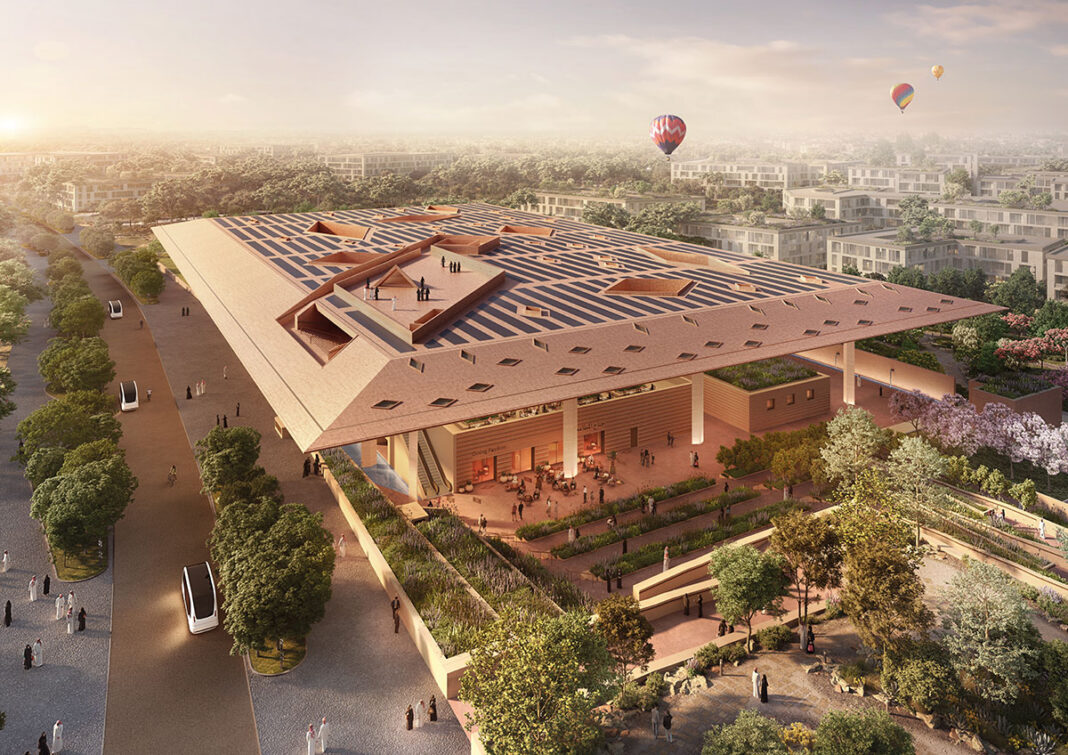
Looking to the future as construction continues, the immediate priorities lie in the delivery of the first residential and cultural assets, advancing infrastructure and releasing new mixed-use investment packages. The opening of the Visitor Pavilion and the progression of key lifestyle anchors all mark important steps in activating the Park for the public.
In the long-term, the Foundation aims to position King Salman Park as a world-leading urban destination, combining culture, nature, innovation and investment in a globally benchmarked lifestyle environment.
“King Salman Park is a symbol of Saudi Arabia’s transformation. As the world’s largest urban park, it reflects the scale, ambition and integrated thinking behind Vision 2030. Its blend of smart systems, sustainable design, cultural destinations and investment-ready districts position Riyadh as a leading global city,” comments Tanasijevich.
“By setting new benchmarks for liveability, innovation and inclusive development, the Park supports Saudi Arabia’s emergence as a hub for world-class tourism, real estate and lifestyle experiences.”
For more information, please visit: https://kingsalmanpark.sa/en

