


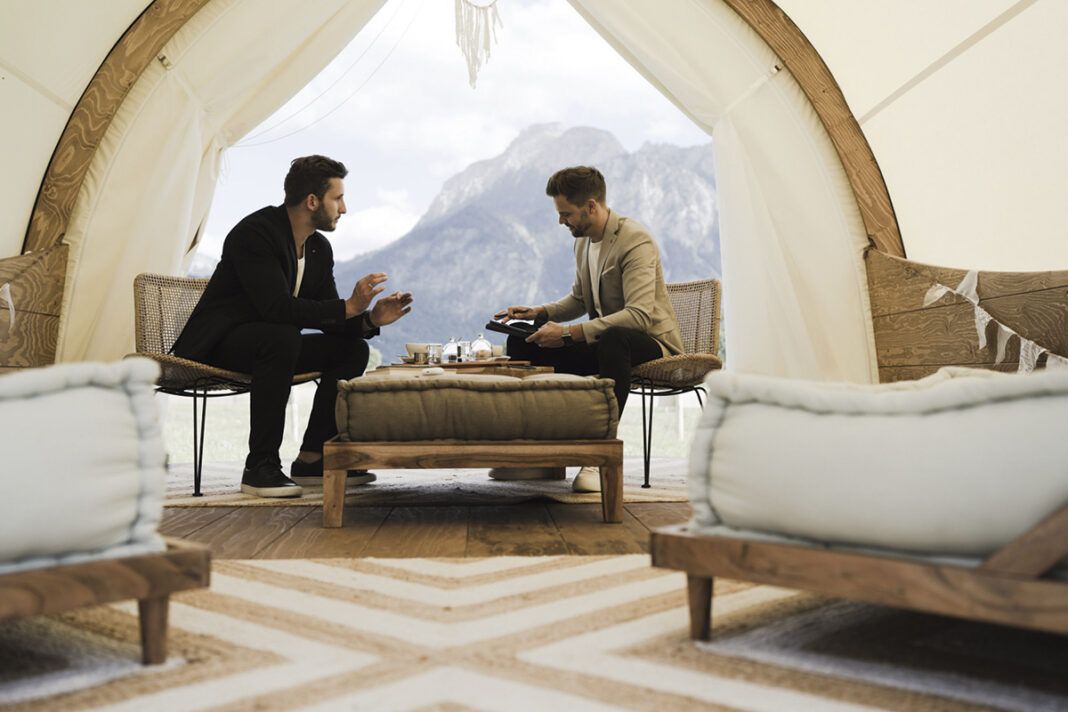
Will Hawkley, Global Sector Head, Leisure & Hospitality at KPMG International offers his thoughts on how guests today are looking for more of an experience when they visit a hotel.

The hotel sector is undergoing a profound transformation. Where once the business revolved around providing a room and bed for the night, today’s competitive battleground is the experience economy. Guests now expect more than a comfortable stay; they want curated, memorable moments, supported by loyalty ecosystems that can
extend far beyond the hotel walls.
Success in this evolving landscape can hinge on three interconnected priorities: continuous experience innovation, strategic ecosystem expansion and delivering personalised loyalty through a blend of data and emotional intelligence. Hotels that master these dimensions will be well positioned to define the future of hospitality.
Customer experience benchmarking
According to data from KPMG’s Global Customer Experience Excellence (CEE) 2025-2026 report, the hotel sector is demonstrating strong growth in customer experience, with its overall CEE score improving by 1.4 per cent compared to last year. This positive trend is driven by significant enhancements in customer expectations, integrity (trust, fairness and transparency) and empathy (customers feeling genuinely understood, supported and valued). This demonstrates that customers across the hotel sector increasingly believe the sector is making efforts to deliver a better experience and align more closely with their needs.
Rising expectations and the demand for immersive hospitality ecosystems
In today’s rapidly evolving market, it’s no surprise that customer needs are shifting. People increasingly expect experiences to be personalised, intuitive and anticipatory – and they typically expect this all the time, from every interaction. They often care less about whether those outcomes are delivered by AI, a human, or a blend of both and more about whether they are coherent, seamless and trustworthy.
In tandem, the sector is responding to a wider social shift: consumers are spending more on activities and experiences than on products or passive leisure. Health and wellness trends, changing drinking habits among younger generations and the desire for mixed-group, social activities are also helping to accelerate this evolution.
To compete, hospitality businesses should think beyond isolated transactions, functional silos and organisational boundaries. The winners in this model could be those who act as experience orchestrators, shaping and governing the end-to-end journey whether they deliver every touchpoint themselves or not. Among the challenges and opportunities, is to design experiences that work not just within their own walls, but across a web of interconnected players.
We refer to this as ‘ecosystem thinking’. It is helping to shape portfolio strategy across the hospitality sector. Asset-light models dominate, with hotel groups expanding through partnerships and sub-brands that cater to new customer segments – from extended stay suites to luxury lifestyle hotels. From partnerships with local florists, coffee shops and artisans, to global brands such as Nobu, businesses can broaden their reach while maintaining brand relevance in a crowded market.
Transforming loyalty into lifestyle
At the heart of this shift lies personalised loyalty. Whether at the mass-market level or in ultra-luxury properties, the expectation is for hotels to recognise not just who a guest is, but why they are there; is it a midweek business stay, a family weekend, or blended “bleisure” travel? Each can demand different experiences.
Technology plays a growing role in enabling this: mobile check-in, digital room keys, IoT-enabled rooms and in-room AI assistants are becoming standard. But one of the true differentiators remains the ability to blend digital personalisation with emotional intelligence. Luxury brands, like the Ritz Carlton, are combining advanced CRM systems with staff training that helps ensure guests feel personally known; the hotel equivalent of a local pub landlord pouring your drink before you ask.
Hotel groups, such as Marriott, Hilton, IHG and Accor, are also reshaping their loyalty programs into ecosystems of experiences. These programs are no longer about redeeming points for a free night; instead, points can be used for experiential moments. For example, Hilton members can attend concerts with ambassadors like RAYE, Accor partners with Paris Saint-Germain to offer sports experiences, while Marriott Bonvoy members can gain access to cultural and culinary events.
These partnerships are aiming to transform loyalty into lifestyle, embedding hotels into the broader rhythm of travel, entertainment and leisure. Crucially, they also give hotel brands direct ownership of the customer relationship, helping to reduce dependency on online travel agencies and regaining control of data, margin and personalisation.
The leaders in customer experience excellence, therefore, should demonstrate that it is not just a project or a short-lived initiative, but an organisational mindset. What can emerge from this is a distinctive, coherent brand experience that is designed to be resilient to market changes and difficult for competitors to replicate. It can deliver a sense of belonging that binds customers, employees, partners and the entire ecosystem together.
