


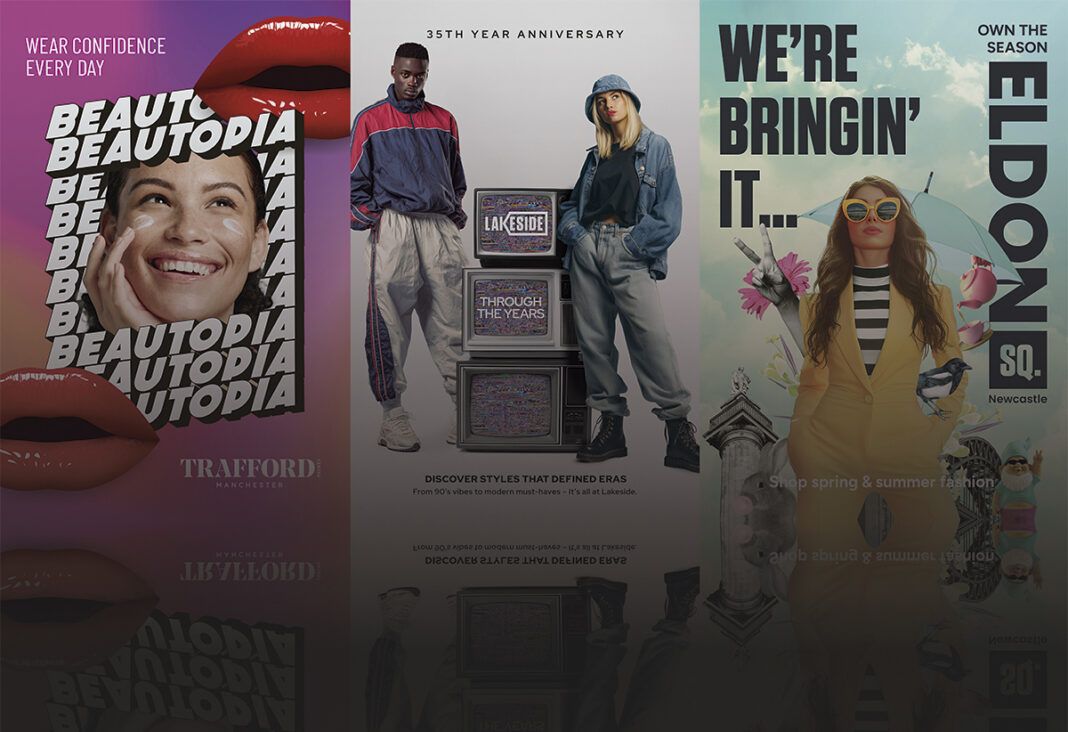
Richard Beasley, CEO of retail, leisure and destination marketing agency BWP, explains how retail marketing has transformed since the 90s.

Retail marketing has transformed over the past three decades, through technology, consumer expectations, a pandemic and an industry that has continually reinvented itself. From a discipline guided largely by experience in the 90s when we launched BWP, it is now purposeful, data-driven, commercially accountable and fully integrated into business strategy.
Historically, retail marketing was often defined by its output of campaigns, events and media placements – judged on visibility rather than measurable impact. Today, that model is almost unrecognisable. Marketing now begins with business objectives followed by informed creative ideas. Strategies directly support commercial outcomes, such as footfall, spend, tenant performance and ultimately asset value. This shift from output to outcome is perhaps the most significant change of all.
Data has been the driving force. A wealth of information now guides decision-making. From transactional and mobile data to Wi-Fi analytics and behavioural insights, marketers are equipped to understand their customers, where they come from, how they move and what drives their decisions. This enables precise targeting and a clearer view of underperforming segments, allowing strategies to adapt accordingly.
Alongside this is an expectation of accountability. Marketing is now considered an investment rather than a cost centre and must demonstrate a clear return. Board-level reporting focuses on tangible commercial metrics and marketing teams can even be strategically incentivised against performance indicators. This alignment has elevated the role of retail marketing, placing it firmly at the centre of strategic decision-making.
The arrival and rapid growth of digital media is also central. Social media and programmatic advertising have enabled an agility that was unimaginable 30 years ago. Campaigns can be created, tested and optimised in real time, with variations tailored to audiences, locations and moments in the day. AI is accelerating this further, allowing marketers to refine messaging and placement with greater speed and precision.
Influencer marketing has also become a valuable part of the media mix. Where audiences can be cynical about traditional advertising, influencers are a trusted voice, enabling brands and destinations to connect with consumers in a relatable way. Strategically delivered, these partnerships amplify reach, drive engagement and support commercial outcomes.
Yet, while digital channels have grown, traditional media has not disappeared; it has adapted. Replacing broad, static messaging, today’s media strategies are dynamic and relevant, delivering the right message to the right audience at the right time. Integrating physical, digital, paid and organic channels is essential to creating a seamless customer journey from awareness to advocacy and loyalty.
If technology has transformed how we market, it has also reshaped the retail experience. Retail destinations are no longer simply places to shop; they are environments designed to engage, entertain and extend dwell time. For example, the shift from basic food courts to diverse, high-quality dining, alongside immersive leisure concepts, pop-ups and experiential events, has broadened the appeal. Marketing’s role has expanded, from driving visits to curating experiences that give consumers a compelling reason to spend time in a destination.
The pandemic accelerated many of these trends as the retail industry was forced to innovate to maintain customer engagement and support brands. From virtual shopping and home delivery to utilising platforms like WhatsApp, retailers and destinations found new ways to connect with audiences. At the same time, financial pressures drove efficiency and value in every marketing decision.
Also notable is the move into genuine collaboration, where marketing, leasing, asset management and operations work in unison. This joined-up ‘one team’ approach is exactly how we work on schemes like Lakeside and Trafford Centre and is essential to creating demand, attracting the right brand mix and delivering a cohesive customer experience. Beyond the scheme itself, community partnerships with local cultural organisations are important in maintaining relevance and placemaking, particularly among younger audiences. Eldon Square in Newcastle is a great example of this, working closely with the local college and council.
The constant throughout it all is the consumer. Shoppers still want to connect, discover and feel good; what has changed is the way they navigate the journey. Today’s consumer is always-on, informed and has instant access to information, reviews and price comparisons. Their path to purchase is diverse and often shaped by peer recommendation as much as by brand messaging. For marketers, this means adopting a truly customer-centric approach that adapts seamlessly across channels and can engage in real time.
Looking ahead, as retail marketing continues to develop, we must seek to understand our audiences while remaining agile, informed and aligned to commercial objectives. While tools, channels and expectations may shift, the essence of retail remains: creating environments and meaningful experiences that bring people together.
