



Crafting Limitless Luxury
A global architecture and design studio leading the evolving world of experiential culture in retail and hospitality, Sybarite’s projects convey the essence of a brand through a distilled design narrative that seamlessly merges into the environment. Here, RLI speaks with Co-Founders Simon Mitchell and Torquil McIntosh about how the business continues to push beyond conventional blueprints for retail and lifestyle experiences.
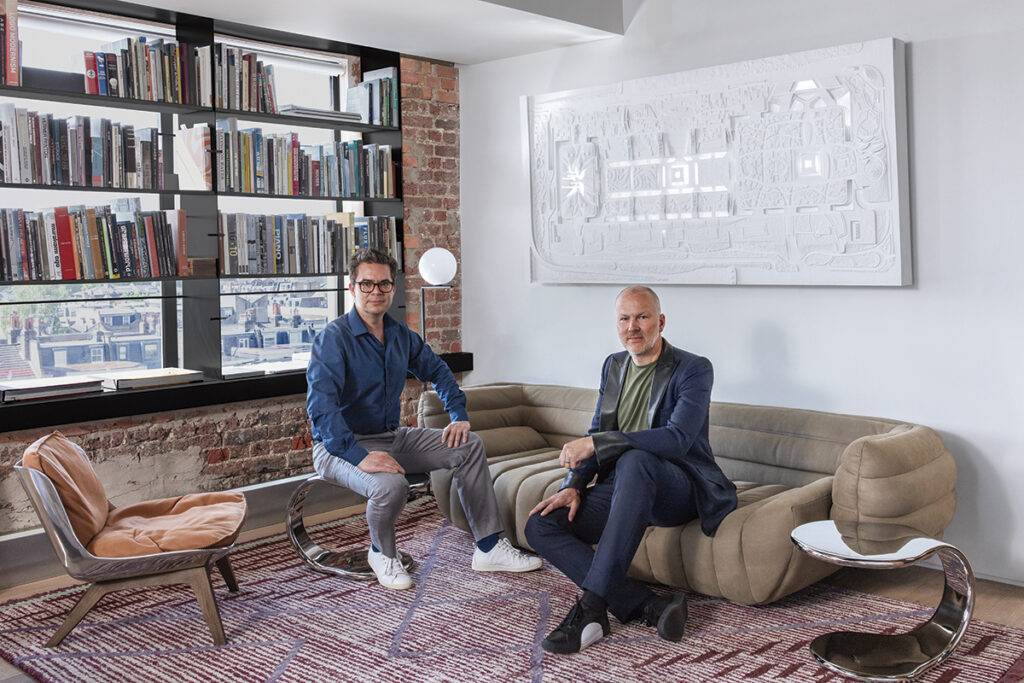
The Co-Founders met at Future Systems, with the ‘cementing moment’ of their partnership rooted in an immediate alignment in their design thinking and architectural approach, alongside a shared passion for retail and its experiential potential.
From the outset, they were intent on moving beyond the formulaic approaches prevalent at the time. Instead, their ambition was to embed a stronger sense of locality within each project, encouraging discovery and creating deeper, more meaningful connections through design. For Sybarite, experience is not an added layer or afterthought but a fundamental component of the architectural language itself, shaping how space is conceived from the very beginning.
In the early days of the business, their work with the Castiglioni family on Marni proved instrumental. They were involved from the brand’s conception through to its global rollout, delivering more than 250 stores over 15 years. Each space expressed Marni’s contemporary and avant-garde DNA while integrating local cultural references, establishing Sybarite’s approach as narrative-driven and deeply contextual.
“Around a decade later, our partnership with SKP marked a significant shift in scale and scope. After winning a competition, we were tasked with transforming Shin Kong Place in Beijing into a timeless department store brand, now one of the world’s leading luxury department stores,” says Mitchell.
“Beyond architecture, we developed a holistic identity – from logo and wayfinding to interior and architectural language, anchored by the signature SKP Curve. This expanded our role into retail strategy and masterplanning, positioning the studio on a global stage,” McIntosh adds.
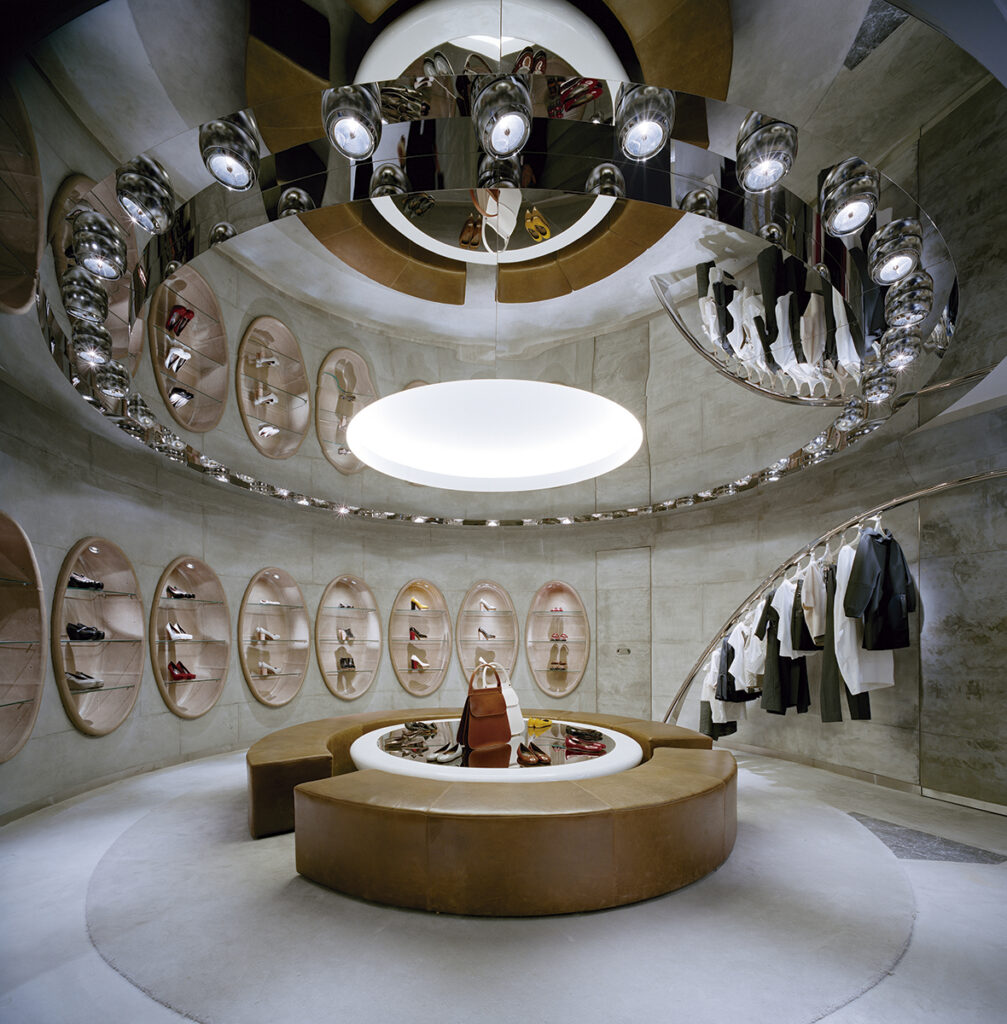
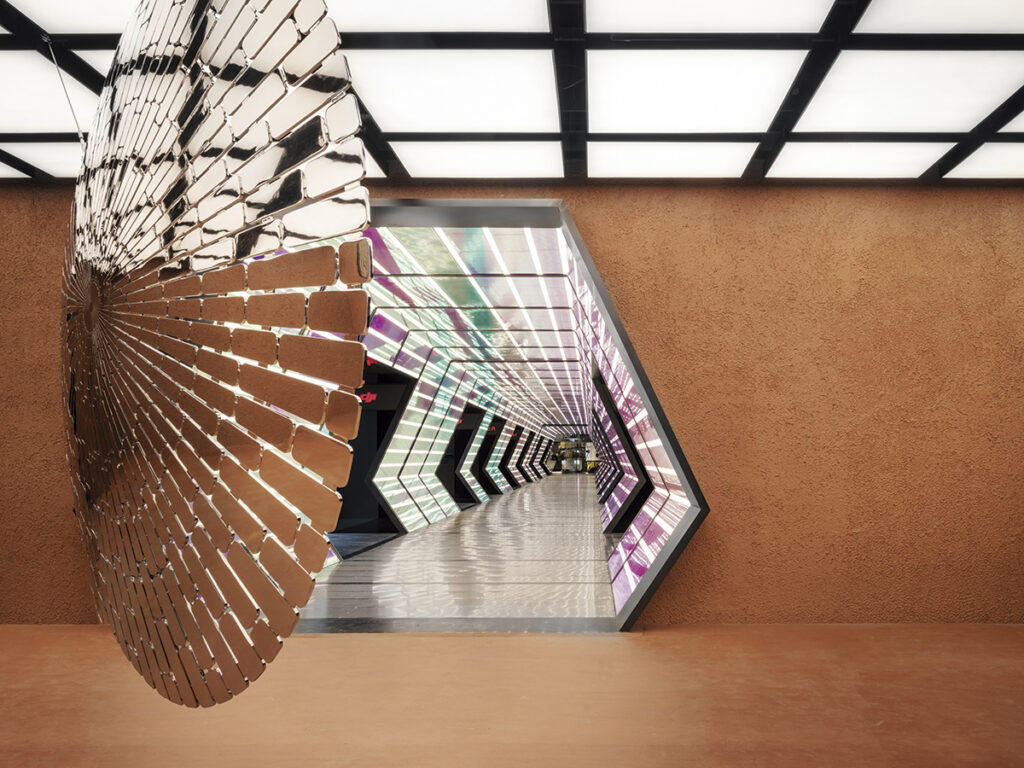
This evolution gave rise to SKP-S, the alter ego of SKP, an experimental, future-facing retail concept where Sybarite has created immersive, narrative-driven environments that challenge traditional definitions of retail success. Centred on experience per square metre, it redefines what a department store can be for the next generation.
Sybarite has always believed that the best idea wins. Choosing not to name the studio after themselves was a deliberate decision to remove hierarchy and ego, reinforcing a culture where the strength of the idea takes precedence over authorship.
With a deliberately boundaryless approach, the studio’s work is fundamentally brand-led and strategy-informed. Rather than imposing a house style, Sybarite works closely with each client to distil their DNA into a bespoke architectural language.
Alongside this, the studio has published two industry reports – The Future of Luxury (2019) and The Future of Experience (2025). These serve as a platform to continually challenge its thinking and remain forward-looking, anticipating where retail is heading rather than responding to where it has been.
At the end of last year, Sybarite delivered the first global flagship for Marine Serre. “It was about translating the spiritual and symbolic layers of the brand into space, creating a flagship that reflects a new chapter of experiential retail, where philosophy and architecture converge,” explains Mitchell.
The studio continues to evolve its work within department stores, recently delivering the ground floor transformation of Harvey Nichols. Reinterpreting the spirit of 1990s fashion editorial, the project introduces a more curated, narrative-led retail environment. Meanwhile, in Oslo, its collaboration with Steen & Strøm has introduced a lounge concept blending art and hospitality to encourage vertical movement and rediscovery within the store.
“In addition, our partnership with SKP continues to grow. Across Beijing, Xi’an, Chengdu and Wuhan, each project has been an opportunity to push the boundaries of retail and its role in urban living. With new projects in Hangzhou and Guangzhou underway, we are defining the next blueprint together,” says McIntosh.
SKP Hangzhou is conceived as a mixed-use destination where retail, lifestyle, hospitality, residential and civic life are seamlessly interwoven within a vertical format. The four-tower masterplan, anchored by a seven-storey SKP destination, explores what the studio describes as “hyper-hybrid” environments, where traditional sector boundaries dissolve.
For Sybarite, verticality opens new possibilities, not only in how people move through space but in how the retail experience extends into new ways of living and engaging. Internally, the scheme transitions from luxury into more contemporary, lifestyle-led expressions through shifts in materiality and programme. Spectacular atriums and double-height spaces introduce moments of drama, while a continuous spatial flow maintains cohesion.
Discussing the convergence of retail, hospitality and leisure, McIntosh notes that this is not a trend, but an inevitability. “Retail today operates as an orchestrated ecosystem, where every touchpoint – spatial, sensory and service-led, forms part of a unified, immersive whole.”
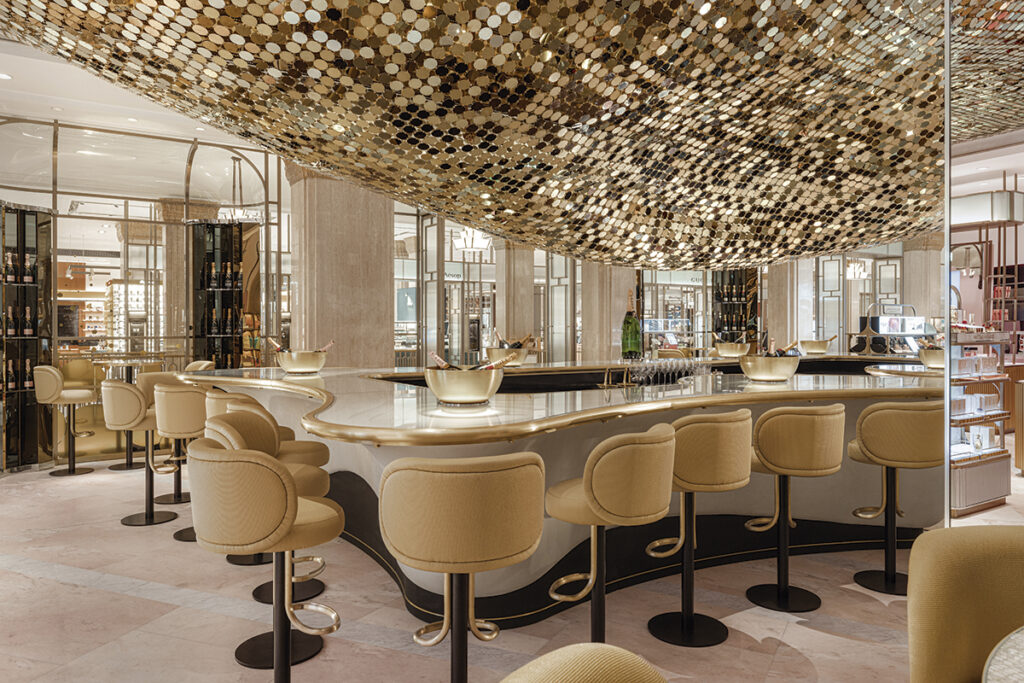
Mitchell adds that the studio’s role is to connect and compose these elements with clarity and intent. “One of the more compelling aspects is unexpected pairing, something we explored with the Moët & Chandon champagne bar within Harrods’ beauty hall. It was about creating a deliberate juxtaposition that reflects the fluid lives of contemporary consumers.”
As a studio driven by innovation, Sybarite ensures its work remains grounded in longevity. For Mitchell and McIntosh, true sustainability lies in what endures, creating a sense of “immediate heritage” through spaces that feel rooted and lasting, yet entirely contemporary. Sustainability, they argue, does not sit in opposition to luxury or craftsmanship, it defines it.
Looking ahead, the next generation of luxury retail will be shaped by a balance between personalisation and civic responsibility.
“On one hand, there is an expectation for highly tailored, seamless experiences where technology is fully integrated yet almost invisible. On the other, there is growing demand for spaces that foster connection, belonging and shared experience,” says McIntosh.
“Retail will increasingly take on a broader civic role, moving beyond transaction to become a platform for culture, wellbeing and everyday life,” Mitchell adds.
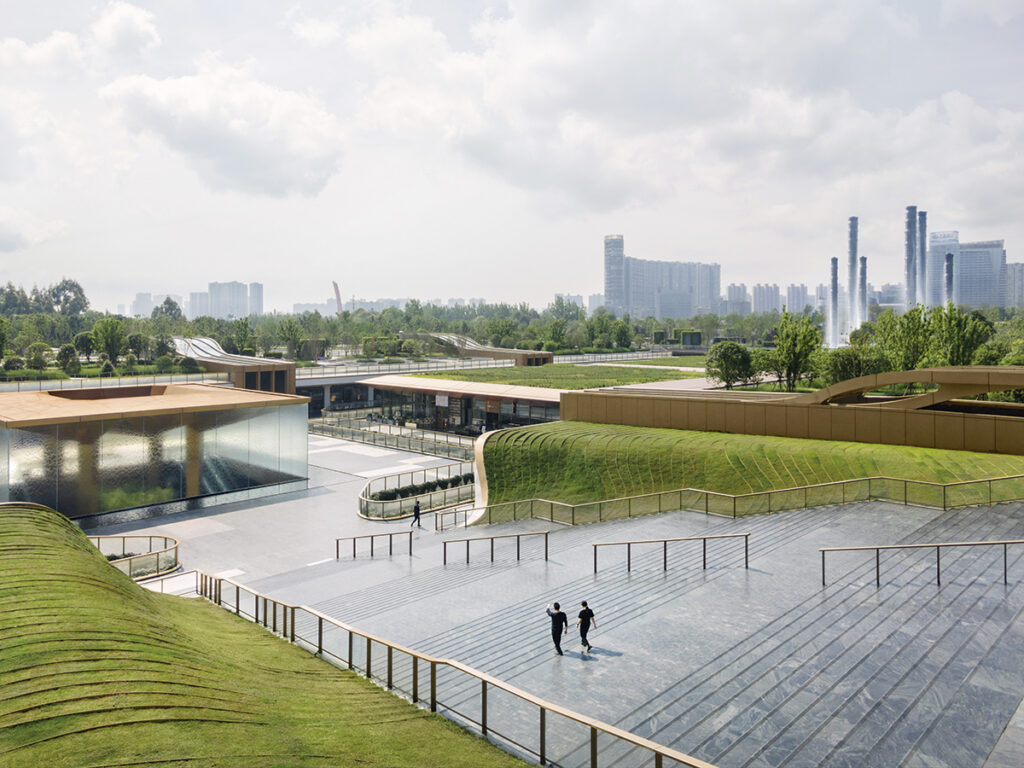
SKP Chengdu embodies this shift, setting a new benchmark through its pioneering approach to subterranean luxury retail within a biophilic park. It repositions retail as civic infrastructure, a landscape where commerce, nature and everyday life converge.
Similarly, SKP Wuhan creates a curated urban experience, where the department store and ‘K Avenue’ promenade interweave to form a fluid indoor-outdoor destination. Positioned within the city’s cultural district, it anchors a new lifestyle hub for Central China.
This is where the Co-Founders see their role – creating destinations that are not only exceptional in experience, but meaningful in how they contribute to the life of the city.
