

The future of successful destinations lies in mixed-use, experience-led placemaking to create authentic communities, stronger commercial resilience and reasons for people to stay longer. Here, Eva Diego, CEO of Hyphen, explains why experience-led destinations are replacing traditional retail-led development models.

For two decades, retail development followed a familiar formula. This was the age of mall culture, reaching a peak in the 1980s, with placemaking usually remote from cities and towns, often only accessible by car and designed around retail units and brands that generated footfall.
The model delivered remarkable success for many years. Originating largely in the US, it was replicated across the world as developers sought to meet growing consumer demand.
Yet over time, cracks began to appear. The rise of online retail, changing consumer expectations and the acceleration of these trends during the pandemic forced the sector to confront the reality that retail alone was no longer enough.
Today, the most successful destinations are those that offer something far more valuable than products, experiences.
This change has accelerated over the last decade, since it became increasingly clear that consumers wanted more from physical places than rows of shops. We have seen a growing emphasis on re-purposing existing assets and introducing mixed-use development models.
Rather than making retail the primary attraction, developers started integrating workplaces, leisure, hospitality, housing and community facilities into a single ecosystem.
The reasons for this are both commercial and human. From a real estate perspective, mixed-use developments make sense because they diversify risk. Office, residential and hospitality elements can support one another financially while generating activity throughout the day and evening.
But the real reason these destinations succeed is because they reflect how people live.
Human beings are fundamentally social. We thrive on connection, for work, leisure or simply spending time with others. Mixed-use destinations create opportunities for these interactions, planned and spontaneous. They provide the conditions for communities to form and flourish.
This is particularly relevant in the post-pandemic era. While technology allows us to work, shop and communicate from almost anywhere, it has also heightened the value of physical experiences. People increasingly seek out places where they can gather, socialise and engage with their surroundings in meaningful ways.
Across Europe, Asia, Australia and Latin America, some of the most successful destinations share a common characteristic of extending beyond the commercial transaction. They embrace placemaking.
The strongest examples understand their relationship with the surrounding community. They consider how visitors arrive, what sits around them and how people move through the wider area. They create high-quality public spaces that are welcoming, accessible and inclusive for everyone.
Crucially, they also acknowledge local identity. One of the most common mistakes in development is assuming that success can simply be replicated from one location to another. While global best practice provides valuable lessons, the most successful destinations are rooted in their own culture and context.
People are increasingly drawn to experiences that feel authentic and distinctive. A destination in Tokyo should not feel like a destination in London. A retail concept that succeeds in Ibiza may need a completely different expression in Singapore or Mumbai.
Brands understand this increasingly well. The rise of curated experiences, collaborations, pop-up concepts and location-specific offers reflects a broader transition towards local relevance.
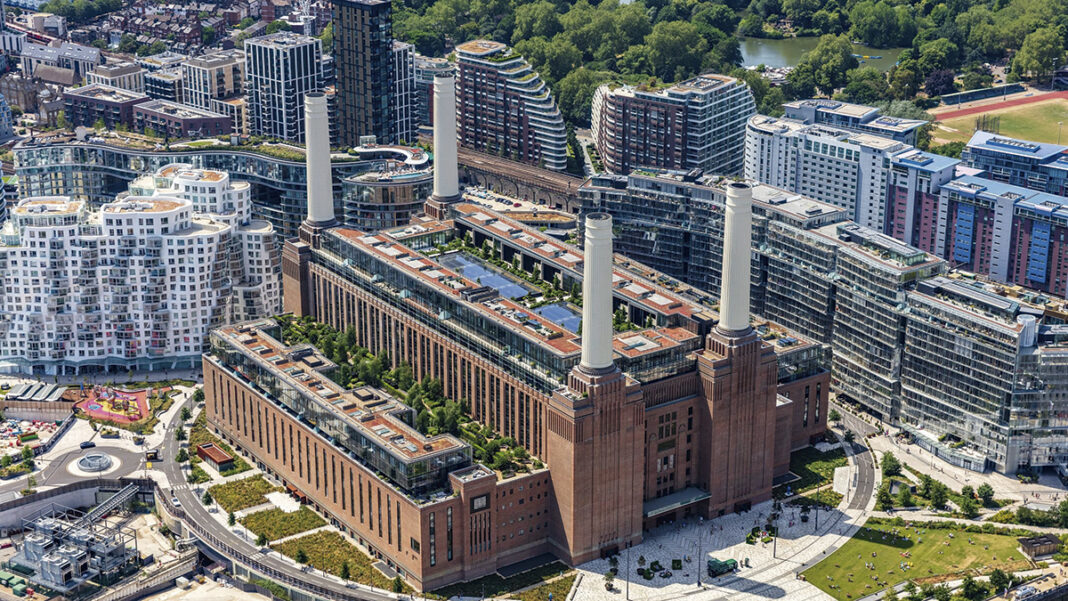
This explains why destinations such as Battersea Power Station in London have attracted so much attention, with a successful combination of heritage, architecture, hospitality, workplaces, public realm and community activity. The destination becomes part of the city rather than a place disconnected from it.
The same principle can be seen in many of the world’s most successful retail environments. Whether they are integrated into city centres, transport hubs or larger mixed-use districts, they offer visitors reasons to stay rather than simply reasons to spend.
For architects and designers, this evolution brings both responsibility and opportunity.
We are trained to think about how people live, work, learn, play and connect. Retail is only one part of that equation. The challenge is to create places that remain relevant over decades rather than years and be flexible enough to evolve alongside changing patterns of behaviour.
No one can predict exactly how increasingly resourceful consumers will shop in ten years’ time. Artificial intelligence, new digital channels and changing lifestyles will continue to reshape the relationship between brands and consumers. What remains constant, however, is people’s desire for memorable experiences and human connection.
People remember where they gathered with friends, discovered something unexpected or felt connected to a community. Those experiences create emotional connections that endure long after a purchase has been forgotten.