


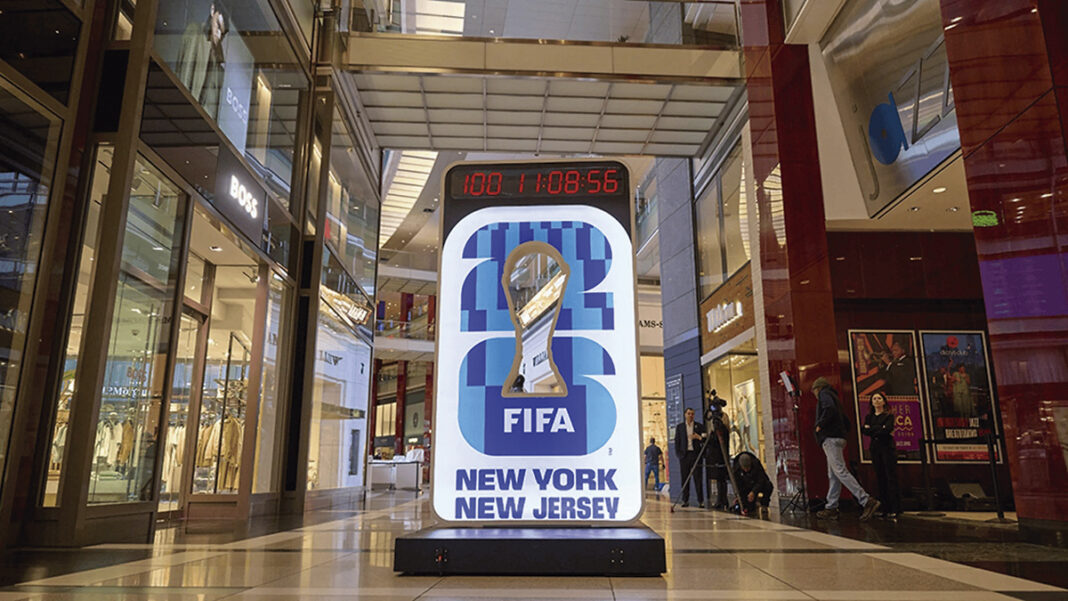
The 2026 FIFA World Cup is almost here and in this article, Chris Fletcher, CEO of Visualsoft highlights why retailers purely focused on replica kits and licensed merchandise are probably missing out on a much bigger opportunity.

The way consumers engage with major football tournaments has changed a lot – and the spending patterns Visualsoft have tracked across recent events tell a story that should reshape how every category of retailer approaches the next few months.
Taking a closer look at what happened to retail during the UEFA Women’s EURO 2025 and the Paris 2024 Olympics, the picture that emerges is striking. Football and major sport more broadly, has become a cultural moment that people buy into across lots of different areas of everyday life, not just in the sports aisle. Understanding that change is the difference between capturing a significant commercial opportunity and watching it pass you by.
Let me start with the data that surprised even us. During the Women’s EURO 2025, childrenswear revenue rose by 54 per cent. Fashion and footwear climbed 26 per cent. Neither of those categories has an obvious connection to a football tournament in the traditional sense, yet both significantly outperformed expectations. At the Paris Olympics, electrical goods and appliances revenue rose by 44 per cent, comfortably ahead of sports equipment.
What these figures show is that people aren’t just buying a shirt and leaving it at that. They’re spending on an experience that surrounds the match – themed outfits for the family, kidswear for a watch party, a new TV for the living room, hosting essentials for friends coming over. The match is the occasion. The shopping basket reflects the atmosphere people want to create, the connection they want to have with friends and family and how they want to spend that time together.
For 2026, this behaviour is expected to intensify. The tournament is hosted across the US, Canada and Mexico, which means a wide spread of kick-off times for viewers. That will push even more fans towards home viewing rather than pubs or stadiums and that creates a direct commercial tailwind for the home viewing economy. Retailers in electronics, homeware, food and drink – even soft furnishings – have genuine reason to be planning World Cup campaigns right now.
Another significant pattern is how condensed tournament spending has become. Purchase spikes are now more predictable in their timing, but more compressed and intense in their nature. In previous tournaments, sports and outdoor sales rose 30 per cent ahead of semi-finals, while childrenswear orders jumped 45 per cent in the days immediately before key matches.
For 2026, it is anticipated that these peaks will be sharper and shorter. Consumers are leaving purchases later but converting more decisively when the moment hits. Mobile-first shopping behaviour and faster fulfilment expectations have changed the rhythm of tournament retail entirely.
The practical implication is that wider campaigns solely built around the full tournament window will underperform. Retailers should be planning around specific fixtures – quarter-finals, semi-finals, or any standout matches – and be ready to flex their stock, promotions and fulfilment rapidly in the 48 hours around those games. If you can’t promote the right product and guarantee timely delivery in that window, a significant portion of the demand will go elsewhere.
On top of all of this, there’s also the growing influence of younger shoppers and the platforms they use to discover and decide to buy. Gen Z and younger Millennial consumers are increasingly shaped by TikTok, Instagram and YouTube creators rather than official tournament marketing or brand campaigns. That means a viral moment during a match – such as a player’s choice of footwear, an outfit spotted in the crowd, or a trending watch-party aesthetic – can drive product demand within hours.
This dynamic amplifies categories that traditional sports retail analysis tends to underestimate: fashion accessories, novelty products, limited-edition drops, community-led campaigns. For retailers with agile social commerce capabilities and creator partnerships already in place, these unpredictable spikes represent high-intent demand that is winnable. For those without, it is demand that will convert somewhere else.
At the centre of this is a shopper who moves fluidly between channels and expects brands to keep up. Our research found that 88 per cent of shoppers now move between online and in-store when buying from the same retailer and 74 per cent say they feel more confident purchasing from brands that offer a joined-up experience. During a tournament where purchases are often last-minute and emotionally charged, that frictionless journey isn’t a nice-to-have – it’s what determines whether a customer completes a purchase or abandons it.
There’s a much bigger retail opportunity around the 2026 World Cup for brands that understand what the event means to consumers today. It’s emotional, social and increasingly spontaneous. It’s a family occasion, a hosting moment, a social media event and a shopping trigger all at once.
The opportunity is significant – but only for those who see the full picture, not just the shirt.
