
The Future Takes Off
As global travel surges and technology accelerates, the airports of tomorrow are being reimagined as seamless, sustainable and smart hubs, not just for transit, but for experience. From biometric boarding and AI-powered operations to immersive retail spaces and carbon-neutral terminals, these next-generation airports promise to transform how we shop, relax and move through the world.
The airports of tomorrow are being reimagined as more than just places of transit, they are becoming dynamic, intelligent ecosystems that blend technology, sustainability and experience. As passenger volumes rise and expectations shift, airport design and operations are evolving to offer seamless, stress-free journeys from curb to gate. Biometric check-ins, contactless security, and AI-powered logistics are already replacing traditional processes, creating environments that are faster, safer and more intuitive.
Retail is also undergoing a transformation. No longer confined to duty-free basics, airport retail is becoming a curated, experiential part of the journey. Travellers can expect immersive, digitally enhanced shopping environments, personalised offers based on travel behaviour and a growing emphasis on local culture and craftsmanship. Luxury brands, pop-up experiences and wellness-focused outlets are turning terminals into lifestyle destinations in their own right.
In their eighth issue of inSites, umdasch The Store Makers highlight that with Gen Y set to account for the largest share of global air travel spending by 2035, travel retail must do all it can to remain relevant to this demographic. Millennials’ hunger for experiences is also shaping their shopping and travel behaviour, forcing retailers to rethink their store design and marketing strategies. Together with Gen Z – whose values are driven by issues such as digitalisation, authenticity and sustainability – these generations are influencing not only retail in general, but also the concept of the airport of tomorrow.
Their article goes onto highlight five trends shaping the airports of tomorrow, which are:
Trend 1 – Experience-Orientation
Travellers often spend several hours at the airport. To make the waiting time more exciting for passengers, airports are increasingly transforming their areas into entertainment hubs that combine retail with experiences. This creates places where brands are presented in a tangible, interactive and emotional way.
Through shopfitting, we have the opportunity to help travel retailers create this quality of experience – through immersive store concepts, customised pop-up formats as temporary stages and the targeted use of interactive technologies. Whether through the use of virtual reality or more traditional store elements: The aim is to create retail spaces that are memorable.
Trend 2 – Digitalisation
Digitalisation is transforming the airport shopping experience. Especially in highly frequented locations where time is of the essence, smart stores offer customers unbeatable efficiency and an innovative shopping experience. Autonomous shops and smart shopping concepts such as the cashierless REWE To Go at Frankfurt Airport or the robot restaurant SELF in Lisbon are examples of how technology is already revolutionising travel retail. Travellers are also looking for maximum flexibility and convenience. The need for a seamless shopping experience is particularly strong among younger audiences: For Gen Y and Gen Z, who are used to being digitally connected anytime, anywhere, an omni-channel strategy is not a nice-to-have, but a must-have. Sophisticated store concepts allow physical spaces to be combined with digital experiences in shopfitting: Whether it is automated self-checkout, digital product information or furnishing elements for click & collect solutions – by integrating holistic concepts and one-stop shop solutions, umdasch supports travel retailers in the realisation of future-proof stores. Gebr. Heinemann – a long-standing customer of umdasch The Store Makers – operates duty-free shops and brand shops at airports around the world and shows how it can be done. With its Click & Collect service, the travel retailer offers its customers a relaxed shopping experience from the first to the last second: products can be pre-ordered online and collected on the day of travel or conveniently delivered to the customer’s home.
Trend 3 – Sustainability
In addition to sustainability issues, the decline in affluent business travellers is also driving this trend. At the same time, more young travellers are looking for affordable, sustainable shopping alternatives. Store concepts that not only incorporate sustainability into the product range, but also in the construction and design, are becoming more popular: through resource-saving materials, modular construction and design. The result is travel retail that makes sense in the long term – both ecologically and economically.
Trend 4 – Authenticity
The generations that are becoming increasingly relevant to airports expect more than just functionality and supposedly lower prices: For them, brands are not just the sum of their products, but must convey a holistic and authentic image in all its facets. Travel retail has a unique opportunity here with the concepts of “Sense of Place” and “Sense of Belonging” to emotionally connect travellers from all over the world to the destination with local flair.
Trend 5 – Self-Care & Individuality
The trend towards wellness, sports and mindfulness offerings at airports is a response to the values of Millennials and Gen Z. These generations place a high value on self-care and mental health – not only in everyday life, but also when travelling. Travellers expect services that are good for both body and mind, such as nap cabins, yoga lounges and relaxation oases. Rather than focusing exclusively on premium lounges, the aim is to create relaxation areas for everyone. Wellbeing zones can also be integrated into the retail environment through innovative space concepts, special furnishings and multisensory design. And it is precisely this that is becoming a decisive factor in the competition for travellers: Where people feel good, they stay longer.
The trendpaper by umdasch The Store Makers concludes by saying the airport of tomorrow will be more than a transit point – it will be a destination that enriches the travel experience and seamlessly adapts to the needs of a new generation of travellers.
Overall, the airports of the future are set to become hubs of connection, innovation and experience -not just gateways to other places, but destinations in themselves. Over the coming pages, RLI will highlight some stand-out examples of this around the globe.
Airport Projects Around the World
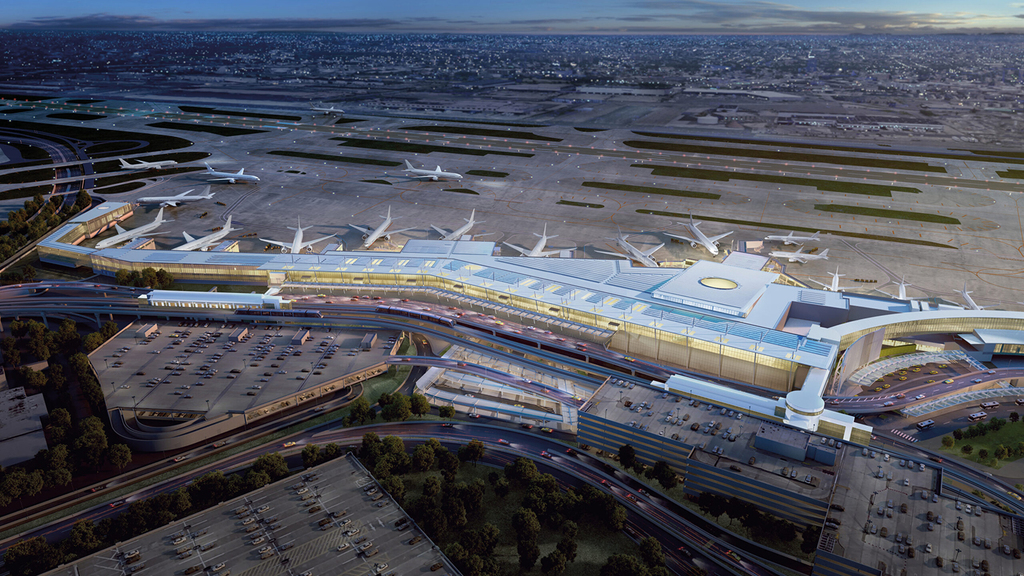
The Port Authority of New York and New Jersey and JFKIAT, the operator of John F. Kennedy International Airport’s Terminal 4 (T4), has announced a new line-up of food and beverage concessions that will include an attractive mix of local and national brands that will create a unique New York sense of place at the recently expanded terminal. Notable local brands that will enliven the passenger experience include Bessou, Dos Toros Taqueria, Boqueria, Eataly, the James Beard Foundation’s Good To Go by JBF™ and Villa Russo Café, a Queens-based family operated business. The selection of these iconic and premium brands was curated following a competitive process that awarded HMSHost, a global leader in travel dining, the contract to oversee their operations at Terminal 4.
Elsewhere at the airport, there has also been announced a $125M commercial redevelopment program for Terminal 8 at John F. Kennedy International Airport (JFK). The project will feature a new Great Hall and is expected to bring more than 60 new shopping and restaurant offerings to the terminal. Following the recent completion of a $400M expansion of Terminal 8, the commercial redevelopment will further enhance the customer experience at the terminal with a complete redesign and expansion of the concessions program, including new dining, retail, duty-free shopping, performance space and new digitally enabled experiences for customers.
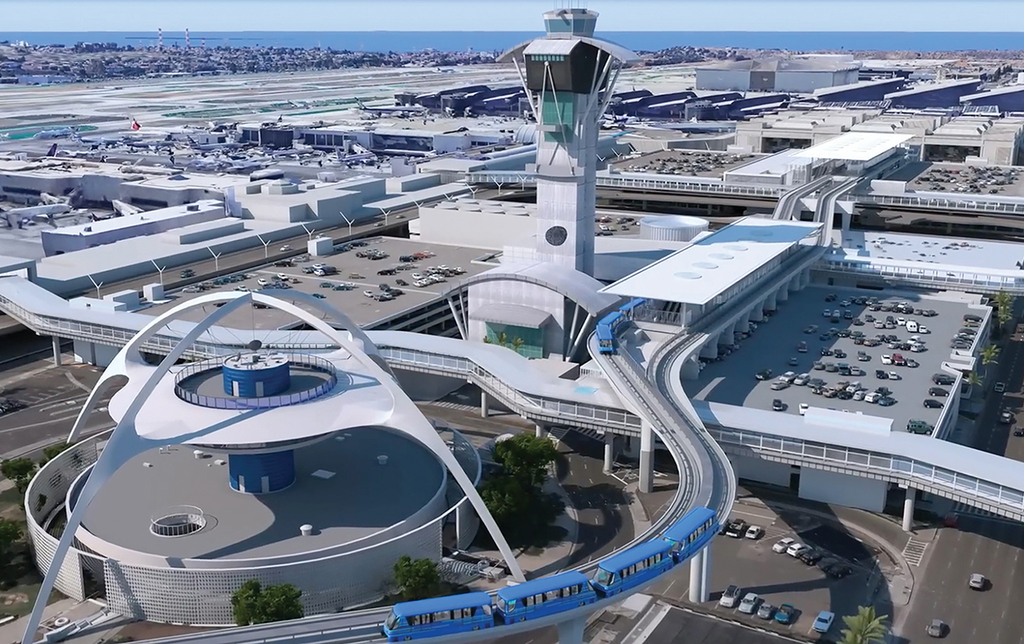
Los Angeles International Airport (LAX) is undergoing a $30bn transformation, large-scale upgrade to enhance the airport’s infrastructure and passenger experience. This ambitious project aims to create a more modern and efficient travel hub, particularly in anticipation of the 2028 Summer Olympics. The project includes significant upgrades to existing terminals, including renovations of Terminal 6 and construction of a new Midfield Satellite Concourse. While some initial plans for new terminal construction have been adjusted, the project still includes expansions and renovations to existing facilities, including the Tom Bradley International Terminal. The project at LAX is a significant investment in the future of the airport and aims to create a more modern and efficient travel hub that will benefit passengers and the local community.
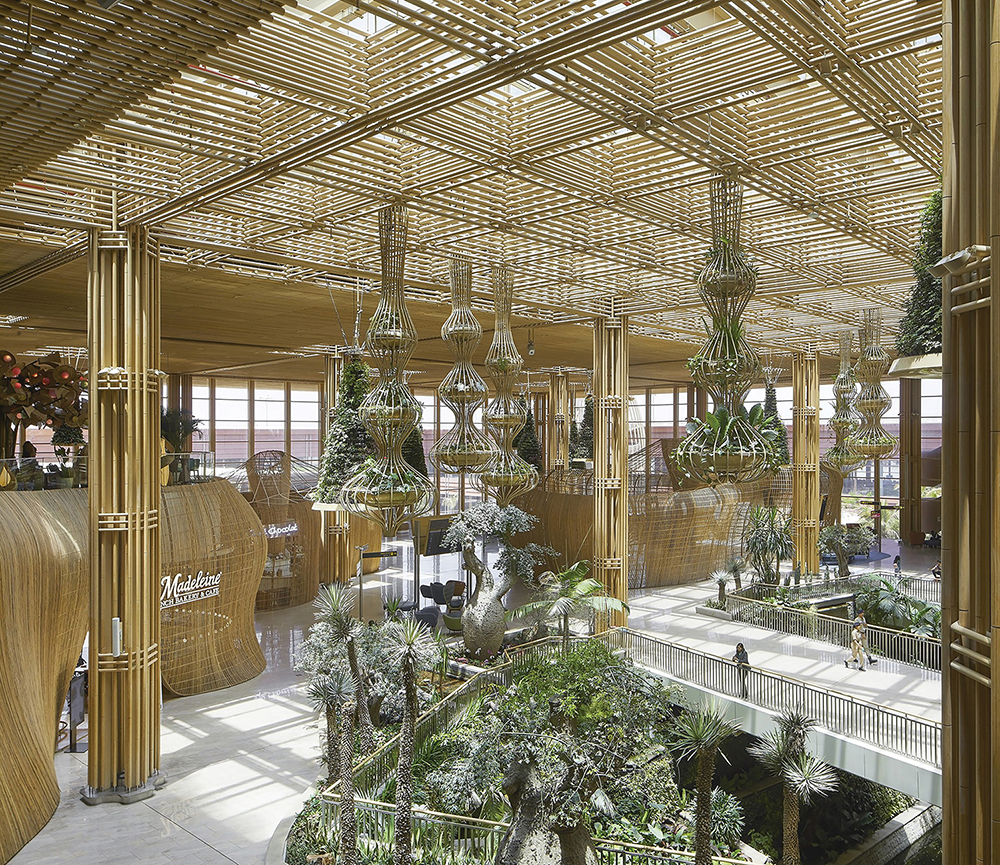
Launched last year, Enter Projects Asia designed 12,000sq m of retail, hospitality and relaxation space in Kempegowda International Airport’s new departure terminal. Inspired by the 20th-century Garden City urban planning movement on which Bengaluru is based, the client wanted a welcoming, nature-centred space for the Indian airport’s 20 million annual visitors – a stark contrast to the conventional, corporate airport aesthetic. The departures lounge features a series of sculptural rattan pods – some as tall as 8 m – housing hospitality, retail and relaxation areas. Each section was handwoven by traditional Thai artisans, providing them with economic support.
Kansai International Airport’s fully refurbished Terminal 1 has opened to accommodate the millions of passengers expected to pass through the iconic building to attend to World Expo in Osaka. The new Terminal 1 includes a 60 per cent increase in the size of the international departure lounge and retail offerings, the introduction of innovative retail layouts based on passenger experiences and the creation of a seamless processing experience. Kansai Airports and global design firm Populous have been working for more than seven years to completely reimagine the airport’s floor plan, bringing a new level of efficiency and experience for travellers to western Japan. In October 2022, KIX opened the new Phase 1 domestic area followed by the new international area. Phase 2 of the project was completed in December 2023 and included 6,650sq m of additional airside retail outlets, 1,130sq m of food and beverage space and a new centralised immigration area. Phase 3 was completed on 27 March, 2025, allowing the consolidation and extension of the security screening area to be ready before World Expo 2025 begins in April in Osaka. A new commercial area includes 13 stores across international departures, international arrivals and a street food court.
Thailand is set to begin construction of U-Tapao Aviation City later this year. The $8.8bn project involves upgrading the Vietnam-war-era Utapao Airport into Thailand’s third main international airport. U-Tapao Airport will connect with Don Muang Airport and the country’s main Suvarnabhumi Airport. The goal of the project is to create a modern aviation hub that offers a range of amenities and business opportunities to complement the existing U-Tapao airport.
Located 40km to the east of Ho Chi Minh City, and the city’s second airport, Long Thanh International Airport will play a crucial role in improving regional connectivity, serving as a hub for both domestic and international flights. Conceived by Heerim Architects, the terminal building takes the form of a blooming lotus flower, boasting an impressive total GFA of 373,000sq m. Arup is the structural engineering and civil engineering consultancy for the detailed design stage of the terminal building. When finished, Long Thanh International Airport will provide convenient travel options to travellers across Southeast Asia and beyond. The entire airport will be operational after the third and final phases is finished, which scheduled for after 2035.

Western Sydney International Airport (WSI) opens its doors in 2026 and the world will be more connected to Sydney’s cultural heartland than ever before. This is an airport experience that will be unlike any other in Australia – Seamless and sustainable, intuitive and exciting. The airport will feature a 7,000sq m retail precinct offering a wide range of shopping and dining experiences. This will include duty-free stores, foreign exchange, travel essentials, an Australian experience zone, food and beverage outlets and more. The airport is also developing a business precinct with opportunities for retail, warehouse and distribution and other businesses.
Manchester Airport’s Terminal 2 is undergoing the final phase of its ten-year, £1.3bn transformation and it is set to be completed in this summer, with 22 new retail and food & beverage (F&B) outlets joining the existing offerings. This final phase will add a food hall, new cafes, bars and restaurants, as well as a selection of new retailers. Highlights include new luxury retailers, including Chanel, alongside other big names like Pandora, LEGO, WH Smith and Boots; The Great Northern Market, a 472-seat food hall bringing the best of Manchester’s street food scene to the airport, featuring six international street food kitchens including a Gooey desserts unit; new cafes, bars and restaurants, including Fever-Tree, JD Wetherspoon , Joe And The Juice and Greggs, plus an extension to the popular Amber Alehouse by Salford brewery Seven Bro7hers and a new 2,165sq m World Duty Free store featuring well-known brands like Christian Dior, Gucci, YSL, Charlotte Tilbury and more.
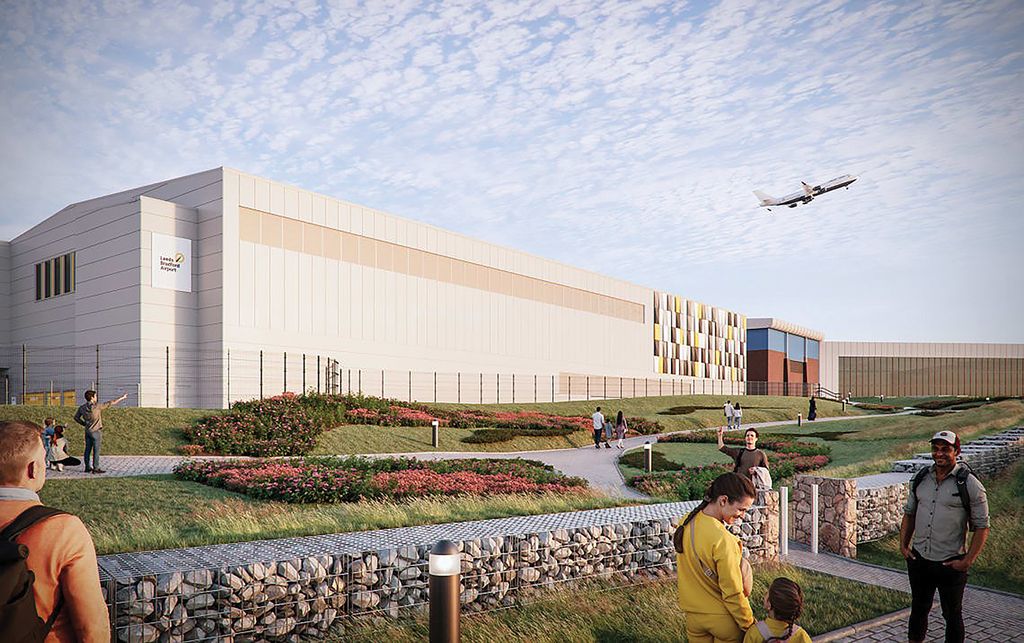
Leeds Bradford Airport (LBA) has showcased an exciting glimpse into its transformative £100M terminal expansion. The major redevelopment, set to be completed in time for the summer 2025 holidays, is designed to elevate passenger experience while reinforcing the airport’s commitment to sustainability and regional economic growth. The new departure lounge, meticulously designed for optimal passenger comfort, will feature enhanced seating areas and an improved retail and dining offering. Meanwhile, a striking exterior view highlights the terminal’s contemporary design, showcasing LBA’s vision for a state of the art, efficient and environmentally friendly airport. After the terminal extension opens, the second phase of the regeneration project will get under way, with a redevelopment of the existing terminal.
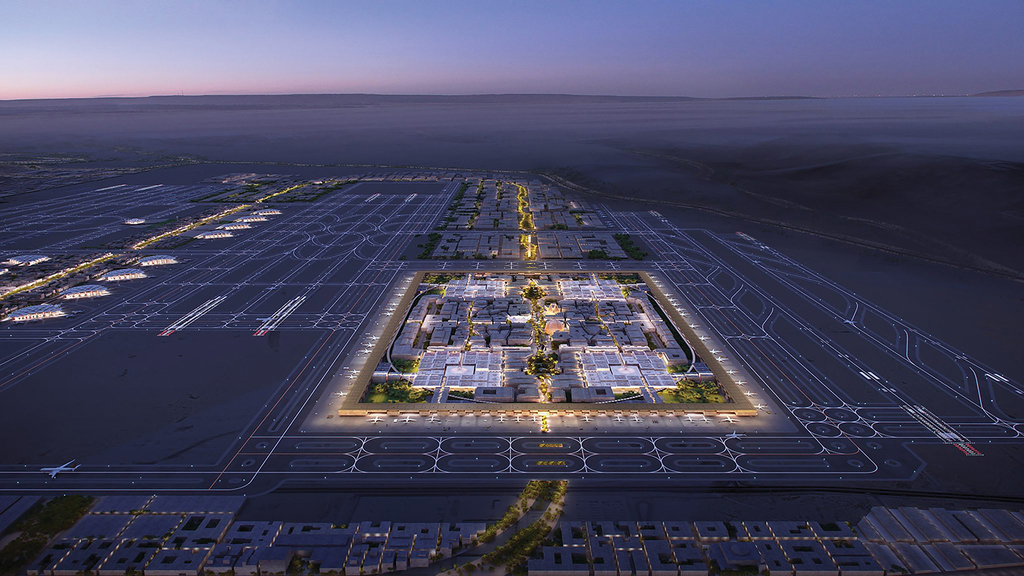
King Salman International Airport Development Company (KSIADC), backed by Saudi Arabia’s Public Investment Fund, has started construction on King Salman International Airport (KSIA) in Riyadh. Local firm Almabani has been appointed to undertake the early works, with mobilisation already under way. The project covers an area of about 57sq km, allowing for six parallel runways and will include the existing terminals at King Khalid International airport. It will also include 12sq km of airport support facilities, residential and recreational facilities, retail outlets and other logistics real estate. If the project is completed on time in 2030, it will become the world’s largest operating airport in terms of passenger capacity, according to GlobalData. Designed by Foster + Partners, the airport aims to accommodate up to 120 million travellers by 2030. It targets to handle 185 million travellers by 2050 and process 3.5 million tons of cargo. The designers plan the airport to “become a dynamic aerotropolis centred on a seamless customer journey, world-class efficient operations and innovation. Riyadh’s identity and the Saudi culture will be taken into consideration in the airport’s design to ensure a unique travel experience for visitors”.
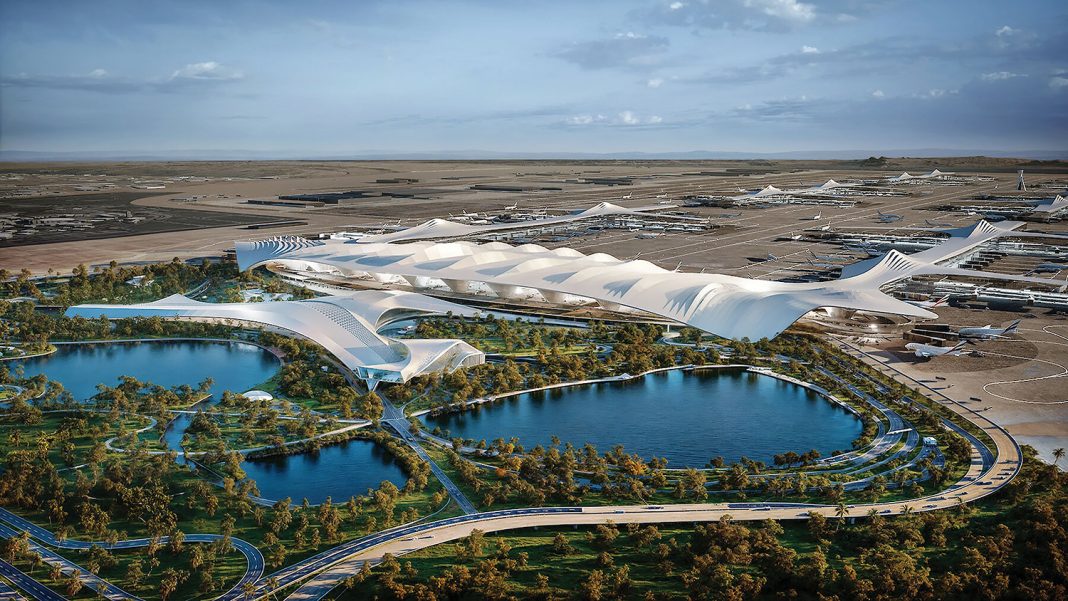
Set to replace Dubai International Airport (DXB), the $35bn Al Maktoum International Airport is, upon completion, set to become the world’s largest airport, with a final capacity of 260 million passengers, 400 aircraft gates and five times the current capacity of Dubai International Airport. The central piazza of the concourse, where the APM drops off passengers, will feature expansive retail, dining and entertainment spaces and the development is expected to more than double retail space to at least 100,000sq m. The first phase of Dubai’s new airport is expected to be completed within ten years, which will see the airport accommodate 150 million passengers annually.