



Innovation without Borders
A company that builds experiences where people work, live, shop, dine and entertain themselves; Design International creates breathing spaces that bring local values to life and bond people together. As we catch up with CEO Davide Padoa, we learn more about how the business has evolved in recent years and what its goals are moving forward.

Historically, Design International (DI) built its reputation on pioneering mixed retail and entertainment destinations that redefined how people engage within strong and attractive commercial spaces. Landmark projects such as Odysseum in Montpellier, France and Morocco Mall in Casablanca, Morocco, exemplify their legacy of innovation.
Over the past 10-15 years, DI has grown far beyond retail. Today their portfolio includes complex urban regeneration projects that mix residential, hospitality and workplace environments, reflecting how cities and communities are evolving. During this time, their focus has remained the same, to create meaningful “meeting places” that encourage connection, inclusivity and a sense of community.
DI has adapted by repositioning retail as part of a larger urban framework rather than a standalone destination. As people’s lifestyles have become more fluid, blending living, working and leisure, their approach has shifted toward creating mixed-use environments that reflect this integration.
“Projects such as Lykli Noida, which is currently under construction and due to open in late 2028, early 2029, demonstrates this evolution,” highlights Davide Padoa, CEO of Design International. “Retail is embedded within a wider ecosystem of public amenities, cultural events, unforgettable experiences and social infrastructure. The focus is no longer on attracting visitors for a single purpose, but on creating destinations that support multiple activities throughout the day and over time.”
Balancing a global design language with local identity is really at the heart of how DI works. Padoa feels there is definitely a shared mindset that runs through all their projects. They listen before they design and they look to understand the culture, the climate, the rhythms of daily life and how people actually live in the area. That process naturally leads to very different outcomes in different parts of the world and whilst it is true that there are habits that are similar around the world, DI’s designs focus on the differences.

A perfect example of this is Ada Mall. On one hand, it embodies their broader design values; open, social spaces, fluid movement and architecture that invites people to experience the destination, not just pass through it. On the other hand, its form, materiality and spatial organisation are deeply rooted in the local context. The curved façade and terraces take inspiration from the nearby river Sava and the lush landscape of Ada Ciganlija, harmonising the building with the natural surroundings and the city’s outdoor lifestyle. Ada Mall is a reflection of Belgrade’s connection to nature and leisure culture.
“Our ethos has also been well engrained into the MaxiMall Pompei project. This brand new development is a vibrant mixed-use destination, integrating retail, a 136-room Moxy hotel and a Discovery cultural hub, while regenerating and re-activating the surrounding urban area. MaxiMall Pompei exemplifies the studio’s evolution from shopping mall specialists to creators of experience-led, human-centric and contextually rooted destinations that blend culture, education, leisure and urban regeneration,” highlights the CEO.
Projects such as Morocco Mall and Ferrari Centro Stile have really shaped how the practice thinks about experiential architecture. As the most visited building in Morocco, the mall has become a social hub and it showed them, as well as all its daily guests, how a space can be more than retail, becoming a lively, social and immersive destination. Meanwhile, Ferrari Centro Stile pushed them to translate a brand’s identity and emotion into the very form and flow of a building. Sitting right in the heart of the Ferrari factory, it is visible only by employees and a select number of ‘ferraristi’ who get their cars tailor-made, so the site needed to resemble acceleration, movement and above all else, elegance.
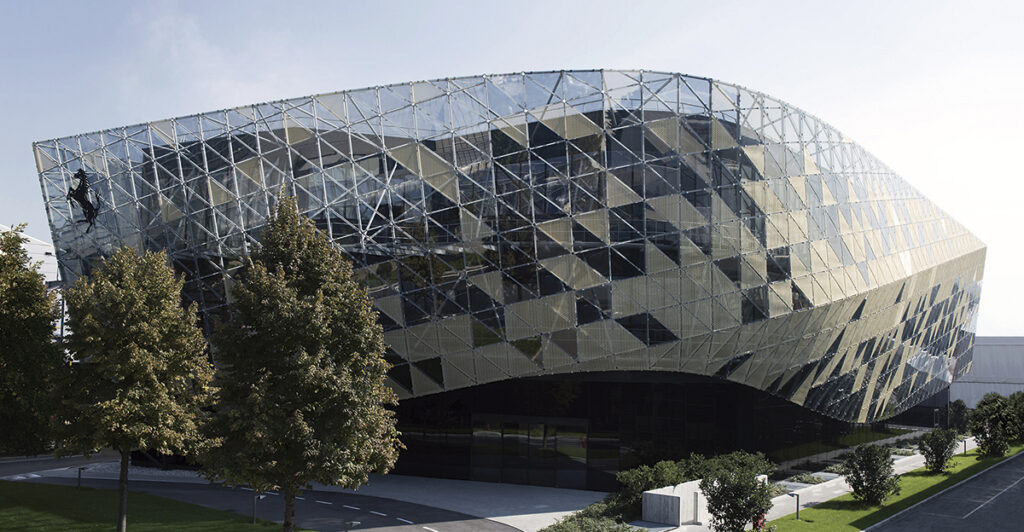
Padoa highlights that together, these projects reinforce that their work is not about buildings, it is about creating experiences that connect and resonate with people, reflect their context and leave a lasting impression. In both cases, the buildings resemble a key brand of their nations.
DI currently uses social media and digital platforms primarily to share updates on their projects and highlight milestones across their global portfolio. While their focus so far has been on keeping audiences informed, they see great potential to use these channels more creatively, to tell the stories behind their designs and show how people experience their spaces and engage with wider communities.
A concept that is at the core of their approach is sustainability, which shapes both their design philosophy and how they deliver projects. They aim to create long-lasting, adaptable spaces that are environmentally responsible, socially valuable and resource efficient, rather than treating sustainability as an afterthought.
The idea of circular thinking is embedded through strategies such as using durable and locally sourced materials, designing for adaptability and reuse, integrating efficient systems and regenerating challenging sites.
“A strong example of this is Silicon Central Mall, which was designed to achieve LEED Platinum certification, targeting the highest sustainability standards and winning recognition for its environmental performance,” says Padoa. “Another project is Infinity Nord, where a previously petrol polluted brownfield site has been transformed into a vibrant mixed-use residential destination, demonstrating how urban regeneration and environmental remediation can unlock new potential in underused land.”
Beyond technical measures, they also prioritise social and cultural sustainability, creating places that foster community, wellbeing and meaningful interaction. One of their unique areas of focus is what the company calls the fifth living façade; they regenerate large roof areas and give them back to the community through public access and activation programmes.

Today, DI is positioned as a global leader in creating mixed-use developments that ultimately improve people’s lives. They design destinations that foster connection, interaction and shared experiences while achieving better, stronger and faster financial results within their catchments.
“One of the biggest challenges and opportunities in the future will be designing with affordability in mind, while elevating quality standards and re-using existing outdated properties,” Padoa comments.
“Developments will need to be adaptable, resilient and socially meaningful, balancing technological innovation with human-centric design. We always design starting from the common areas and the open areas; rooms and functions then follow swiftly. We want to do today what others will do tomorrow.”
