


Retail real estate projects across Latin America are entering a new phase of growth and reinvention as developers embrace mixed-use concepts, experiential retail and urban regeneration to meet changing consumer habits. In this feature, RLI explores the projects and trends reshaping the region’s retail landscape and redefining how Latin America shops, works and socialises.
Across Latin America, retail real estate is undergoing a profound transformation. From large-scale mixed-use developments in Mexico City and São Paulo to lifestyle-driven retail destinations in Bogotá, Lima and Santiago, developers are rethinking the role of commercial space in some of the region’s fastest-evolving urban markets. No longer defined solely by traditional shopping centres, today’s projects are blending retail with entertainment, hospitality, residential and public space to create destinations built around experience, convenience and community. Developers and landlords are increasingly focused on experiential retail, creating destinations that encourage longer customer visits through restaurants, leisure attractions and cultural events.
The shift is being driven by a combination of changing consumer expectations, renewed investor confidence and rapid urban growth. As Latin America’s middle class continues to expand and digital commerce reshapes shopping habits, developers are responding with more flexible, integrated and technology-led concepts designed to attract both global brands and local consumers. Sustainability, accessibility and mixed-use density are also becoming central to new projects as cities seek smarter ways to accommodate growth.
Despite economic and political volatility in some markets, retail development activity remains strong across the region. International retailers continue to view Latin America as a long-term growth opportunity, while domestic developers are increasingly focused on creating spaces that reflect local culture and evolving lifestyles. The result is a new generation of retail real estate projects that is reshaping urban landscapes and redefining the future of commerce across Latin America.
Looking ahead, the outlook for Latin American retail real estate is broadly positive. Continued urban growth, rising consumer spending and the integration of digital and physical retail channels are expected to support demand. However, market performance will remain uneven, with modern, experience-led retail destinations likely to outperform older and less differentiated assets.

Projects Across Latin America
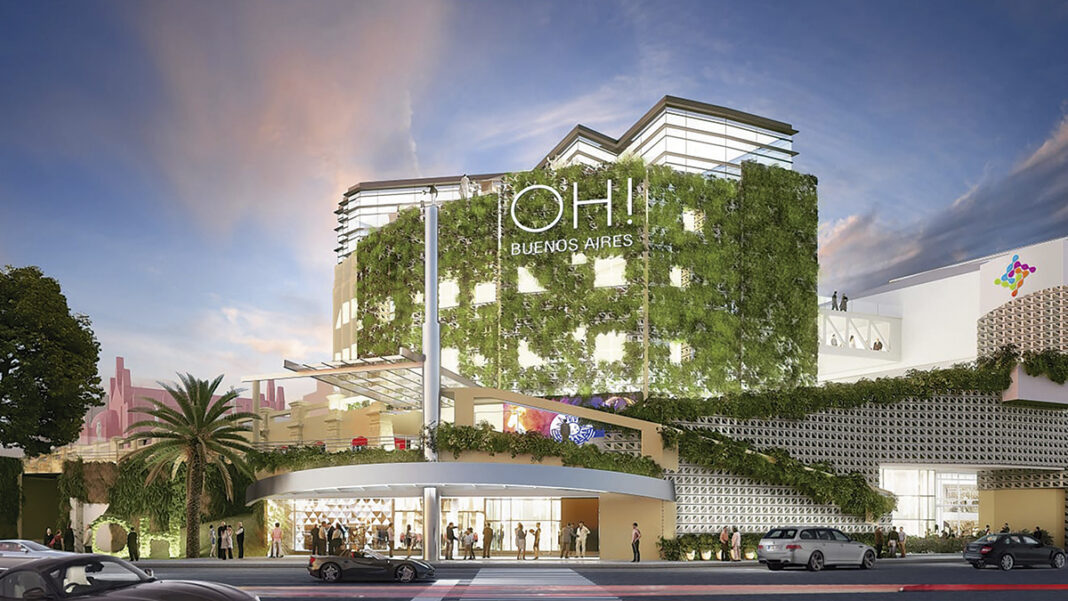
OH! Buenos Aires, the bioclimatic shopping and experiential centre in Recoleta, is scheduled to open in August 2026. Utilising four open-air, semi-covered bioclimatic patios that will bring in natural light, it will create a microclimate, reducing reliance on conventional heating and cooling. The new destination will feature over 100 stores, a sprawling gastronomic boulevard with 35 food concepts and unique attractions like giant slides and a Sacoa arcade with virtual reality. Retaining the original 1990s facade, in collaboration with the Clorindo Testa Foundation, the site will honour the architectural legacy of the original site. OH! Buenos Aires is set to be a 34,000sq m lifestyle and shopping hub situated in the former Buenos Aires Design building in Recoleta. It reimagines the traditional mall by blending luxury retail, entertainment and gastronomy with bioclimatic architecture, natural ventilation and protected historical heritage.
Arauco Chicureo in Santiago (located in the municipality of Colina) is scheduled to open in the second half of 2026. The 40,000sq m shopping centre was acquired by Parque Arauco and upon opening will feature more than 100 stores, including a Líder supermarket and a Homecenter Sodimac. Arauco Chicureo will bring services closer to the community, responding to the commercial equipment needs of Colina and Chicureo Poniente. It will be an alternative for entertainment, health, education, gastronomy, pharmacies and supermarkets and it will provide free parking and entertainment areas to the community, such as children’s play areas, a pump track and a climbing wall. It also includes medium and small stores, a restaurant area, a food court, a gym and spaces for medical services, which will open to the public in 2027.
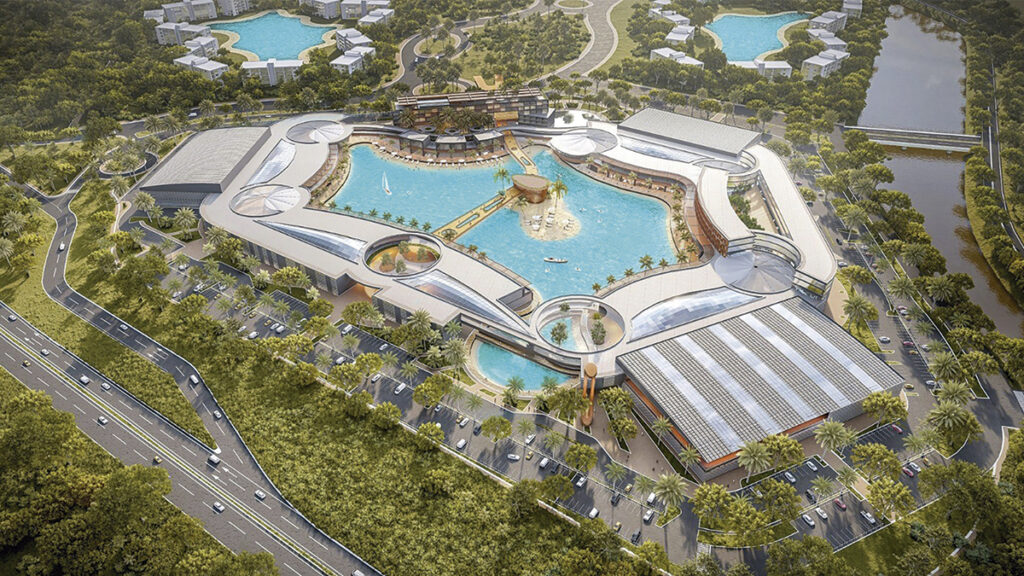
Kristal Mall is Colombia’s first “shopping resort”, currently under construction in the northern zone of Cartagena, with a projected opening in 2027. The 120,000sq m megaproject is built around a massive 20,000sq m crystalline lagoon featuring Crystal Lagoons® technology. Developed by Arquitectura y Concreto, it will house over 200 stores and restaurants, including a 4,300sq m Éxito department store, a hotel and medical towers. It blends entertainment and shopping around a monumental 5.3-acre crystalline lagoon with turquoise waters as its centrepiece. This innovative project addresses the global challenge of reinventing malls, transforming them into multifunctional destinations that attract a new generation of visitors. Kristal Mall is part one of Latin America’s most extensive agreements between Crystal Lagoons and AED, a leading Colombian real estate company. This strategic agreement includes 11 projects in key regions such as the Eje Cafetero, the Andean region and the metropolitan area of Bogotá.
Recently opened in Cabo del Sol, luxury meets opportunity with Ánima Village, a visionary open-air retail and lifestyle destination. Designed by Sordo Madaleno Arquitectos in partnership with developer SOMA Group, Ánima Village redefines the traditional concept of a shopping plaza. Blending art, gastronomy, wellness and nature, it brings together the best of Cabo’s coastal charm and international sophistication. Spread over 22,000sq m of leasable space, Ánima Village hosts more than 84 luxury and lifestyle brands, offering a walkable network of plazas, terraces and green corridors. Global names include Louis Vuitton, Prada, Cartier and Rolex and complementing these flagship stores, visitors will also find Dior, Dolce & Gabbana, Alo Yoga, Lululemon, Sephora and Nike, among others – making it the most exclusive retail destination in Baja California Sur. Beyond shopping, Ánima Village offers an immersive lifestyle experience. The culinary offering features a mix of fine dining and casual eateries, from Grupo Hunan and Mastro’s to La Lupita and Starbucks. The space will also become a cultural hub through Arte Abierto, an initiative showcasing public art installations, interactive exhibitions and live events that celebrate creativity and community. Every architectural element – from local stone and terracotta façades to botanical landscaping and water features – reflects a deep connection to Cabo’s desert-meets-sea landscape.
The commercial portion of the Espacio Condesa complex in Mexico City is scheduled to open during the first half of 2026, while the office spaces are expected to open in the following semester. The 10-storey mixed-use centre will feature anchors like Cinépolis, Coppel and La Comer. The project consists of the construction of a mixed-use residential complex on a plot of 10,659sq m with a total construction area of 221,219sq m, a footprint of 9,907sq m and a free area of 752sq m. It has a four-level base for commercial use, from which two towers are developed. The first is distributed over 22 levels above the base plus a rooftop for commercial and office use and the second is distributed over 16 levels above the base plus a rooftop for residential use (112 homes) and a hotel, with a construction area above sidewalk level of 108,558sq m, as well as 12 levels below sidewalk level to house 3,195 parking spaces, 630 bicycle parking spaces, machine rooms and cisterns for the complex, with a construction area of 112,661sq m. The project is owned by Fibra Plus and is being developed by Nemesis Captial.


One of the most anticipated developments in northern Mexico is Altea Paseo Hidalgo, a new complex to be built in Monterrey, which joins the trend of vertical urban spaces that combine commerce, housing and services. Altea Paseo Hidalgo will be a mixed-use development, aligned with the urban densification process underway in Monterrey, particularly in its downtown area. The project encompasses more than 27,000sq m of construction, distributed across levels that will integrate commercial and residential areas. The concept seeks to respond to a new profile of urban consumer: people who prioritise location, connectivity and immediate access to services, in a modern and functional environment. Commercial premises are planned for the lower levels, while apartments will be developed on the upper floors, allowing the complex to function as a small, active urban ecosystem throughout the day. Set to launch later this year, the project is being developed by Altea Desarrollos.
Antara was, without a doubt, the driving force behind the development of the district known as “Nuevo Polanco” in Mexico City. By investing in the creation of a new urban centre that integrates high-end office spaces, retail and entertainment, Antara set a benchmark for the area’s growth, as well as for the style and quality of the new developments surrounding it. This new phase by developer FIBRA SOMA includes the creation of a central park that will provide visitors with a green space for gathering, relaxation and connection with the environment. In addition, a new tower will be developed featuring office spaces and a Rosewood hotel, further reinforcing the project’s commitment to quality, design and high-level service. Regarding the retail offering, Antara’s expansion will introduce new stores and restaurants, further elevating the destination experience. The update is scheduled to complete next year.
Developer Fibra Danhos has launched a landmark urban development in Oaxaca City through a $320M investment to transform the historic Hotel Misión de Los Ángeles into Parque Oaxaca, a mixed-use centre that will combine business, culture and sustainability while generating 7,000 jobs. Parque Oaxaca will be designed by architect Mauricio Rocha. The project will include more than 50,000sq ft of space and feature 122 retail spaces, a Liverpool department store, cinemas, dining areas, a gym and a boutique hotel. The design features tree-lined plazas, pedestrian corridors and open-air walkways that integrate with the city’s historic scale and landscape. In addition, the project includes environmental restoration efforts such as cleaning the Jalatlaco River, preserving century-old trees and pursuing LEED certification, which recognises global standards for sustainable construction and resource efficiency. With its mix of commerce, culture and environmental responsibility, Parque Oaxaca is destined to become a cornerstone of urban renewal and economic vitality in southern Mexico when it launches in 2027.
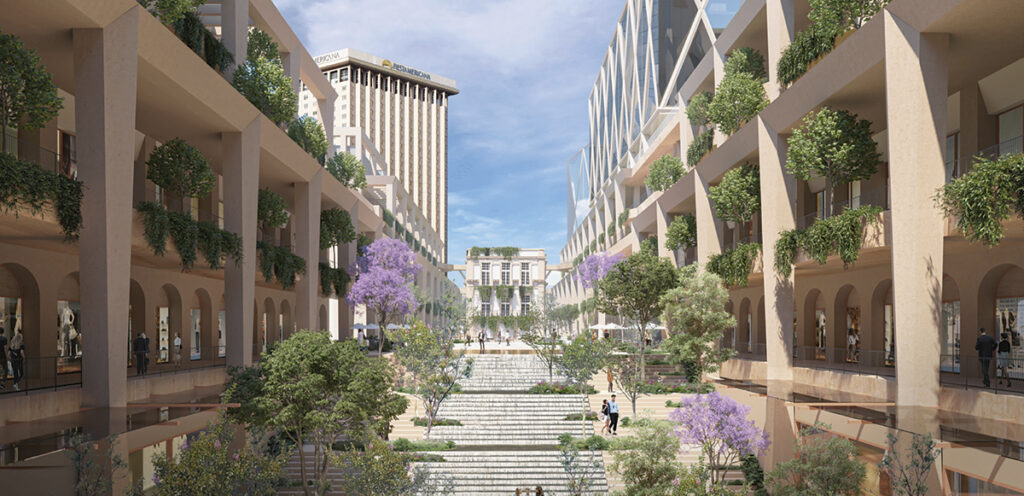
Reforma Colón is a massive, mixed-use mega-development in Mexico City located on Paseo de la Reforma. Designed by Sordo Madaleno Architects and under development by Grupo Kaluz and FIBRA SOMA (the real estate arm of Sordo Madaleno), it features a 291m (73-storey) main tower, four additional residential towers and a shopping mall. It is aimed at revitalising the surrounding urban area and will open the doors to its first phase in 2027. Set to be built on a total GLA of 90,000sq m, the development is being planned in two main stages and integrates a highly permeable, people-centred urban design. The vision is to create a comprehensive mixed-use district, conceived as a catalyst for urban transformation through the re-urbanisation of streets and the consolidation of pedestrian corridors that connect the project to the Zócalo and Bellas Artes. Its strategic location allows it to function as a key connector between Colonia Juárez, Condesa and Mexico City’s Historic Center.
Chapman Taylor has designed the major extension and renovation of Galerías Laguna shopping centre in Torreón, northern Mexico for developer Liverpool, transforming the existing mall into a vibrant retail and leisure destination and strengthening its role as a key social hub for the city. Located within a consolidated urban area with strong commercial activity, the project reimagines the existing 85,000sq m shopping centre and introduces a 34,184sq m extension. The scheme enhances Galerías Laguna’s offer by expanding beyond traditional retail to create a dynamic, experience-led destination that encourages longer dwell times and all-day use. The design introduces two new main entrances that reorganise circulation and significantly improve the visitor experience. The first entrance connects directly to the food court, where a generous double-height atrium forms the heart of the restaurant zone. Flooded with natural light, this space creates strong visual connections between levels and establishes a lively social focus within the centre. The second entrance leads to the mall’s experience zone and provides direct access to a new rooftop sports and leisure area, extending the programme vertically and activating the building throughout the day and into the evening. Through this transformation, Galerías Laguna is set to become an ideal retail and leisure destination for Torreón, one that blends commerce, social interaction and active leisure within a contemporary, locally rooted architectural framework. No opening date is currently listed.
