


From the luxury avenues of Paris to the dynamic shopping districts of Tokyo and London, the world’s most iconic retail destinations offer more than commerce – they define culture, experience and innovation. This article explores the cities shaping global shopping, where flagship stores, local boutiques, shopping centres, mixed-use destinations and evolving consumer trends converge to create unforgettable retail environments.
Dubai
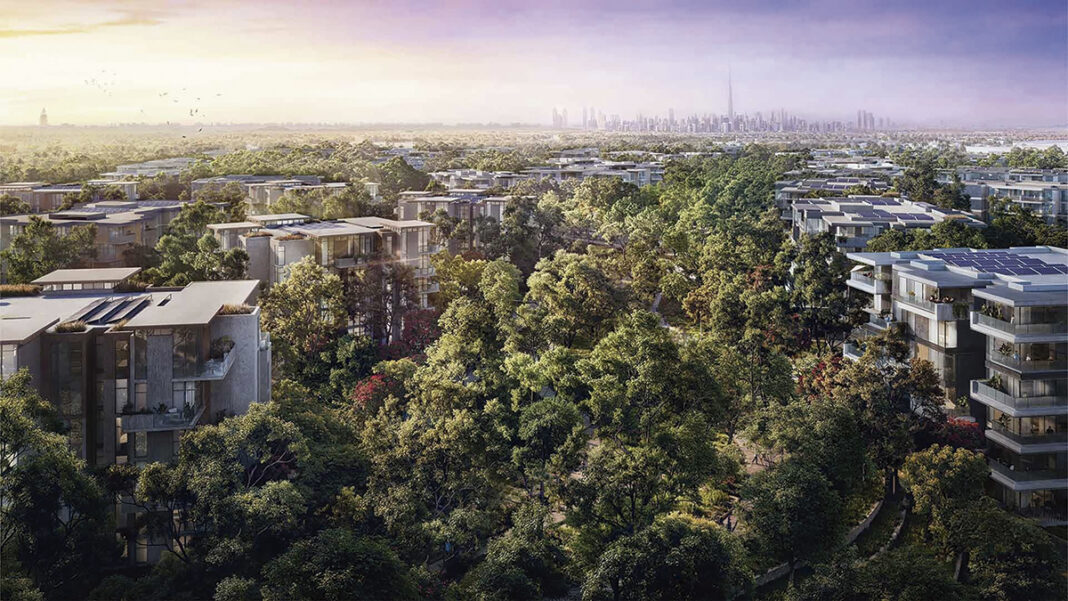
Dubai’s retail sector is entering 2026 with a level of depth and momentum that places it among the most resilient and diversified retail markets globally. The latest Cushman & Wakefield Core Dubai Annual Retail Market Update 2025/2026 shows a sector advancing on several fronts at once: luxury performance, community-led demand and destination-focused retail within major mixed-use districts. That breadth is unusual and it is becoming a defining feature of the city’s retail landscape. Majid Al Futtaim has unveiled the $4.2bn Ghaf Woods Mall in Dubai, the region’s first forest-integrated retail destination combining luxury and design. Ghaf Woods Mall will become the Group’s new flagship mall and the first-of-its-kind forest-integrated retail space in the region and complement the developer’s $4.19bn Ghaf Woods residential community. When completed, the mall will offer an immersive, experience-led environment blending retail, dining and entertainment with biophilic design that connects visitors with nature. Located on E311 (Sheikh Mohammed Bin Zayed Road), Ghaf Woods Mall will feature a curated mix of retail, dining, leisure and lifestyle experiences, merging premium retail with immersive natural surroundings. Majid Al Futtaim is strategically positioning the mall to attract flagship and anchor tenants seeking early access to a high-growth catchment area in Dubai.

Hong Kong
The Hong Kong retail market is poised for a moderate recovery in 2026, with sales projected to surge by up to eight per cent to roughly HK$410bn, driven by increased tourist arrivals, a stronger RMB favouring inbound spending and improved market sentiment. While high-street rents may see modest growth, luxury and experiential retail in core districts will dominate, supported by AI adoption, as online sales continue rapid growth. The market is witnessing strong demand for experience-based services, such as healthcare, pharmacy and beauty services, along with expanding F&B options in residential areas. Situated in a historic neighbourhood full of heritage, Central Crossing shines as a distinctive mixed-use development in Hong Kong, exuding its own energy within the dynamic city. Central Crossing, a joint venture by Wing Tai Properties and CSI Properties at 118 Wellington Street, topped out in February of this year and is slated for full completion in mid-2026, with a full debut including the Andaz hotel expected in 2027. The office tower is scheduled for completion in mid-2026, while the luxury hotel, Andaz Hong Kong Central, is also scheduled to open its doors next year. With approximately 433,000sq ft, this upcoming development represents a new dimension of placemaking in Central.
Kuala Lumpur
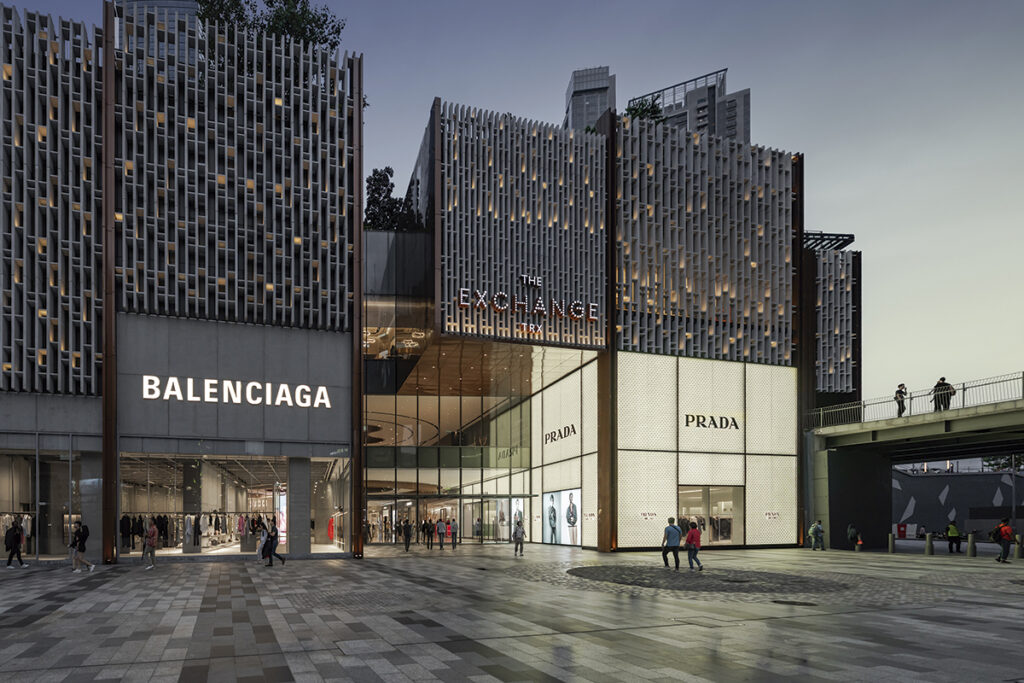
Kuala Lumpur’s retail market is the largest and most developed in Malaysia, supported by strong urbanisation, tourism and rising middle-class spending. Total retail stock in Greater Kuala Lumpur reached nearly 79 million square feet in 2025 and is expected to continue expanding, driven by new mall developments in suburban areas. As for the new social heart of Kuala Lumpur, this is The Exchange TRX which is a dynamic retail and lifestyle destination seamlessly integrated within a 10-acre public park. Launched in November 2023 by developers Lendlease and TRX City Sdn Bhd and with architectural work by Leonard Design Architects, it represents the future of experiential retail, sustainable urban living and vibrant cultural expression. Part of the 17-acre lifestyle quarter of TRX, The Exchange TRX brings international placemaking and sustainability standards to Malaysia, strategically located in the nation’s first dedicated international financial district. The large-scale experience-led destination encompasses retail, Malaysia’s first Kimpton Hotels & Restaurants that is connected to the TRX City Park, six premier residential towers, a low-rise large floor plate campus-style office and a dedicated Marr Rapid Transport station. The first part of the development is currently being completed in stages up until 2027, before it moves onto plot two.
London
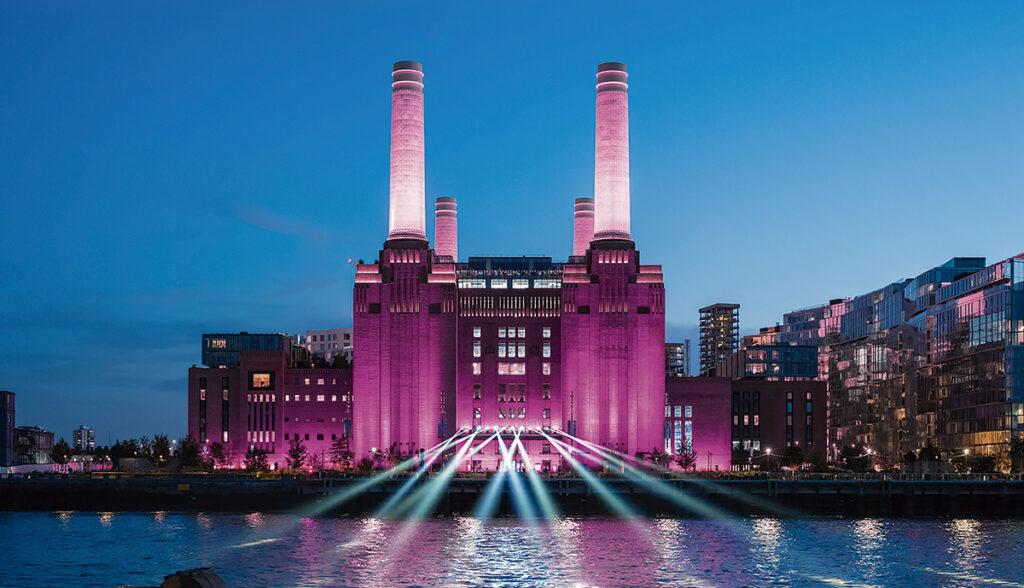
London’s retail market is one of the most mature and globally significant, anchored by strong international demand and a resilient consumer base. Prime central locations such as the West End continue to experience low vacancy rates and rising rents, driven by limited supply and intense competition for flagship space. Tourism and global brand entry remain key drivers, reinforcing London’s status as a leading retail destination. While consumer spending is cautious due to cost-of-living pressures, improving confidence and investment activity – up over 40 per cent in 2025 – are supporting recovery and long-term growth. Meanwhile, Battersea Power Station has announced the appointment of renowned masterplanner and strategic urban design practice, Studio Egret West, to evolve the original Rafael Viñoly masterplan for the remaining 16-acres of the 42-acre riverside neighbourhood. The ambitions for the new plans will reflect that, with the potential to deliver up to 3.2 million square feet of residential, commercial, cultural and leisure space, continuing the evolution of one of the most exciting large-scale brownfield regeneration opportunities remaining in Central London. The final phases of Battersea Power Station will connect to the new Nine Elms Park, a 14-acre green space running from Vauxhall, through Nine Elms and concluding at the six-acre riverfront Power Station Park.

Los Angeles
The Los Angeles retail market in Q4 2025 shows vacancy rates holding steady while asking rents continue to decline, according to the Los Angeles Retail Report 4th Quarter 2025 by Kidder Matthews. Construction activity remains subdued with a sharp year-over-year drop in projects under development, though net absorption turned positive after two years of negative performance. Vacancy remained at 5.6 per cent, while asking rent fell to $2.80 per SF per month, a 308 per cent decrease from the previous year. In terms of projects within the city, Palisades Village, the open-air shopping and lifestyle destination in Pacific Palisades, is slated to reopen in 2026, with early to mid-year targeted for its return. The relaunch will feature returning tenants, new offerings and a renewed focus on community-centred spaces. Among the notable returns is luxury fashion retailer elysewalker, a cornerstone of the Palisades retail scene. The brand will relocate and reopen its flagship store within the revamped Palisades Village, reaffirming its longstanding ties to the neighbourhood. In addition to legacy retail, a new dining concept is expected to be unveiled in the coming months, adding to the reimagined village experience. Ahead of the main centre reopening later this year, Chase Bank reopened its doors last month.

Milan
According to Cushman & Wakefield’s ‘Milan Global Cities Retail Guide’, Milan is a leading global city, with strengths in the arts, commerce, design, education, entertainment, fashion, finance, healthcare, media, services, research and tourism. The city is a major world fashion and design capital, well-known for several international events and fairs, including Milan Fashion Week and the Milan Furniture Fair, which attracts millions of visitors from all over the world. The report also highlights that a distinctive feature of Milan is the so called “Quadrilatero della Moda”, represented by Via Montenapoleone and adjacent streets, is characterised by the high concentration of luxury brands, featuring approximately 300 top domestic and international brands. Recognised worldwide, these streets have achieved global status amongst retail minds around the world. A major project in the city is the Parco Romana project (formerly the Porta Romana railway yard) a major urban regeneration initiative in Milan which was initially designed to serve as the 2026 Winter Olympics Athletes’ Village, with a long-term plan to become a sustainable, mixed-use neighbourhood now that the games have finished. The development will feature a “green heart” and suspended forest and is a central part of Milan’s 2030 sustainability goals.
New York
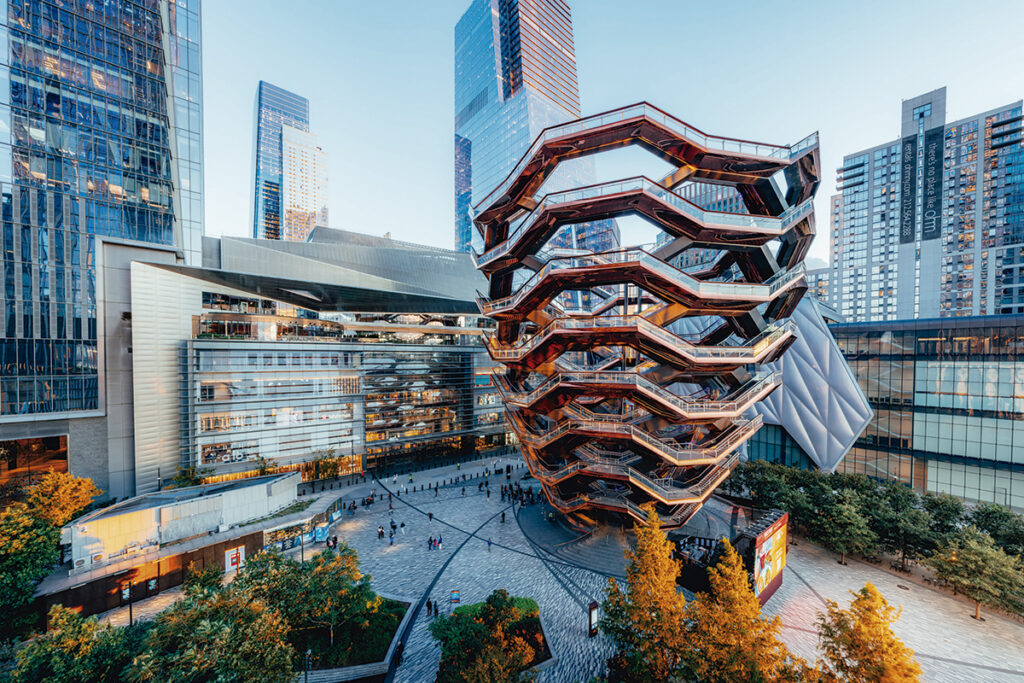
With its dominant positions in commerce and tourism, New York City is the most important retail market in the United States, says New York City Economic Development Corporation. Retail is all about location, location, location – and for that, you can’t beat NYC. Whether its premier department stores, world-famous restaurants, or local bodegas serving the needs of the community, this city has it all. From Fifth Avenue and Orchard Street in Manhattan to iconic shopping corridors like Arthur Avenue in the Bronx and Queens Boulevard, retail has defined the city’s streetscape for generations and provided a livelihood for countless New Yorkers. While core elements are complete at one of the largest projects on the planet, Hudson Yards, the full vision of the scheme, particularly with Phase 2 and potential future expansions, continues to develop. Being developed by The Related Companies and Oxford Properties Group, Hudson Yards is a transformative 28-acre mixed-use development on Manhattan’s West Side and features over 18 million square feet of commercial and residential space, including office towers, luxury residences, a hotel and more than 100 shops and restaurants. Attractions include The Edge, the highest outdoor sky deck in the Western Hemisphere and The Shed, a cultural centre for the arts.
Paris
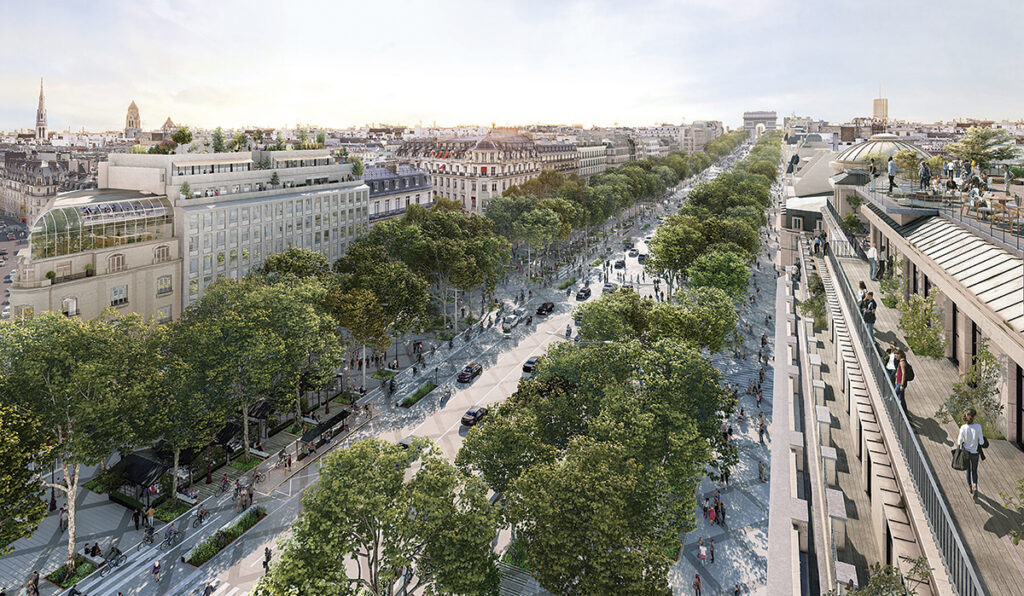
Regarded as the fashion capital of the world by Cuhsman & Wakefield in their Paris Global Cities Retail Guide, it is the retail, administrative and economic capital of France, accounting for near 18 per cent of the French population and 30 per cent of national GDP. One of the top global cities for tourists, it offers many cultural pursuits for visitors. The city has recently seen a surge of activity across its major luxury streets. The most well-known, the Champs-Élysées is undergoing a major transformation, marked by high-end redevelopment and the continuation of a long-term urban “greening” project aimed at reducing traffic and enhancing pedestrian spaces. Key projects include the 2026 opening of the Louis Vuitton Hotel and flagship complex at 103-111 Avenue and the renovated Paris Marriott Champs-Élysées Hotel. While specific luxury developments are peaking in 2026, the broader revitalisation led by architect Philippe Chiambaretta continues, with the long-term goal to turn the avenue into a garden, with more trees and fewer vehicle lanes, whilst the square is being redesigned to be more pedestrian-friendly following improvements made for the 2024 Olympics. The project aims to reduce traffic, improve air quality and bring back residents by replacing car-centric infrastructure with “planted living rooms” and pedestrian areas.
Seoul
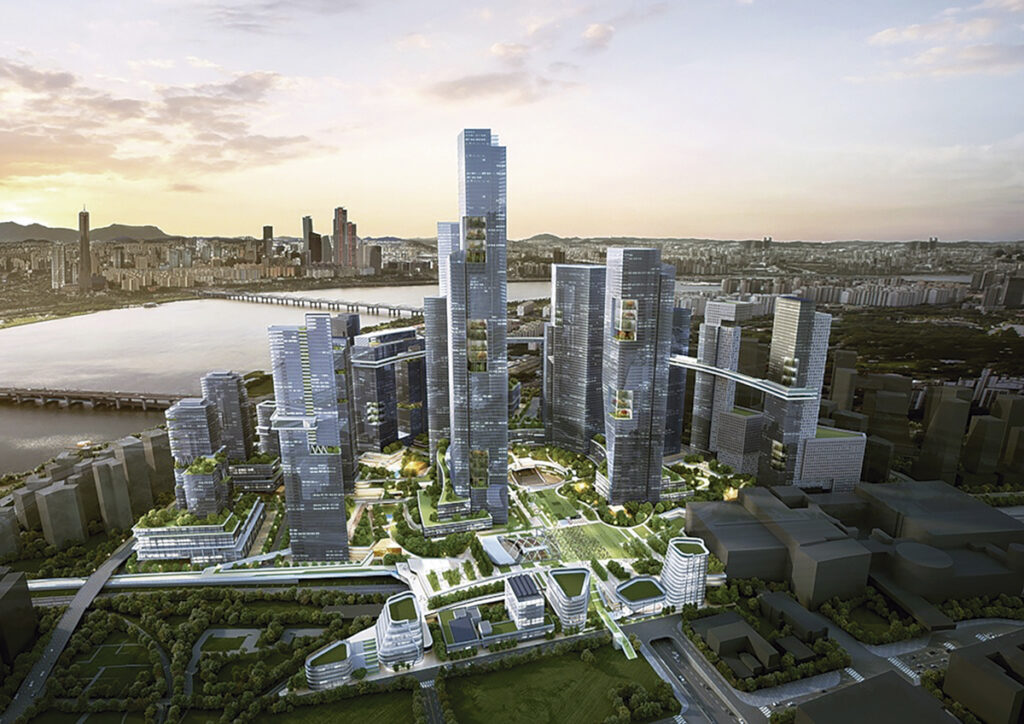
The Seoul retail market in 2026 is experiencing its slowest growth in five years, projected at only 0.6 per cent due to high inflation and weak consumer sentiment. While online shopping (3.2 per cent growth) and luxury-driven department stores (0.7 per cent) show resilience, hypermarkets and supermarkets are in contraction. Key trends include AI-driven personalised shopping, increased demand for K-beauty/food and shifting consumer focus to value. After more than a decade in limbo, the long-delayed development of the Yongsan International Business District began on 27 November last year. The project will transform the 456,100sq m site of the former Yongsan train depot – considered the last major undeveloped plot in central Seoul – into a high-density vertical city. The site connects Seoul Station, Yongsan Station and the Han River waterfront and the city plans to leverage this central location to develop a new core business district. Completion is being targeted by 2030 and the project will feature a 100-storey landmark skyscraper and high-rise buildings connected by skybridges and integrated green spaces. The development is set to be bigger than Hudson Yards and is divided into an international business zone, a business complex zone and a business support zone, integrating offices, housing and culture.
Shanghai
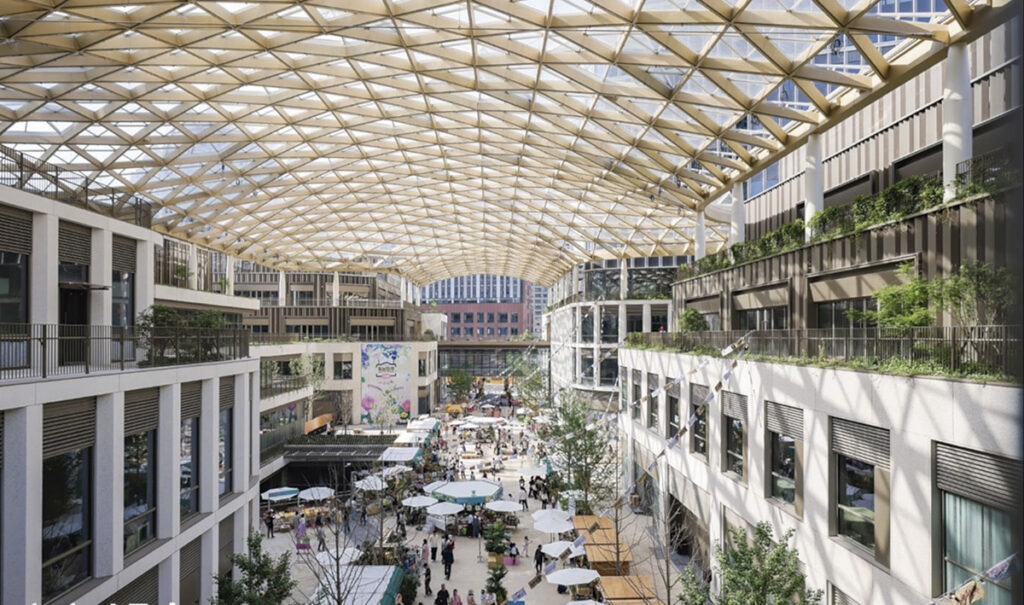
Supported by policies promoting the night-time economy, brands and shopping centres in the city of Shanghai have extended their business hours, introduced pop-up pedestrian streets and markets and seen notable increases in evening footfall and sales. Established brands continued to streamline operations by closing underperforming outlets and concentrating resources on flagship locations to strengthen brand image and consumer appeal. In the first eight months of 2025, total retail sales in Shanghai rose 3.7 per cent year-on-year. Wholesale and retail trade grew 4.7 per cent, while the accommodation and F&B sector declined 2.7 per cent, according to the Savills publication, ‘Shanghai Retail Q3/2025’. The report also highlights that only one new project commenced operations within the Outer Ring Road in Q3 of 2025, the Xintiandi Galleria, an 88,000sq m retail development in the Huaihai Rd (M) business area, bringing total citywide stock to 16 million square metres. The project forms the retail component of a 390,000sq m mixed-use complex located east of Xintiandi. It features outdoor dining areas and trendy sports brands, alongside diverse entertainment venues such as AI Cinema & Party King and Owner Club, designed to cater to consumers’ social and leisure needs continuously throughout the day.

Singapore
Singapore’s retail sales in 2026 are poised to see moderate growth, supported by ongoing recovering tourism, a stable labour market and falling interest rates, according to Cushman & Wakefield’s ‘Retail Marketbeat Singapore Retail Q4 2025 Report’. Though households have become more conscious in their spending, balancing higher living costs with a focus on value and experiences, which will limit discretionary demand. Retail sales rose 0.8 per cent year-to-date as of November 2025, led by computer & telecommunications equipment (+10.2 per cent) and recreational goods (+8.2 per cent), amidst high online penetration for IT products and sustained consumers’ demand for leisure and experiential retail. Within the city, the Marina Bay Sands (MBS) $8bn expansion is a major project which broke ground in July 2025. With construction being undertaken by Woh Hup, the expansion will feature a fourth tower with 570 luxury suites, a 15,000-seat arena and a 76,000sq ft “Skyloop” rooftop. This project includes high-end retail, Michelin-level dining and 200,000sq ft of MICE space, targeting completion in 2030 and opening in January 2031. The project aims to set a new standard for luxury in Asia, with the new tower’s amenities focused on an exclusive guest experience, catering to high-net-worth tourists.
Tokyo
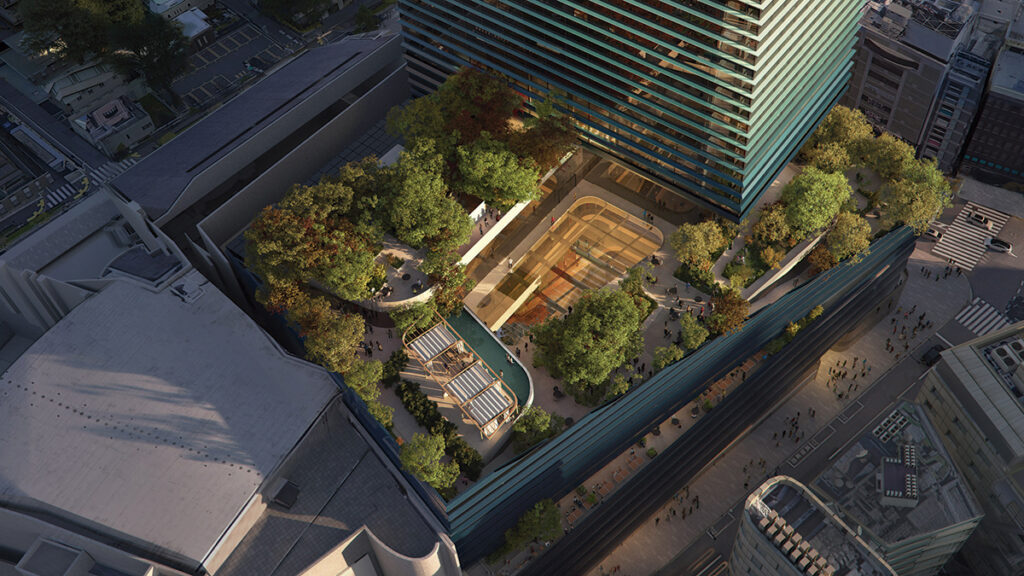
The retail market in Tokyo is one of the world’s largest and most sophisticated, underpinned by high consumer spending and dense urban populations. Prime districts such as Ginza and Omotesando command some of the highest retail rents globally, supported by strong demand from luxury brands and international retailers. Tourism recovery has boosted footfall and sales, particularly in flagship stores. Vacancy rates remain low in core areas, reflecting constrained supply and continued retailer expansion. The market is highly experiential and technology-driven, with seamless integration of e-commerce and physical retail. Stable economic conditions and inbound tourism are expected to sustain long-term growth in Tokyo’s retail sector. Snøhetta has designed its largest project in Japan to date with the new Shibuya Upper West Project for Tokyu Corporation, L Catterton Real Estate and Tokyu Department Store. The 119,000sq m mixed-use development includes the Bunkamura cultural complex and will offer high-quality retail, a contemporary luxury hotel and rental residences, as well as art and cultural experiences in the vibrant Shibuya district of Tokyo. Key features include The Hive, a vibrant and lively atrium anchoring the heart of the project. The project aims to achieve the highest possible sustainability ratings and is expected to complete in 2029.
