

Scaling with Style

The story of Koton began in 1988 in a small store in Istanbul and in the time that has passed since, it has grown into one of Türkiye’s most recognisable fashion retailers and a global brand across physical and digital operations. RLI organised some time with business CEO A. Bülent Sabuncu to converse about the company and its plans for 2026 and beyond.
What has guided Koton since its inception is the core DNA of the brand; a strong customer-centric mindset, design-driven creativity, agility, accessibility and a commitment to premium quality. From day one, the customer has been at the centre of every decision they make. They shape each product with their feedback, expectations and lifestyle insights and they refine their collection through what they learn from them.
This allows them to deliver trend-right, high-quality and accessible fashion at speed. As they expand internationally, they stay true to their values while also adapting to the cultural and shopping dynamics of each market. This balance between global brand principles and local needs has played a major role in shaping Koton’s identity and sustained growth.
“Our company differentiates itself globally through a clear and continuously strengthened brand positioning built on being trendy, affordable and premium. Our strong design culture and Türkiye’s production speed allows us to interpret global trends quickly and deliver high-quality, accessible fashion at pace,” comments A. Bülent Sabuncu, CEO of Koton. “By staying close to consumers in every market, we shape collections that align with their style, culture, lifestyle and price expectations while preserving a consistent global brand identity.”
Today the company operates in over 70 countries through its retail and digital sales channels as well as marketplaces and manages an extensive operation comprising 463 stores in 35 countries. Their main market remains Türkiye with 243 stores, while at the end of November this year they had a total of 220 stores in the GCC, CIS, CEE and MENA markets.
In the GCC region, together with their partner Apparel Group, they entered the Oman and Qatar markets and during the third quarter of 2025 they launched two stores in Oman and two in the UAE. Post Q3 they have opened four stores in Bahrain, Saudi Arabia and Qatar, further expanding their presence in the region.
Sabuncu explains that the Middle East, especially the Gulf countries, stand at the centre of their growth strategy. The region’s young demographics, strong fashion appetite and advanced retail landscape create significant potential and their partnership with Apparel Group is a major driver of their accelerated expansion.
“We now operate in all GCC markets except Kuwait, which we plan to enter in 2026. Beyond the Gulf, we see meaningful opportunities in the CIS and Central & Eastern Europe, where our direct structuring model, such as in Hungary, gives us the agility and control to respond swiftly to market dynamics. Furthermore, we have expansion plans set for North Africa.”
On the digital side, they are preparing to extend their global reach. They have established a company in the US to launch marketplace-led e-commerce operations, with the aim of this going live in the first quarter of 2026.

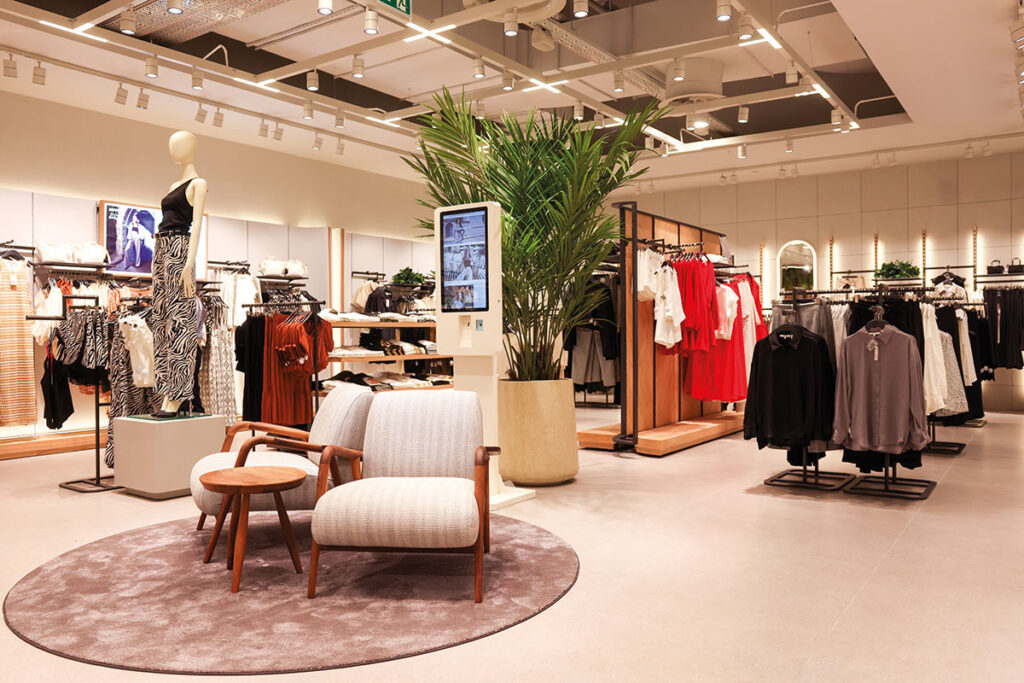
With customer expectations evolving rapidly, Koton is introducing several new innovations, both in-store and online, to respond to these expectations. In their new concept stores, especially in the GCC region, they have implemented self-checkout systems that significantly speed up the shopping journey. These stores also feature more open and intuitive layouts, digital screens and improved product navigation that help customers shop with ease.
Meanwhile on the digital side, they continue to strengthen their omni-channel ecosystem with faster delivery options, seamless click-and-collect processes and personalised recommendations powered by data. Together, these innovations create a more fluid, convenient and modern shopping experience across all touchpoints.
In addition, their Koton Club loyalty program has now reached nine million members in Türkiye. This offers numerous advantages, including the opportunity to earn points on purchases, welcome points on their first purchase, surprises on birthdays and easy exchanges and returns without receipts. They are currently developing the same benefits for customers who shop at their stores in the CIS. By expanding their loyalty program in this way, they aim to provide their customers with the same experience globally.
As our discussion with Sabuncu moves onto the topic of social media, he comments that this medium is not just a communication channel for Koton, but also a space where they follow trends in real-time and build one-on-one relationships with their customers. They implement strong content strategies on platforms such as Instagram and TikTok, which has a high concentration of young consumers and quickly delivers collection launches, brand collaborations and digital campaigns to consumers through these channels. They have also adopted a dynamic social media approach that considers local trends and cultural codes in every market.
“In digital marketing, we manage story-based content with performance-focused communication in a balanced way. This allows us to create a structure that supports both brand awareness and sales conversion. Each country also operates with its own digital strategy playbook, enabling us to tailor our communication, targeting and content to local consumer behaviour while maintaining a unified brand identity,” says Sabuncu.
The sustainability vision of Koton is guided by the Respect Life sustainability manifesto, which they launched in 2020. This approach is based on four fundamental pillars: Respect Planet, Respect Communities, Respect People and Respect Business. The heart of this sustainability strategy lies in reducing our environmental and social impact, creating a more responsible production and consumption model and transforming their entire value chain.
The long-term vision of Koton is to strengthen its position as a leading fashion brand at home and abroad while creating a responsible production and consumption model in line with their Respect Life approach. In the coming period, they aim to accelerate all core processes from product development to supply chain and customer experience, while positioning their omni-channel strategy even more strongly at the heart of their business model.
“Our strength lies in our ability to evolve while adhering to our core values. As we continue our global expansion and sustainability transformation, we prioritise offering accessible, trend-focused and premium fashion, while creating a positive impact for our customers, our employees, our communities and our planet,” Sabuncu concludes.