



In a world of digital distractions, the appetite for escapism – through immersive, surprising and shareable experiences, has never been stronger. This is the view point of James Dwyer, Owner and Creative Director of Lumsden and in this month’s Leisure Insight he discusses the topic in greater detail.
For visitor destinations, understanding audience motivations is crucial. From branded environments and themed attractions to museums and cultural landmarks, success lies in connecting people with their passions. Increasingly, these experiences also act as tools of placemaking – anchoring developments, boosting dwell time and adding value to retail districts and leisure hubs. Yet destinations now compete for visitors’ most precious commodity: time. To win it, they must spark emotion, build connection and feel worth stepping away from the everyday.
Intellectual property is a powerful draw, sparking curiosity and driving footfall. When handled well, it amplifies excitement and engagement, but it can’t carry an experience alone. Long-term success depends on delivering something authentic, high quality and memorable that lives up to the promise and inspires return visits.
IPs attracts fans first: devoted audiences who arrive with deep affection for the worlds and stories they already love. That loyalty is a gift, but also a risk. Expectations are high and if the experience feels generic or uninspired, disappointment spreads fast. Sometimes a single weak thread – a jarring detail or a moment that doesn’t quite land – can undermine the whole concept.
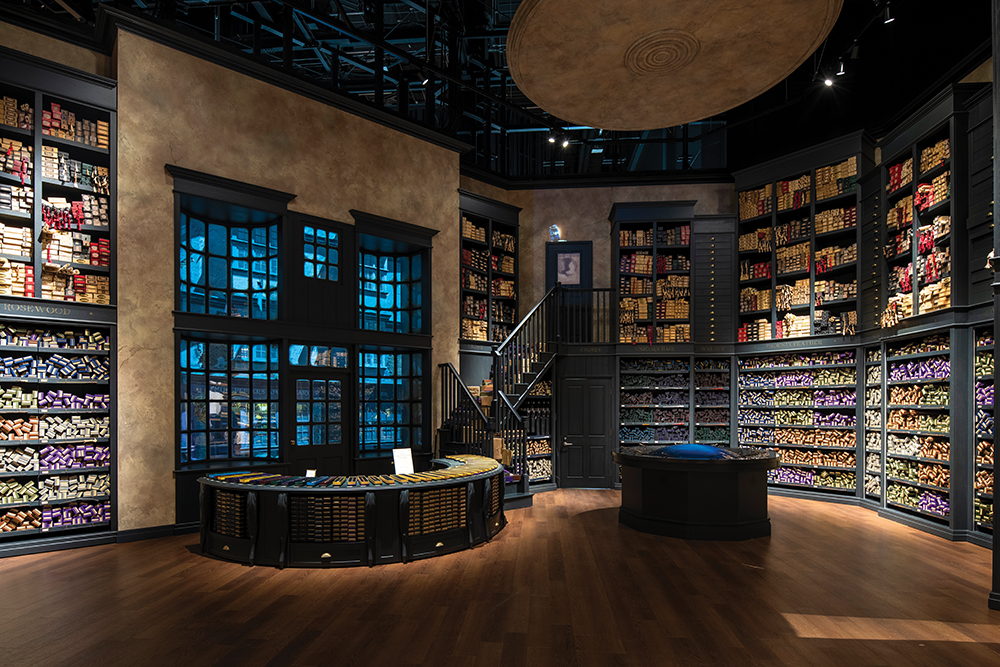
Since 2011, Lumsden has partnered with Warner Bros. to create the retail and hospitality experiences for the global Making of Harry Potter Studio Tours and flagships, widely recognised as some of the most successful and immersive IP-based destinations in the world. From the outset, our focus has been on extending the story beyond the attraction itself, through rich storytelling, meticulous detail and complete cohesion, so that shopping and dining feel like a natural continuation of the journey.
This philosophy applies across sectors – entertainment, cultural, or commercial – from the richly cinematic world of Harry Potter to the Portico Shop at The National Gallery, inspired by masterpieces such as Van Gogh’s Sunflowers and Monet’s Water Lilies. The most effective environments draw on the same foundations: a deep understanding of what captures imagination, stirs emotion and encourages genuine engagement and reason to return.
“Wow” moments capture attention, but in retail and hospitality, depth is what keeps people coming back. The most successful destinations pair spectacle with substance, designing experiences that evolve, adapt and stay relevant long after opening day.
Louis Vuitton’s dramatic “cruise liner” in Shanghai, appearing as if it had docked overnight, turned architecture into theatre and retail into spectacle. Every element, from the striking exterior to the curated interiors, immersed visitors in the brand’s world, evoking the spirit of travel and adventure through the brand’s heritage and creativity, proving how physical storytelling can command global attention.
Contrast that with a growing shift from store to venue. Apple’s Town Square concept deliberately drops the word “store” to signal a move from shopping to gathering, hosting workshops, talks and performances that build community around the brand. Hospitality takes the same path: Eataly and Time Out Market blend food, culture and theatre to create destinations as much about connection as consumption. Together, they show how retail and dining are becoming cultural platforms, earning loyalty through belonging rather than transaction.
Innovation is redefining what visitors expect from retail, hospitality and culture. The most effective destinations merge story, technology and design to create experiences that feel compelling, purposeful and memorable.
The Sphere in Las Vegas captures this balance. Opening with U2’s viral performances and Darren Aronofsky’s Postcard from Earth, it proved how technology can create awe and global buzz, but its real strength lies in reinvention. Its recent AI-enhanced production of The Wizard of Oz expanded the film’s world with immersive visuals and multi-sensory effects that deepen audience connection.
At the other end of the spectrum, the brilliance of technology often lies in its invisible, seamless integration – creating moments of pure magic. TeamLab’s En Tea House in Tokyo shows that innovation can also be quiet and contemplative: digital art, light and ritual dissolve into atmosphere, where technology heightens connection rather than overwhelming it. Here, visitors are invited to enjoy a cup of tea from which flowers bloom infinitely and beautifully within the teacup – a fleeting moment of wonder that blurs the line between nature, art and technology.
Together, these examples show what audiences now crave: experiences that move them, whether through spectacle or stillness. Ultimately, the most powerful destinations don’t just impress, they connect. They leave space for emotion, discovery and change. And that’s where good design lives.
