

In this edition’s Retail Insight, Joanna Brown, a Partner at Forsters LLP, a leading law firm in London, offers her viewpoint on how flexible spaces are becoming a new go-to in the industry. She also highlights that these environments must be adaptable and offer a variety of options moving forward in order to stay relevant and attractive.
The shift towards experiential retail spaces is reshaping how global brands engage with consumers worldwide. Traditional shopping models focused solely on product transactions are giving way to environments that offer immersive experiences. Experiential retail or ‘competitive socialising’, as it is often referred to in the UK, has been heralded as saving the high street and bringing footfall back to towns and cities worldwide, from major urban centres in Europe to pop-up venues in North America.
But how resilient is this type of retail given changing trends? Venues dedicated to activities people typically engage in only once or twice are going to struggle in the long term. These venues must be adaptable to host a variety of experiences and to cater to diverse consumer interests, especially once brands identify a sense of consumer apathy towards certain activities that were in vogue one week and out of favour the next. After all, how many times would you really be willing to spend money on axe throwing?
Experiential retail refers to the creation of environments where customers can engage with a brand or product in an interactive and memorable way. This approach goes beyond shopping by creating experiences that resonate emotionally with consumers. Notable examples include Lululemon offering in-store yoga classes in Toronto or soft toy retailer JellyCat launching its fish and chips experience in Selfridges in London. These experiences help customers to form lasting associations with the brand, encouraging repeat visits and ultimately driving customer loyalty.
The success of such ventures underscores the broader trend around consumers increasingly seeking experiences that offer novelty and social interaction. This shift is particularly pronounced among younger demographics that prioritise experiences over material goods, a trend observed not only in the UK but across global markets in urban centres with Millennial or Gen Z populations.
For instance, the popularity of activity bars like Boom Battle Bar, Puttshack and Flight Club in London highlights a growing demand for venues that combine leisure activities with socialising opportunities. The latter two have even expanded to the US and Australia, tapping into the competitive socialising experience by fusing leisure and nightlife into retail hybrids. Dubai Mall, the world’s largest destination for shopping, is also embracing experiential retail, including offering attractions such as an aquarium, zoo and ice rink.
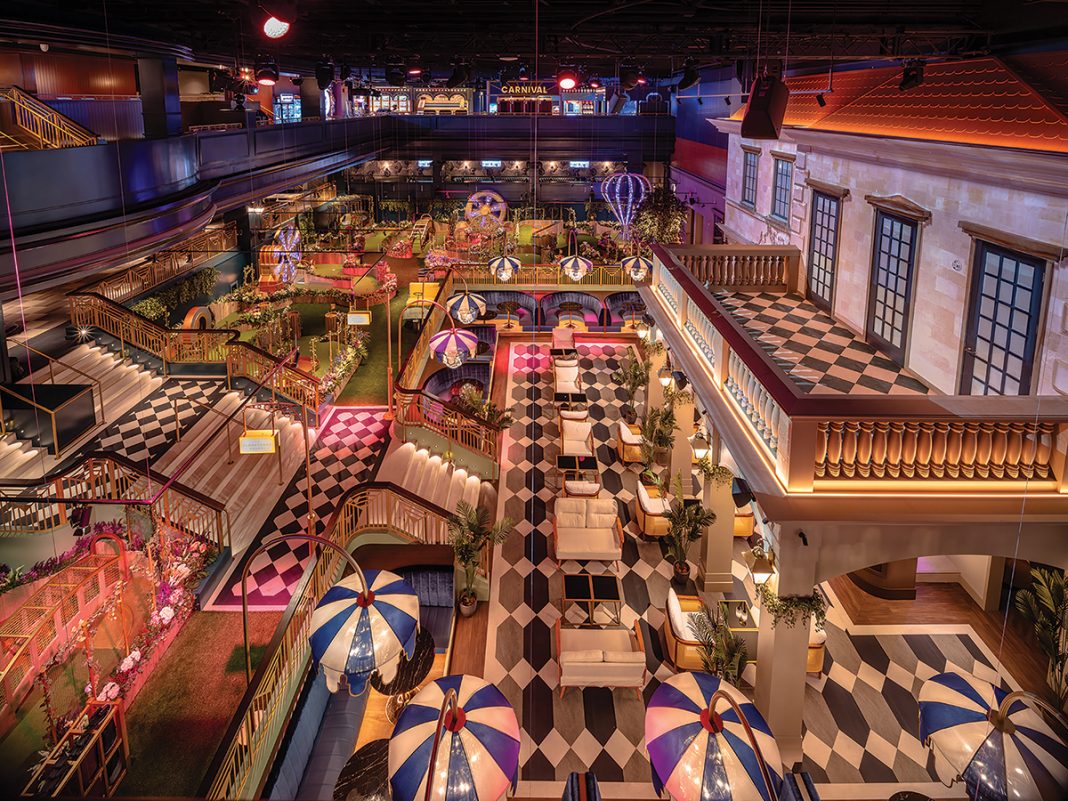
However, the core challenge in experiential retail is designing spaces that are flexible enough to accommodate a range of activities which can adapt as customer demand fluctuates. Unlike traditional retail spaces, which are often static and purpose-built, experiential venues need to be more adaptable.
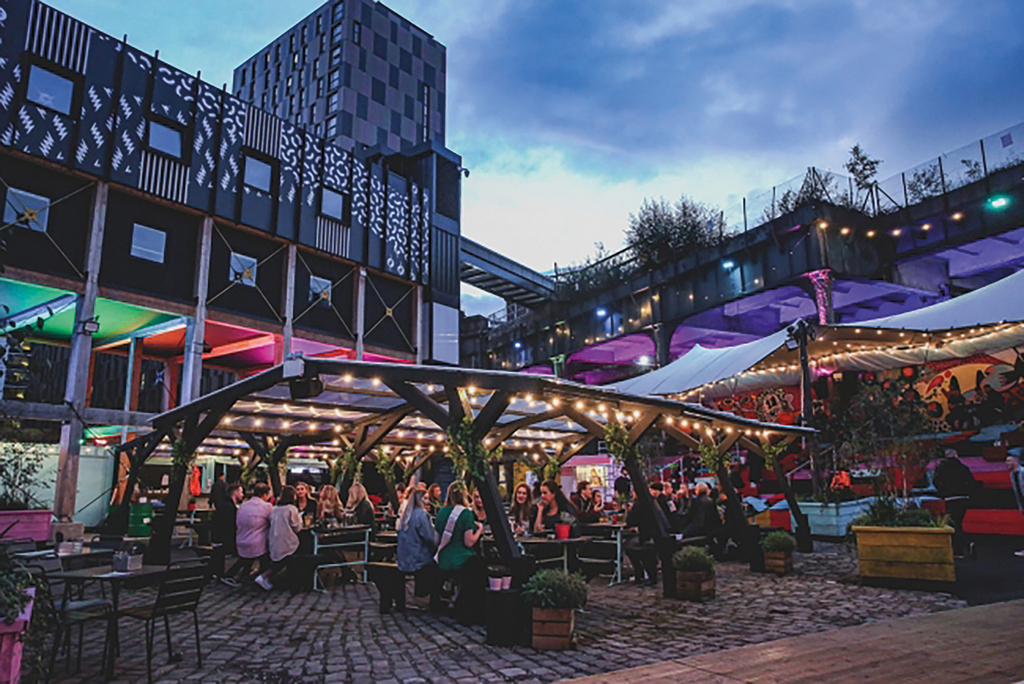
On the horizon for flexible experiential retail in the UK is Freight Island at Eldon Square in Newcastle. Set to arrive later this year, the space has the ability to act as an entertainment venue, function rooms, a microbrewery, restaurants, bars, play areas and temporary markets, including Christmas markets and arts and crafts. Freight Island’s capacity to transform into different retail offerings makes it a space which is attractive to all ages and interests. This versatility not only entices a broader audience but also enables the venue to adjust its offering based on consumer trends.
The financial viability of experiential retail hinges on the ability to generate consistent footfall and engagement. Venues that offer unique experiences can command premium pricing and foster customer loyalty. The rise in hospitality venues across the globe featuring such activities is testament to this trend, from immersive dining in Seoul to interactive museum-bars in New York. According to the Hospitality Market Monitor, themed bars and competitive socialising venues have grown by 24.3 per cent in the last 12 months in the UK, now nearly treble the size it was in March 2020.
Moreover, the success of these venues is reflected in their financial performance. XP Factory, the operator behind Boom Battle Bar, reported a record revenue of £57.3M at their most recent full-year results, a 17 per cent increase from the previous year. This growth underscores the lucrative potential of experiential retail when executed effectively.
In the digital age, technology plays a pivotal role in enhancing the experiential retail landscape. Interactive elements such as gamified interfaces and augmented reality features can enrich the customer experience and encourage repeat visits. Venues like Electric Shuffle have integrated technology to automate scorekeeping and create engaging visuals, a tactic mirrored in immersive experiences such as Paris’ Atelier des Lumières.
The future of retail lies in the ability to create spaces that are not only functional but also flexible and engaging. By embracing the principles of experiential retail, businesses can transform one-time activities into recurring experiences that resonate with current consumer trends. Brands across the globe must design spaces that offer unique, memorable experiences to attract and retain customers in an increasingly competitive market.