

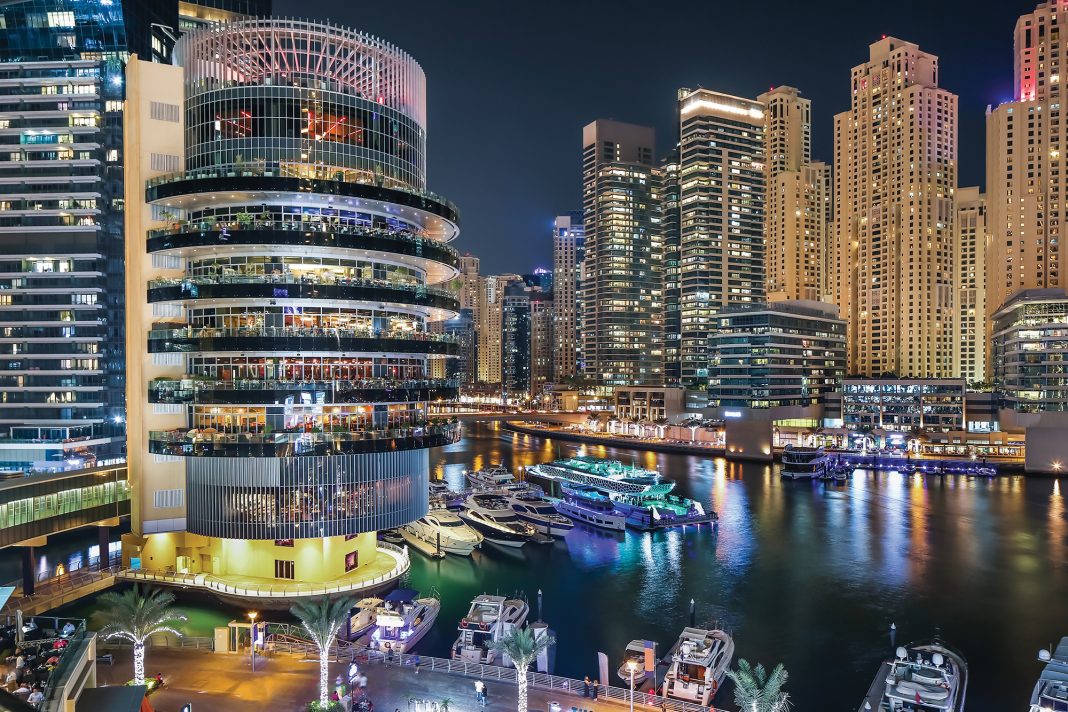
When developing a retail destination, we need to consider the type of audience the scheme will attract. In this month’s Retail Insight, Hamzah Abu Zannad, Managing Partner of Native Advisors and a real estate developer in Dubai for the past two decades, takes some time out to highlight the importance of this. To do this, he uses the Dubai shopping centre scene as a case study ahead of the launch of his Netflix series with the Dubai Government about real estate in Dubai.

A retail attraction needs to be clear about where it is to be positioned among these maps, and consistently deliver on this positioning. A lack of clarity along with inconsistencies in the delivery is where we have been seeing the retail mistakes in Dubai.
The Frequently Affordable Became Inaccessible & Unaffordable
There are retail destinations in this world that we visit on an occasional basis, even though we know that they are inconveniently located and will cost more than an average outing. These are destinations that have huge spaces, enormous parking and multiple activities available, as they cater to a collective experience that excites and invigorates. When the destination is positioned for such outings, everything else follows, such as the floor space of a retail outlet.
The common mistake is to take attributes of a retail destination that are meant for collective, exciting and occasional outings and force them on a destination that is meant to be more individualistic, more of a relaxed vibe and more frequently visited. The most important attribute here is the space of each individual retail outlet, more specifically, the enormous size of the retail space allocated by the developer, with shops starting at 5,000sq ft. It is a massive undertaking for a tenant to fill such spaces, let alone having to bear the immense cost of fit-out.
For example, a Cheesecake Factory can afford to operate a large space, but most new businesses have a different business model. Even a destination as opulent and unique as Pier 7, tenants operating frequently visited pubs are struggling to fill occupancy because of such large spaces offered.
In Dubai, we have been missing out on so many retail concepts that are meant to be frequently visited and affordable, due to the fact that master developers have not been catering to such concepts. Think of a boutique store, a small “hole-in-the-wall” charming pub or a tiny two-table Chinese restaurant, well, we don’t see these in new developments, because the master developer does not cater for them. This needs to stop.
Seasonal Destinations Need Seasonal Treatment
It is no secret that an outdoor space in Dubai is very seasonal, hence the tenant must capitalise during the high season to compensate for the low season. However, developers and landlords renting out such seasonal outlets need to also carry some of the weight. Smaller tenants with smaller retail concepts need to also be able to afford their own outdoor space. This is what we have been seeing in Global Village, where the tenant only pays for the season that they’re able to operate outdoors.
New Destinations Need Initial Critical Mass
At one-point Meraas insisted on having tenants with only new and original concepts, this would be feasible if the shops were small and affordable, but to launch a 300-seat restaurant from the start is a huge undertaking. This also creates a huge risk for the landlord if it is apparent across an entire tenant mix. You need to launch with established anchor outlets to create enough critical mass to the destination, this is needed to help sustain smaller original concepts.
In conclusion, not every retail attraction is meant to be for that exciting occasional outing. Hence, Dubai needs more smaller and original retail concepts. However, such retail concepts need proper platforms provided by the master developer, who need to lower the entry barrier with smaller retail spaces that require lower initial capital expenses. If we look at learnings from Jumeriah Lake Towers (JLT), we see how it has become an unofficial ethnic cuisine destination and we that smaller F&B outlets allow for entrepreneurs to test and learn with ethnic food.
Hence, we see in almost every major city, retail destinations that cater to such ethnic attractions, with retail markets such as Little Italy and China Town. However still in Dubai, retail means big and inaccessible, hence, we don’t have a charming Little Italy, we have Hessa’s intimidating highway with little Lebanon hiding behind an exit we’re all worried to miss as we are looking to eat our daily manoushe from Allo Beirut, Barabr or Farouj Al Abduallh. Think about it, instead of having an accessible, pedestrian-friendly, Lebanese food market, we have inaccessible huge Lebanese restaurants alongside gas stations on a speeding highway. This embodies the lack of planning at times where this vision could have been realised to create an exceptional attraction.
On another note, boutique malls have been very successful and extremely popular by both tenants and customers alike, for several reasons, ease of accessibility, from parking to arriving at the desired shop, smaller shops, unique community locations and cheaper rentals.
High end and special purpose food courts have also been very successful and desirable as well, Timeout food court and Depachika food courts are also examples of small plug and play shops. To demonstrate this example, Nusret Saltbae burger is really struggling to create footfall to stay afloat due to the sheer size of the restaurant at DIFC, whereas Salt Burger, a similar concept was first tried out in a food truck, then a small retail shop, then they scaled to what is now a well-known concept with three different locations.