

In this month’s Technology Insight, Helena González Ung, Director of Special Projects & Digital Art at Trison Necsum discusses how emotion, creativity and technology are redefining the future of retail and leisure.
In a world where shopping and leisure have merged into a single language of experience, technology is no longer a tool: it is emotion made visible. The future of retail is not about screens or devices; it is about how these elements become invisible yet powerful enablers of human connection. We are entering a new era, one in which emotion becomes architecture, technology and when used with sensitivity, becomes poetry in motion.
At Trison Necsum, we believe that technology should never shout, it should whisper. Its presence must be so naturally integrated within the architecture that what truly stands out is the emotion it awakens. When innovation serves creativity rather than competing with it, spaces transcend their function and become something more profound: emotional destinations.
Retail and leisure spaces are no longer transactional. They are becoming cultural, artistic and social ecosystems where people go not only to buy, but to belong. This is the shift we are witnessing across the globe – from Madrid to Riyadh, from Istanbul to Santiago – a transformation where technology merges with storytelling to evoke wonder, nostalgia and curiosity.
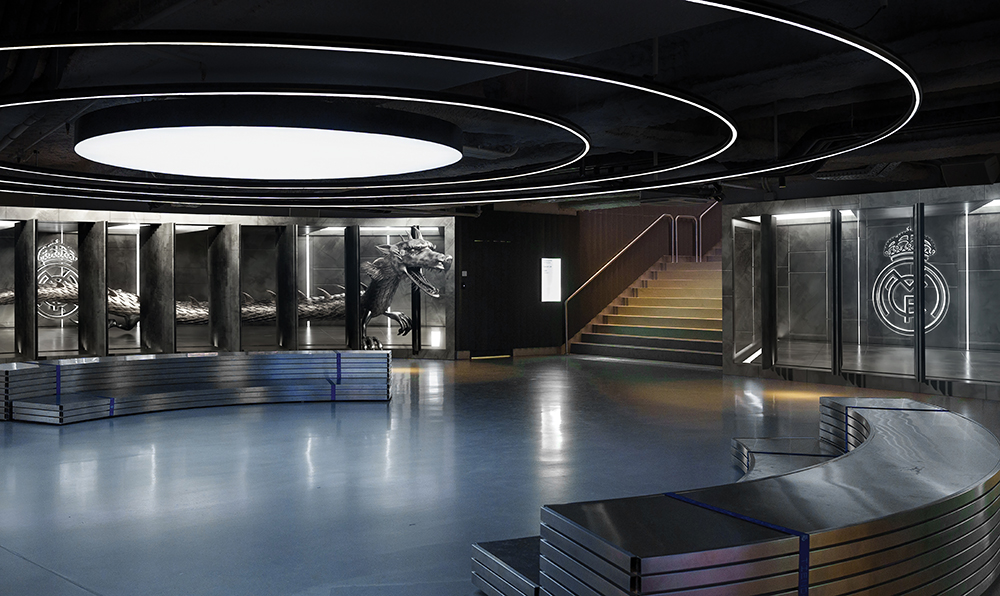
The store of the future is no longer defined by its size or its catalogue, but by the story it tells. At the newly renovated Santiago Bernabéu Stadium in Madrid, Trison Necsum redefined this paradigm by transforming the Real Madrid flagship store into a digital stage, a place where visitors don’t just see the brand, they feel it. A 3D dragon soaring through the space, holographic vitrines revealing the club’s new jersey, dynamic lighting and immersive soundscapes – all orchestrated to provoke emotion, not just admiration. Millions of visitors have captured this experience, sharing it across the world, turning architecture into a living canvas of emotion.
This is the essence of “invisible technology”: the art of making innovation disappear so that emotion can appear. True technological excellence lies in its subtlety – in how it enhances without overwhelming, in how it connects people to something greater than the digital itself. When we speak about experiential retail, we are in fact speaking about emotional design. And emotion, unlike technology, does not become obsolete.
Every project begins with a question: What do we want people to feel? Only then do we choose the right technologies, not the other way around. This reversal of priorities is what separates memorable experiences from mechanical ones. Light, sound, movement and content are not ends in themselves; they are instruments in an emotional symphony that must be carefully composed.
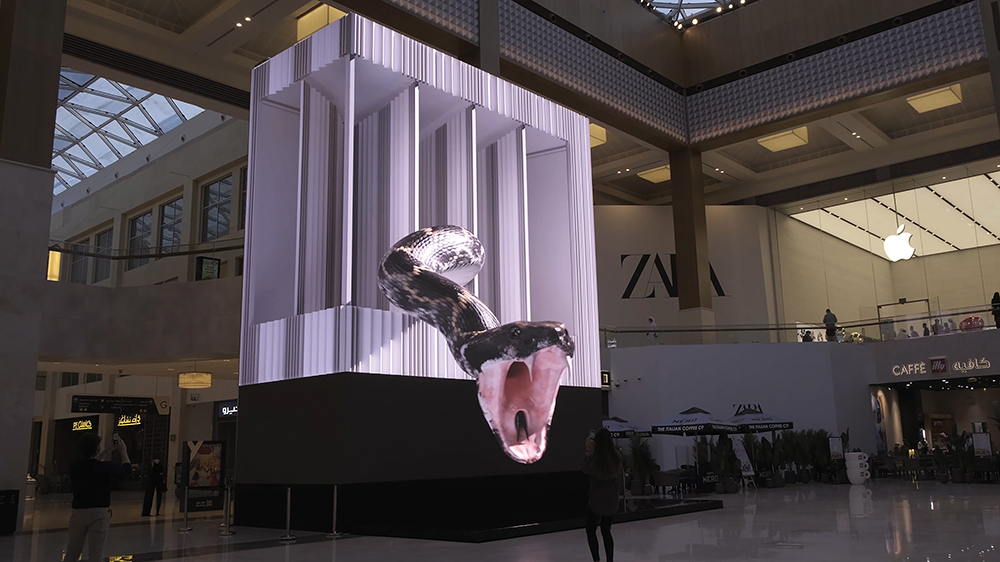
Technology today allows spaces to evolve in real time, to adapt, respond and even anticipate. Through generative content, data-driven storytelling and intelligent lighting, environments can now breathe, change mood and speak directly to each visitor. The future of experiential retail will be defined by this responsiveness: spaces that are alive, sensitive and in constant dialogue with their audiences.
A call for sensibility
As we move deeper into the digital age, the challenge will not be to add more technology; it will be to bring back sensibility.
Technology evolves. Emotions endure. What we remember from a place is not the resolution of its screens, but the resonance of its stories. The soft light that wrapped us, the rhythm that made us pause, the moment we felt something unexpected in a world that moves too fast.
This is the responsibility of those of us who design experiences: to protect the human essence within the digital. To make technology disappear, so that emotion can appear. The future of retail and leisure will not be more digital, it will be more human. And the most advanced technology will be the one capable of touching the heart.
As digital designers, we no longer build static spaces, we build emotions that move. We stand at the intersection of art, architecture and technology, shaping experiences that are both human and transcendent. The future of retail and leisure belongs to those who understand that the ultimate luxury is not what we own, but what we feel.
Emotion is the new architecture. And invisible technology is how we build it.