

Sustainability is becoming a stronger concern for retailers and consumers as well as shopping centre owners and investors and it is starting to drive a dramatic change in consumer shopping behaviour, as consumers demand more proof that goods they buy are sustainable and ethically sourced. In this article, we take a look at a selection of developments and retailers from around the world who are highlighting this new sustainability trend in their work and showing just how important it has become.
The time has come for the industry to embrace sustainability issues wholeheartedly. Retailers are rightly being driven by their customers to become more environmentally friendly and as sustainability becomes a prerequisite, they will increasingly expect landlords to provide spaces, environments, and initiatives that help them deliver their own commitments to customers.
Sustainability has come into clear focus in recent years, and more and more shoppers are putting additional thought into what they are buying. According to a Forrester report from 2019, over 60 per cent of adults who shop online in Europe want the businesses they buy from to be transparent about their business practices.
Retailers in particular are responding to this rise in attentiveness. Canadian brand Patagonia for example, already sells clothing made from recycled material that is also capable of being recycled and aims to ensure that by 2025 it uses only recycled and renewable materials in its products.
Sustainability is now a global initiative being undertaken by companies across the globe. For example in London, Maggie Milosavljevic, Commercial Director at LabTech explains that there has been a clear shift in consumer focus towards sustainability, and landlords have a part to play in this movement, by encouraging and working with operators, and making this shift towards sustainability as simple as possible for customers. An example of this is their Buck Street Market project in Camden, a retail and F&B destination that has a clear focus on sustainability. “Buck Street Market is the UK’s first dedicated eco-market for the conscious consumer: units are made from recycled shipping containers, a site-wide zero single-use plastic policy is in place, and all food waste is composted to generate energy that is fed back into the main grid. Our retailers follow ethical trading principles, whether it’s through the use of recyclable packaging, or by selling natural, vegan, and fairtrade products. Zero waste is absolutely at the heart of all our practices at Buck Street Market, and everyone who visits can be assured that their choices fit perfectly with the growing ethos of sustainable living.”
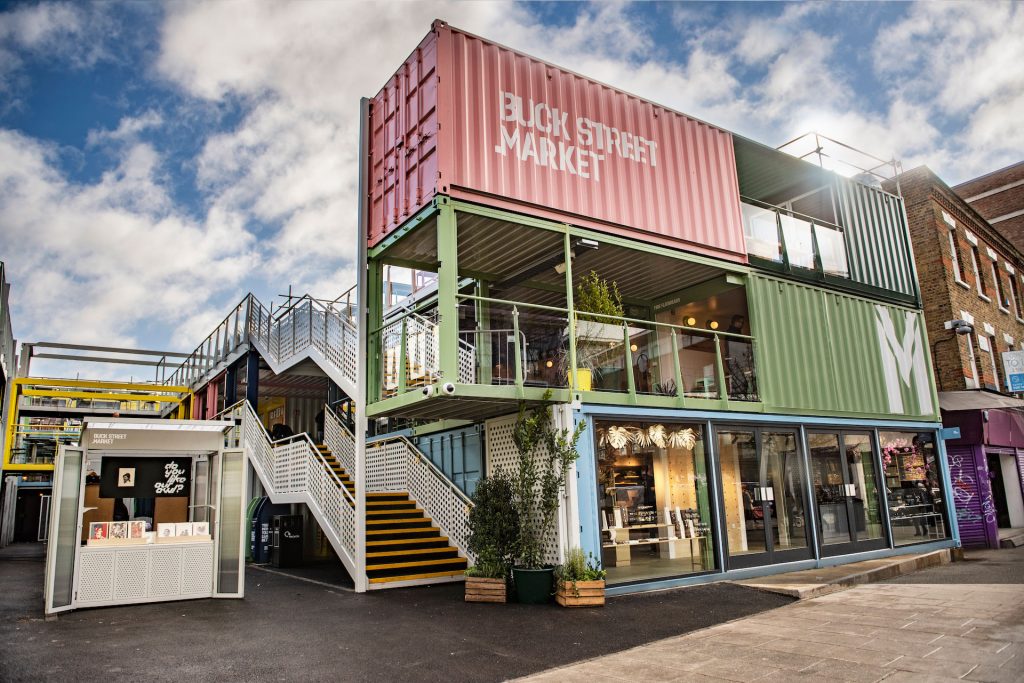
London, UK
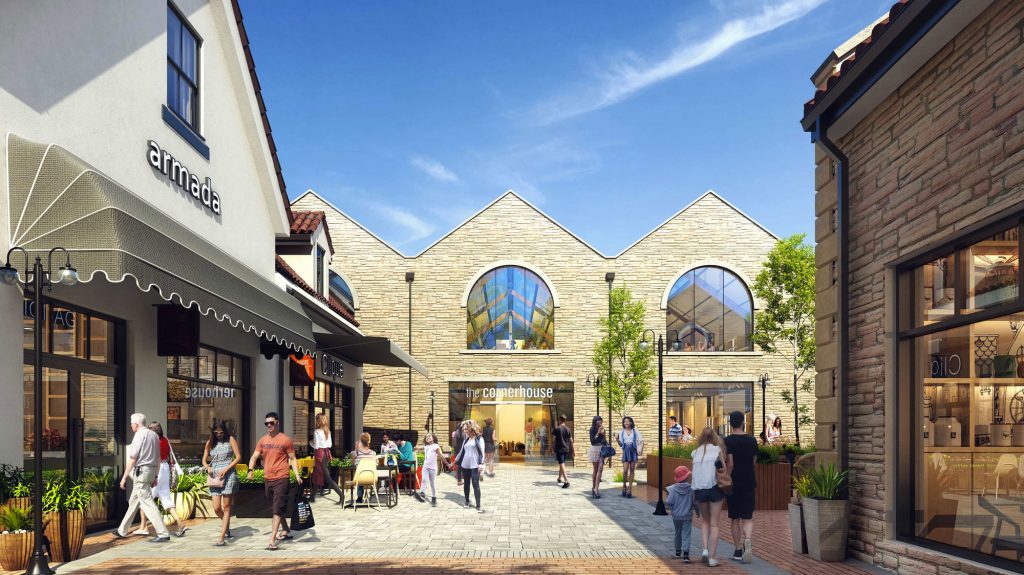
Located on the major A1(M)/A66 Scotch Corner junction, the Scotch Corner Designer Village is set to be the leading outlet and leisure destination in the North of England. Being built with sustainability in mind and ambitious commitments in every aspect of this unique destination, SCDV is working with its brand partners and all stakeholders to set new standards in the industry for sustainability. Scotch Corner is creating a low-carbon, sustainable shopping and leisure destination, enhancing local communities and achieving very high standards, in line with forward-looking goals. The Ten Principles of the UN Global Compact are the driving template and Scotch Corner views sustainability as a continuous process, improving with yet more ambitious commitments and targets. Key commitments are carbon-neutral guest travel, funding major global offsetting projects in India and Brazil, net-zero carbon emissions, 100 per cent renewable energy and zero-waste to landfill.
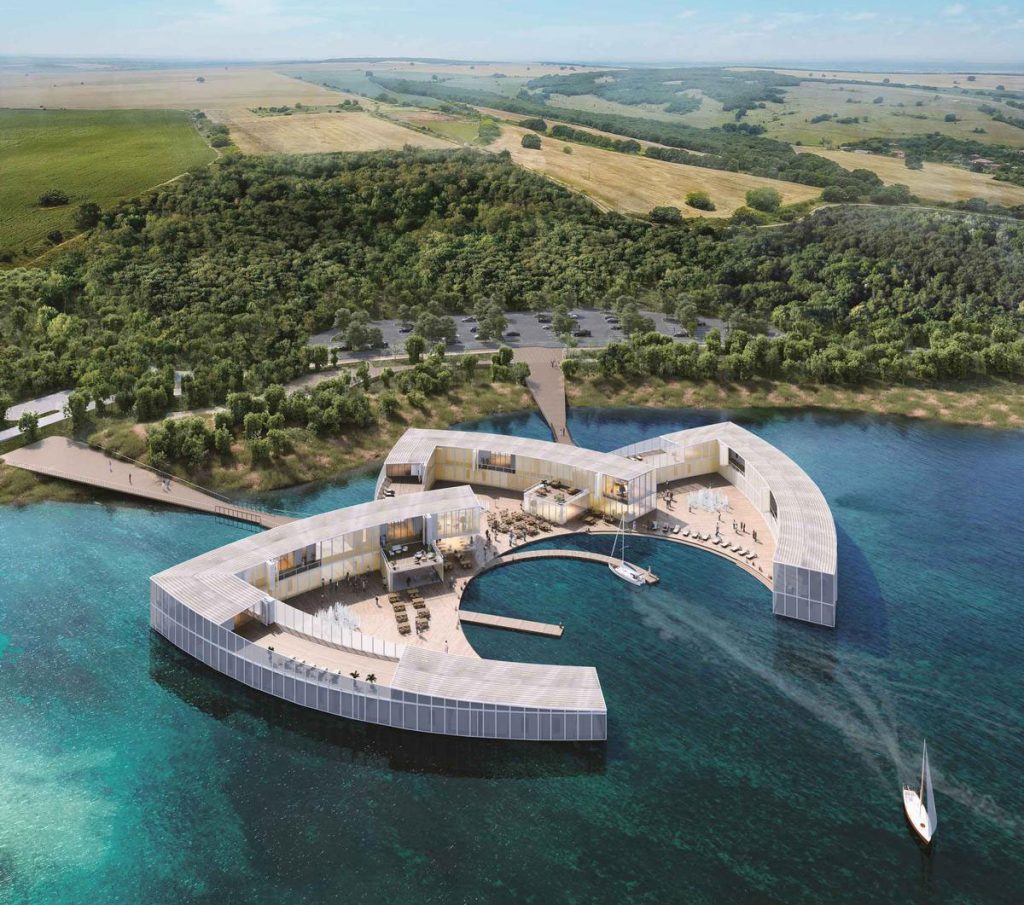
Baca Architects, the UK’s foremost specialists in floating and flood resilient design, has submitted a scheme to transform an unused quarry lake and surrounding land into a unique eco-wellness resort centred on waterside living and water-based recreation. The 80ha Ashwicken Lake site is close to the Norfolk Broads in East Anglia and combines woodlands and wetlands with the one kilometre square lake at its centre. The proposals target zero-carbon both in use and production, employing materials of low-bodied energy, high levels of thermal insulation and building airtightness, natural ventilation, and offsite prefabrication as well as on-site energy generation and waste treatment. The sourcing and durability of the materials used, potential for recycling and the distance to site were all considered within the design. The project has been designed to a BREEAM ‘Very good’ rating. Space is allocated on the site for a solar array and the lake is utilised as a source of renewable energy. Areas of nature conservation will deliver a biodiversity net gain and the entire site will be a car free environment with the focus on walking, cycling and transport by electric water taxis.
Mixed-use developer Milligan has appointed further specialist partners to collaborate on the Gateway at PEAK, the UK’s first national park gateway, consented on the eastern boundary of the Peak District. Architects Stanton Williams, technology specialists RDS Global, operations consultant DN Consultancy and landscape architects Gillespies, have all been appointed by the Milligan development team. In July 2020, Milligan formed a unique working group of local stakeholders on the development of Gateway at Peak, part of PEAK Resort. Since then, the vision for a sustainable hub, welcoming visitors to the Peaks, providing food and accommodation, retail opportunities and environmentally friendly options for onward travel into the park, has been taking shape. The latest partner appointments are an exciting milestone in the progress of the development.
As one of the world’s largest lifestyle brands and sports licensors, U.S. Polo Assn. has the opportunity to make a meaningful impact on our global environment. U.S. Polo Assn. is committed to understanding and addressing the challenges of sustainability and recognising the importance of global social responsibility and has launched USPA Life in this regard. USPA Life is a 360-degree sustainability initiative addressing sustainable production practices to reduce waste through the reuse of plastics and recycled cotton, and to manage water consumption by using reclaimed water. Product tags and packaging are produced using environmentally friendly paper and inks to reduce pollution. At point of sale, colorful icons drive the message and educate the customer how to choose eco-friendly products. USPA Life gives U.S. Polo Assn.’s global partners the tools to identify and promote good business practices while reducing environmental impact. In turn, the U.S. Polo Assn. customer is better able to make informed and meaningful choices.
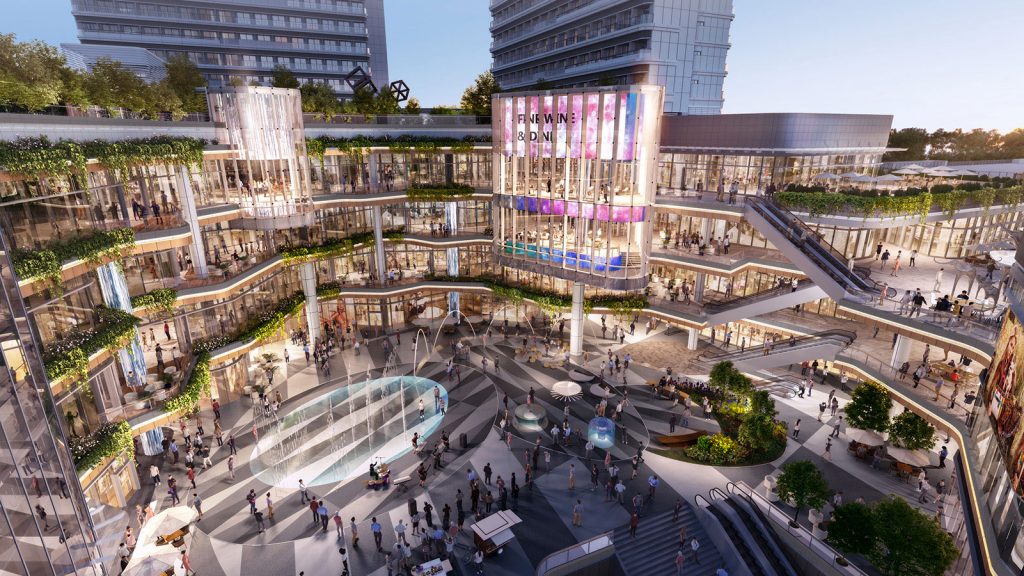
Lead8, the international award-winning design firm, is delivering the masterplanning and architecture for the future Yanlord Dream Center in Shenzhen. The development will establish a new green community; a mixed-use destination that integrates people and space, business and city, life and nature once complete. Located in the heart of Longgang District, the site is situated above a subway station and will be the first subway superstructure in eastern Shenzhen. The 300,000sq m mixed-use scheme features a 90,000sq m retail mall, two office towers and two serviced apartment towers by Lead8. The idea of a ‘Floating forest island’ was the catalyst for the design concept and originated from Shenzhen’s natural landscapes. The design echoes the city’s image of as a green metropolis and emerging economic capital. Living landscapes are blended through the development with gardens featured throughout the levels, allowing visitors to feel as though they are walking through a forest or an urban green valley.
Fast fashion retailer H&M started its latest brand sustainability initiative domestically, giving customers in Stockholm the chance to transform unwanted garments into revamped fashion items with the help of its new garment-to-garment recycled materials machine ‘looop;, so-called because the company “is committed to closing the loop on fashion”. The looop initiative debuted in one of H&M’s Drottninggatan (Queen Street) back in October, enabling customers to watch as the container-sized machine dissembles and assembles their recycled materials, which are cleaned, shredded into fibres and spun into yarn, which is then knitted into new, environmentally friendly fashion items. According to Mark Faithfull, along with the initiative above, IKEA is another international retailer following up on its pledge to have a positive impact and open a second-hand store in Sweden by offering customers vouchers for returned IKEA furniture, which it will then sell or recycle as part of a brand sustainability initiative. The Buy Back initiative was launched in IKEA stores across several markets in November – Black Friday discount day – when furniture items previously purchased from IKEA could be returned by customers who had registered a request online.
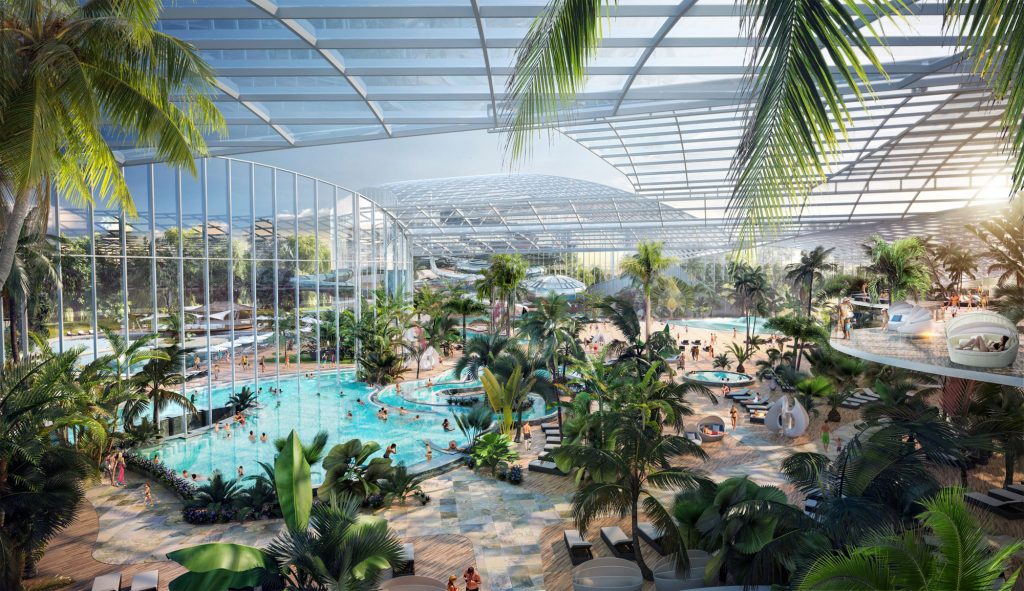
An international concept whose upcoming project will be developed in Manchester, in the UK, the resorts constructed by Therme Group are some of the largest attractions in the world, built and operated at the highest level of quality and sustainability. Therme Group works to build the world’s most advanced sustainable buildings, targeting the highest levels of official accreditation. In its project development process, it combines the latest cutting-edge technologies, bringing together hundreds of companies, both in local markets and from around the world.
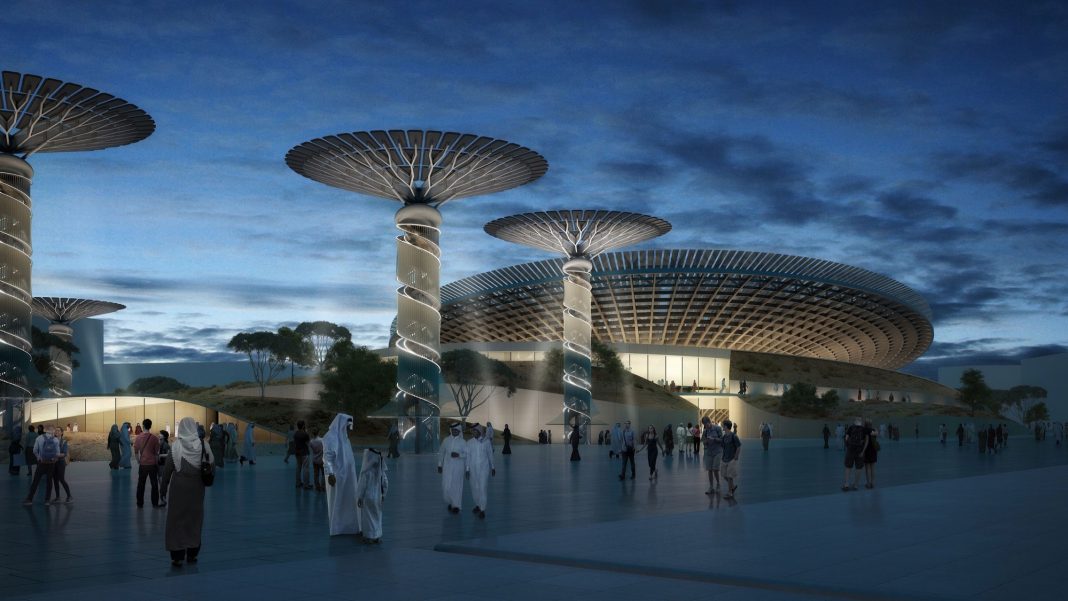
Highlighting sustainability on a global scale, the delayed Expo 2020 in Dubai aspires to deliver one of the most sustainable World Expos ever. As part of this, it will feature Terra – The Sustainability Pavilion, which will allow guests to embark on a journey for our planet and shared future. To achieve this ambitious goal, they have developed a strategy packed with ideas – from recycling to promoting natural solutions – that are as intricate as they are innovative. This supports not only its Sustainability subtheme, but also the Dubai Plan 2021, the UAE Vision 2021 and the United Nations’ 2030 Agenda for Sustainable Development. District 2020, the human-centric smart city that is evolving from Expo 2020 Dubai, has also announced a number of key partnerships that will contribute to the curation of its innovative ecosystem and its start-up community. District 2020’s unique human-centric physical environment – which re-purposes 80 per cent of the Expo 2020 event infrastructure and iconic structures – has also been designed to fuel the collaboration and the spaces that will enable innovation to thrive.
Saudi Arabia
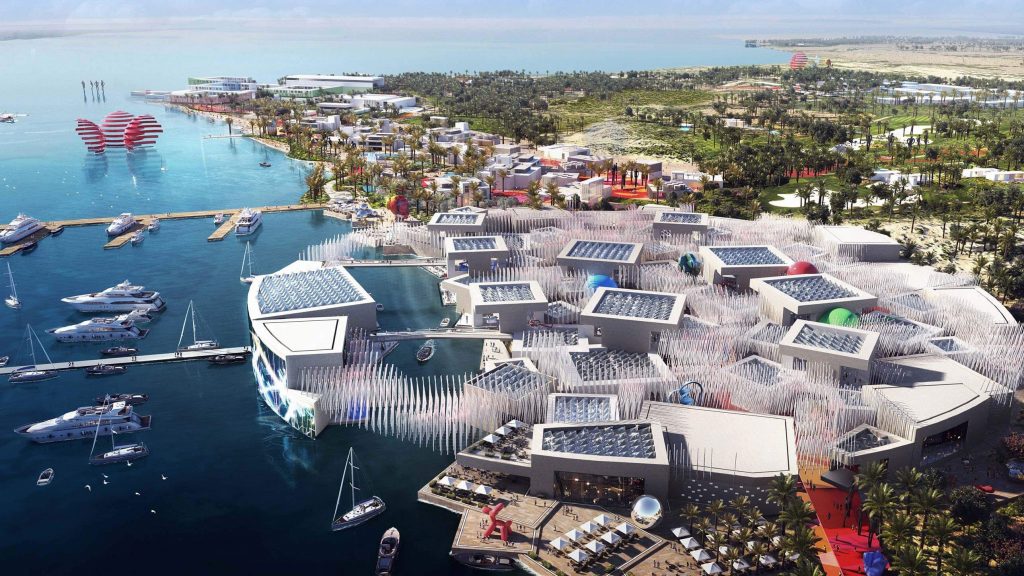
The Giga-Projects under construction across the Kingdom of Saudi Arabia represent some of the largest and most sustainable projects in the world, and the Amaala scheme is the most ambitious of the lot. “We are on track and broke ground early last summer,” Nick Naples, the CEO of Amaala stated. “It is audacious, yet achievable,” he said, with phase one scheduled to be rolled out by 2024. “I am fortunate enough to be at the helm of an incredible project that will be groundbreaking in the areas of sustainability, wellness and philanthropy. I am working with professionals from around the world and have the privilege of seeing young Saudi talent grow and develop into the country’s leaders of tomorrow.”