

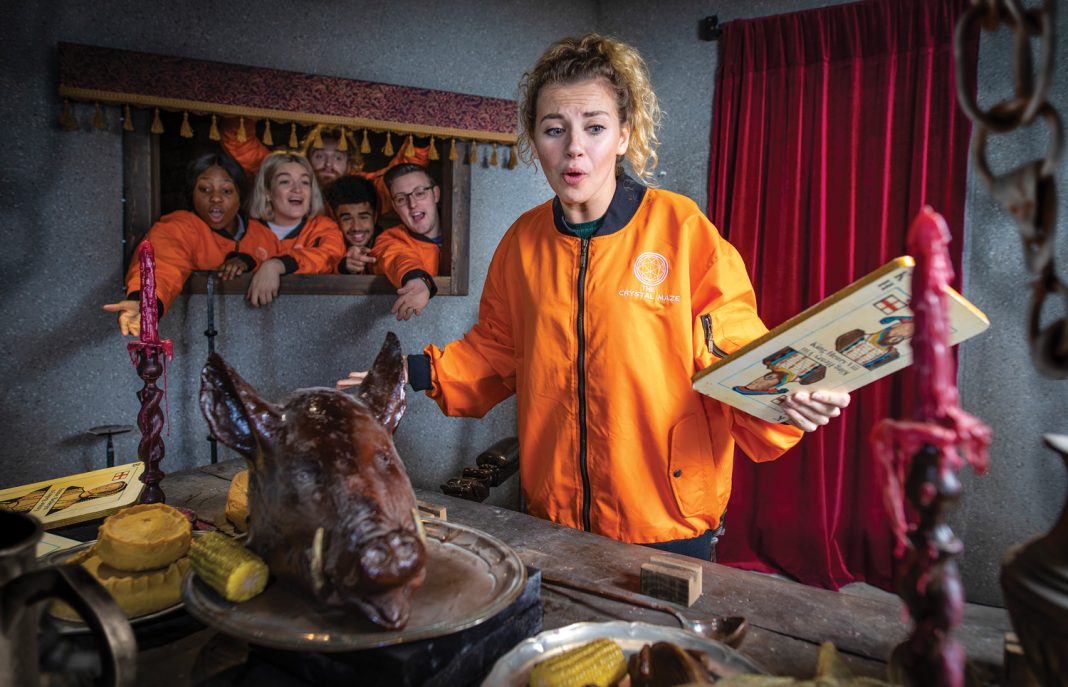
Immersive experiences is a sector still not defined but at the forefront of leisure and in this month’s Leisure Insight feature, Tom Lionetti-Maguire, CEO of Little Lion Entertainment delves a little deeper into a sector that is a major topic in the industry at present as customers crave experiences that are more and more immersive.

Consumer trends inevitably underpin the way in which leisure develops, and so it is no surprise with access to technology 24/7 and consumers demanding more, that immersive experiences are leading the way in terms of the future of leisure. While a bit of a buzzword that has been thrown around over the years, the ‘immersive experience’ has developed from initial small gimmicks that were used to attract consumers, to fully immersive experiences through theatrical expression, and technology where consumers are able to enter a completely new world and escape reality. Ultimately, this has become a whole sector in itself within leisure, and rather than being an add-on to a bar or restaurant consumers specifically look for immersive experiences to enjoy their free time. Despite this, it is still not specifically defined as a sector, and there hasn’t been a great deal of research into the huge potential this burgeoning sector has.
What defines an immersive experience?
The scope of immersive experiences is large but involves something that creates the sense of being lost within an experience or story. From decoration, such as the themed bars to social, team-based experiences such as the escape room phenomenon, and now the use of augmented and virtual reality, immersive experiences can range in different levels. If we look back, this was initially created through amusement parks that created immersion through ‘fantasy’ with the likes of Disney creating themed experiences on a scale previously unseen. These amusement parks were the owners of this type of experience until recently, when this has been made more accessible through immersive experiences on a smaller scale. Immersion into theme parks was always broad brush however, and gave spectators a sense of the world, whereas its younger ‘immersively theatrical’ cousin has plunged people entirely into carefully structured and narrated worlds.
While not completely clear what has led to this drive for more immersive experiences, it is no doubt that consumers have always enjoyed a sense of escaping from reality. What amusement parks like Disney began was to enable a mechanic in which consumers can be immersed in their favourite films, tv shows and video games. More recently, this trend has been exacerbated by social media and the notion that sharing an experience is an extension of our personalities. Consumers are keen to share their experiences via these social media platforms and an immersive experience creates a narrative that reflects their personality, whether it be a ‘cool trend’ or nostalgia for something such as our Crystal Maze experience; there is certainly an emotional connection to the immersive experience.
The opportunity is huge
Leisure in general has been more resilient to the last two years than expected. In a recent Barclays survey, it was found that 94 per cent of leisure and hospitality owners were confident, coming out of this difficult period. For investors wondering where to invest though, the immersive experience sector is still one that hasn’t been properly defined, and this could cause challenges.
In 2019, the immersive entertainment industry was valued at $61.8bn reflecting the tremendous growth in this exciting and unique industry, according to the Immersive Entertainment Industry association.
Despite this, and the association, there still aren’t many statistics demonstrating the pure growth and opportunity that this sector
could achieve.
This is especially important, as it is no doubt that this type of experience will continue to grow but for typical leisure investors, they don’t have the in-depth knowledge or statistics to illustrate the growth this offers. It is therefore down to industry leaders to educate investors and stakeholders.
What next?
While most of the conversation is still focused on virtual reality and the metaverse that is being created by Mark Zuckerberg, we have a different impression of what will drive this leisure trend. Although technology is key and there is no shortage of virtual reality experiences, artist-driven immersive theatre experiences are still one of the fastest growing trends in leisure. The likes of Punchdrunk and ourselves at Little Lion Entertainment, saw the opportunity to create a whole experience from start to finish, and this has been very successful. At our Crystal Maze Live Experience, we have sold over one million tickets since launching five years ago, and we will shortly be launching a Tomb Raider experience in Camden Town, London. Likewise, companies such as Punchdrunk have gone from strength to strength, creating beautiful worlds and highly anticipated shows such as the upcoming “Burnt City’ this summer in London.
We have no doubt that there is significant demand for this type of theatrical experience, and yet there are still not many players in the market. Following the last two years of isolation, we are seeing that consumers are keen to socialise with friends, family and big groups, which is why this type of experience is seeing such demand. In fact recent ONS data has confirmed that consumers are more interested in experiences rather than spending money on goods. People want to be active, and engaged, not passive and isolated. Therefore although we aren’t against the idea of virtual reality and the metaverse, we believe there is still a big desire for human connection and interaction through leisure. Now though, we need more insight and definition of the sector to attract investment, to ensure these businesses continue to grow and develop.