


Luxury Without Walls
From a 30-metre Louis Vuitton ocean liner in Shanghai and Dior’s branded boat in Capri to Gucci’s floral takeover of Monte Carlo and Burberry’s transformation of a Riviera hotel, luxury’s most innovative houses are taking retail far beyond the boutique. RLI explores ten extraordinary temporary destinations redefining where – and how – luxury meets its customer.
For decades, the luxury flagship was the ultimate physical expression of a brand: prestigious address, extraordinary architecture, immaculate interiors and an environment controlled down to the smallest detail. In 2026, however, some of luxury’s most compelling physical experiences are happening somewhere else entirely.
Across Shanghai, London, Capri, Monte Carlo, Saint-Tropez, Sicily, Formentera and the Hamptons, leading luxury houses are increasingly taking their brands beyond conventional retail environments and into hotels, resorts, beach clubs, restaurants and unexpected temporary spaces. The pop-up itself is not new. What has changed is its ambition.
Today’s best luxury activations are no longer simply temporary shops designed to generate short-term sales. They are immersive brand worlds: highly visual, intensely experiential and deliberately created to become part of the destination around them. They invite customers to stay longer, eat, drink, discover, participate, photograph and share.
For landlords and developers, the implications are significant. Luxury’s growing appetite for temporary and seasonal experiences creates opportunities far beyond the traditional luxury mall or high street. Hotels, mixed-use destinations, waterfronts, cultural districts and leisure-led developments can all become platforms through which the world’s most desirable brands engage with their customers.
Over the coming pages, RLI selects ten of the standout concepts demonstrating how luxury retail is moving beyond four walls.
The Pop-Ups Redefining Luxury Retail in 2026
1. Louis Vuitton, The Louis, Shanghai, China
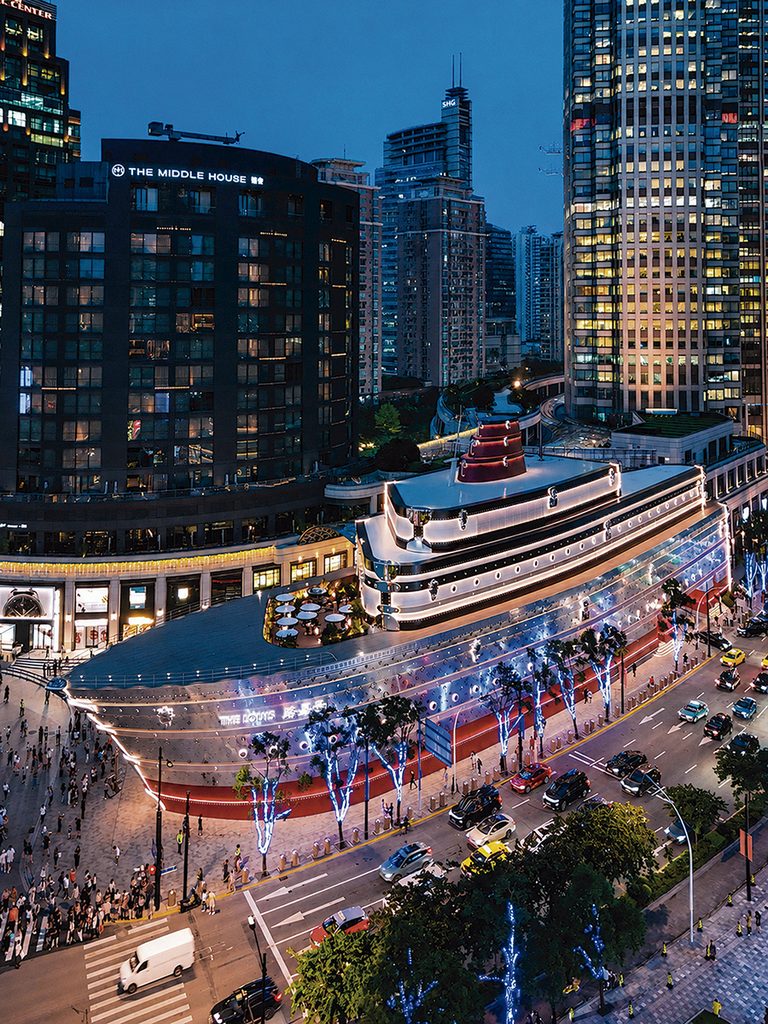
If one project captures the scale of ambition now surrounding experiential luxury retail, it is The Louis. Rising approximately 30 metres above Shanghai’s HKRI Taikoo Hui, Louis Vuitton’s extraordinary ship-shaped temporary destination is less a pop-up store and more a piece of urban theatre. Inspired by the Maison’s historic association with travel, the vast structure resembles an ocean liner complete with monogrammed exterior, dramatically reinterpreting Louis Vuitton’s heritage for a new generation. Inside, retail sits alongside exhibition space, cultural programming, workshops and hospitality, creating multiple reasons to visit beyond the transaction itself. The project demonstrates the extraordinary pulling power physical retail can achieve when architecture, culture, hospitality and storytelling are treated as one experience. For developers, there is an equally important message: a temporary retail intervention can become an attraction capable of generating footfall, social currency and international attention for an entire destination.
2. Dior, Dioriviera at Il Riccio, Capri, Italy
Luxury retail has long followed its customers to the world’s most exclusive summer destinations, but Dior has elevated the seasonal boutique into an entire lifestyle proposition. At Capri’s celebrated Il Riccio, the Maison’s Dioriviera universe extends beyond merchandise into the wider resort experience. For 2026, the activation takes on additional significance as Jonathan Anderson brings his interpretation to Dior’s summer world. A traditional Capri gozzo boat has been given the Dior treatment, while the surrounding environment incorporates branded cabanas, parasols, loungers and retail. The result is an experience in which the distinction between fashion, hospitality and holiday almost disappears. Rather than asking the customer to visit Dior, Dior becomes part of the customer’s journey through Capri.
3. Gucci, La Ros des Vents, Monte Carlo, Monaco
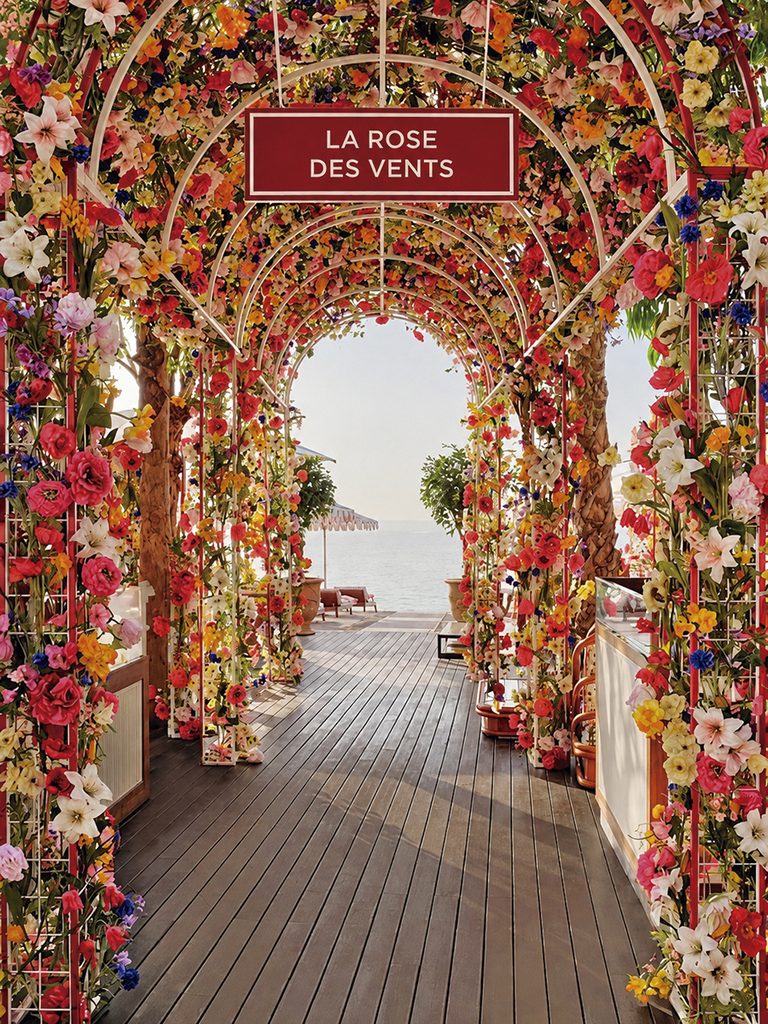
Few activations demonstrate the power of connecting brand heritage with place as effectively as Gucci’s transformation of La Rose des Vents. The Monte Carlo beach destination has been enveloped in Gucci’s instantly recognisable Flora motif, extending across parasols, loungers, entrances, tableware and the surrounding hospitality environment. The choice is particularly resonant. The original Flora design was created in 1966 for Princess Grace of Monaco, giving the contemporary activation an authentic connection to its location rather than simply applying branding to a beautiful setting. Alongside the hospitality experience sits an exclusive boutique, allowing discovery, leisure and commerce to coexist naturally. It is precisely this sense of place that separates the best luxury pop-ups from conventional brand activations.
4. Burberry, Hôtel Belles Rives, Antibes, France
On the French Riviera, Burberry has taken a similarly expansive approach, transforming the historic Hôtel Belles Rives into an immersive expression of the British house. A Riviera-blue interpretation of Burberry’s famous check flows through the beach club, terraces, parasols and loungers, creating an environment that is immediately recognisable without losing the character of the location. The experience extends beyond design. Waterskiing and playful branded hospitality elements bring Burberry into the leisure experience itself. This is an important evolution. Hotels offer luxury brands access to precisely the international, affluent customer they are seeking – but in an environment where that customer has time to engage. For hotel operators, meanwhile, association with a global fashion house can generate international media attention, social content and a new layer of experience for guests. It is becoming a powerful partnership model.
5. Christian Louboutin, Loubi’s on the Beach, Selfridges, London, UK
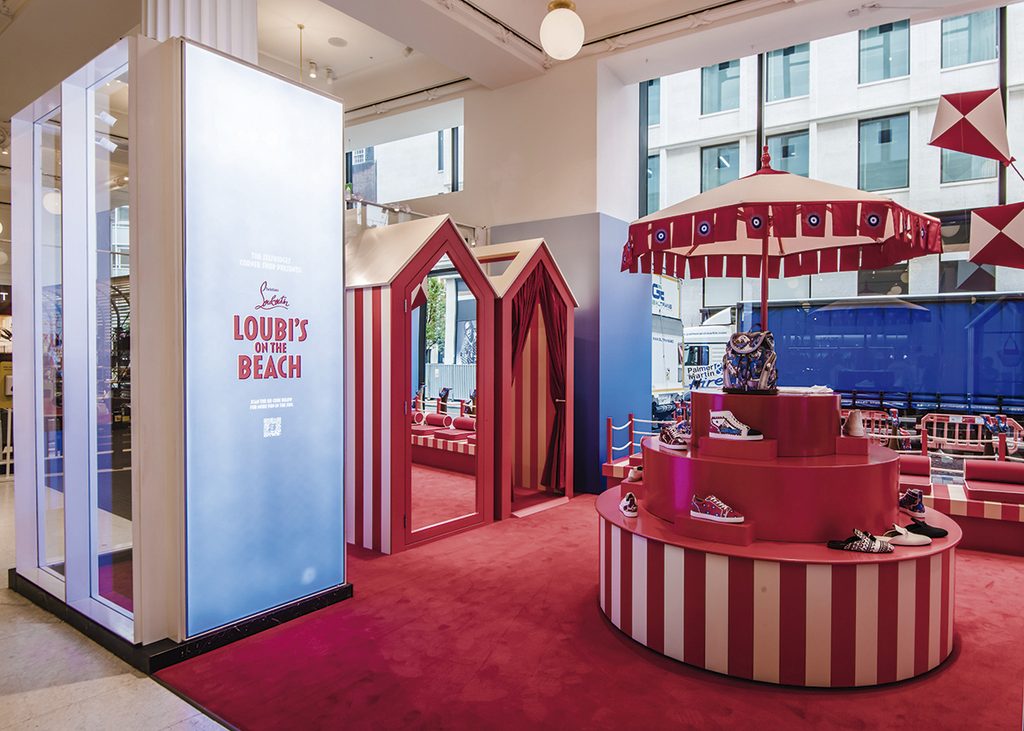
Who needs the Riviera when you can bring the beach to Oxford Street? Opening at the Selfridges Corner Shop in September, Loubi’s on the Beach transforms one of London’s most important temporary retail spaces into a playful seaside fantasy. Beach huts, boardwalks, parasols, deckchairs and a lifeguard create the setting, complemented by branded ice cream and synchronised-swimmer-inspired window displays. It is theatrical, humorous and highly shareable – yet unmistakably Louboutin. The concept demonstrates the continuing importance of the department store as a stage upon which luxury brands can experiment. Instead of replicating a permanent concession, the best department-store pop-ups give customers something they could not experience anywhere else. That sense of discovery is increasingly valuable in an age when virtually every product can be purchased online.
6. Dior, The Corner Shop at Selfridges, London, UK
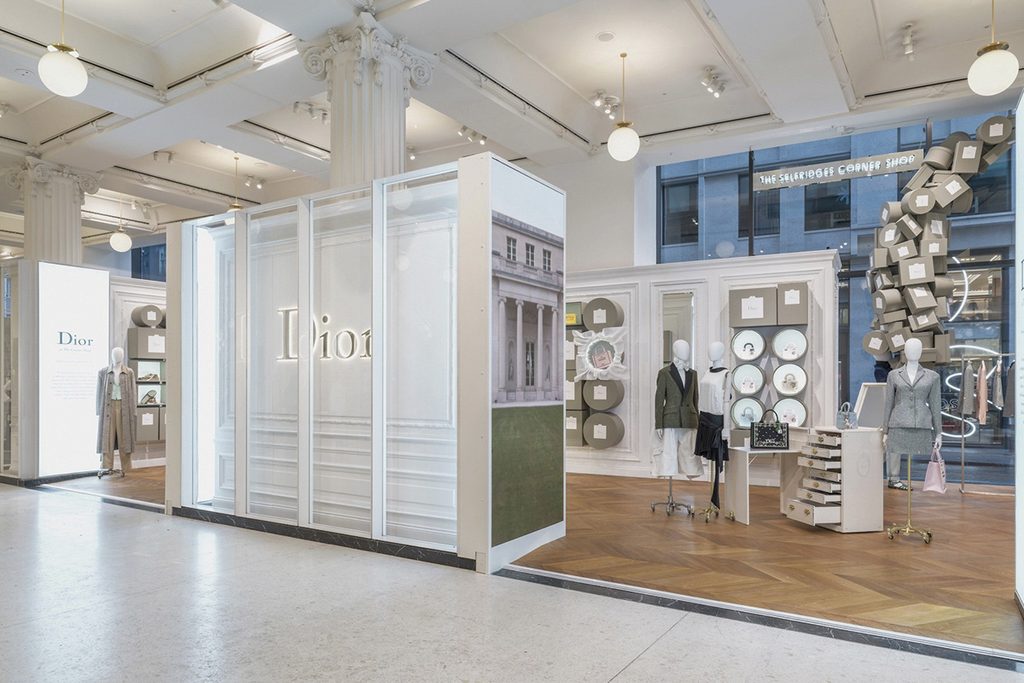
Dior’s earlier Selfridges activation approached temporary retail from a very different perspective. Created around the arrival of Jonathan Anderson’s first collections for the House, the concept drew inspiration from Colifichets, Christian Dior’s original boutique opened in 1947. Rather than reproducing the archive literally, Dior reimagined it through a contemporary and almost surreal environment of oversized grey boxes, sculptural installations, whimsical figures and personalised experiences. It is a perfect example of how luxury houses are increasingly mining their archives to create physical experiences with greater depth. The customer is not simply introduced to a new collection; they are invited into the story of the Maison itself.
7. Dolce & Gabbana, San Domenico Palace, Taormina, Sicily, Italy
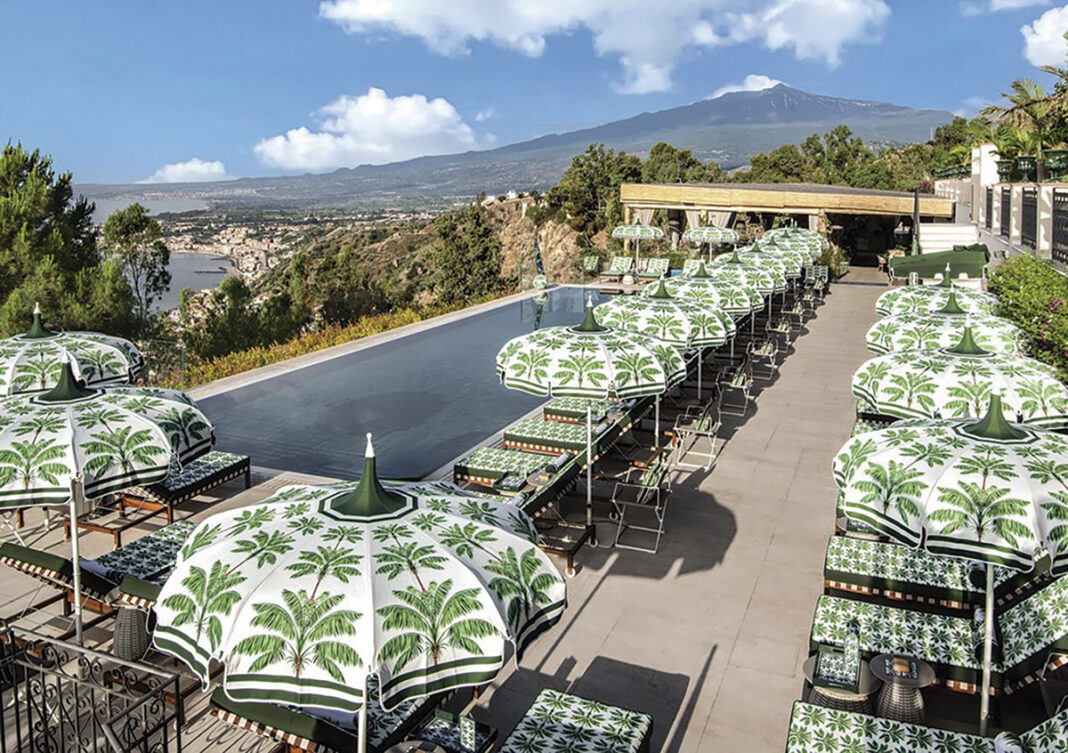
There can be few settings more naturally suited to Dolce & Gabbana than Sicily. At the celebrated San Domenico Palace in Taormina, the Italian house brings its exuberant visual identity into one of the world’s best-known luxury hospitality destinations. It is another demonstration of a rapidly developing relationship between fashion and five-star hospitality. The attraction is obvious. Luxury hotels provide extraordinary architecture, desirable locations and an international audience already predisposed towards premium experiences. Fashion houses bring creativity, cultural relevance and global reach. Together, they can create moments that extend far beyond either conventional hotel marketing or traditional retail. The best examples do not feel like sponsorship. They feel as though brand and destination belong together.
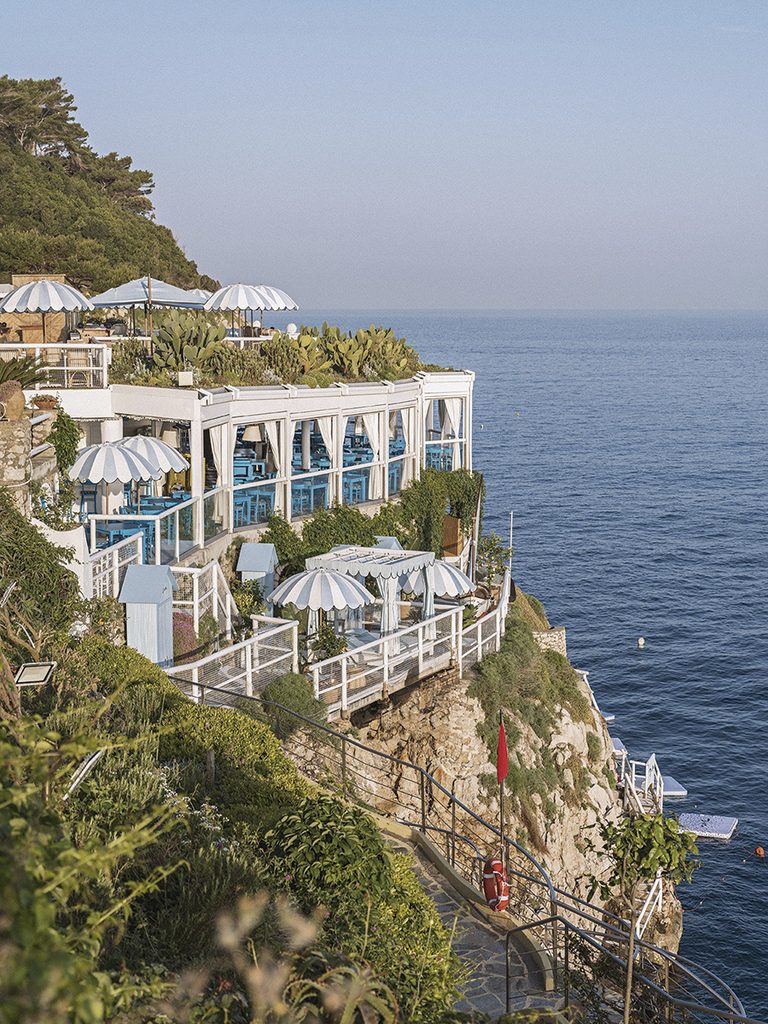
Dior, Dioriviera at Il Riccio, Capri, Italy
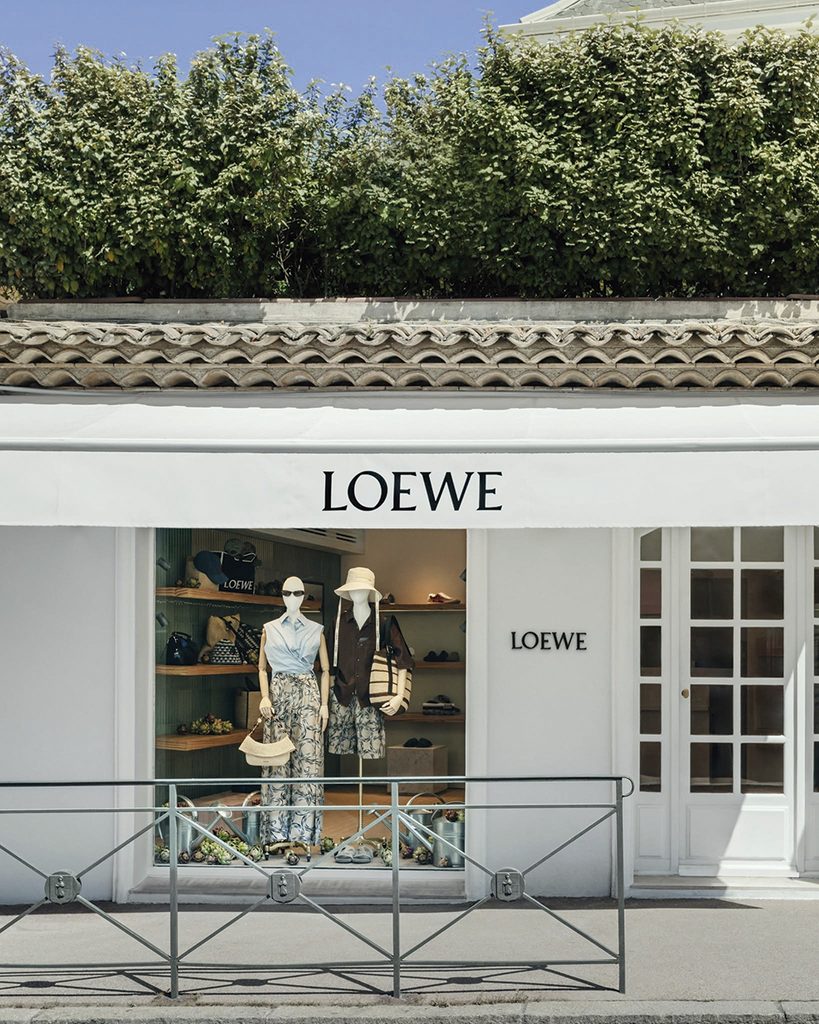
Loewe, Paula’s Ibiza, Saint-Tropez, France
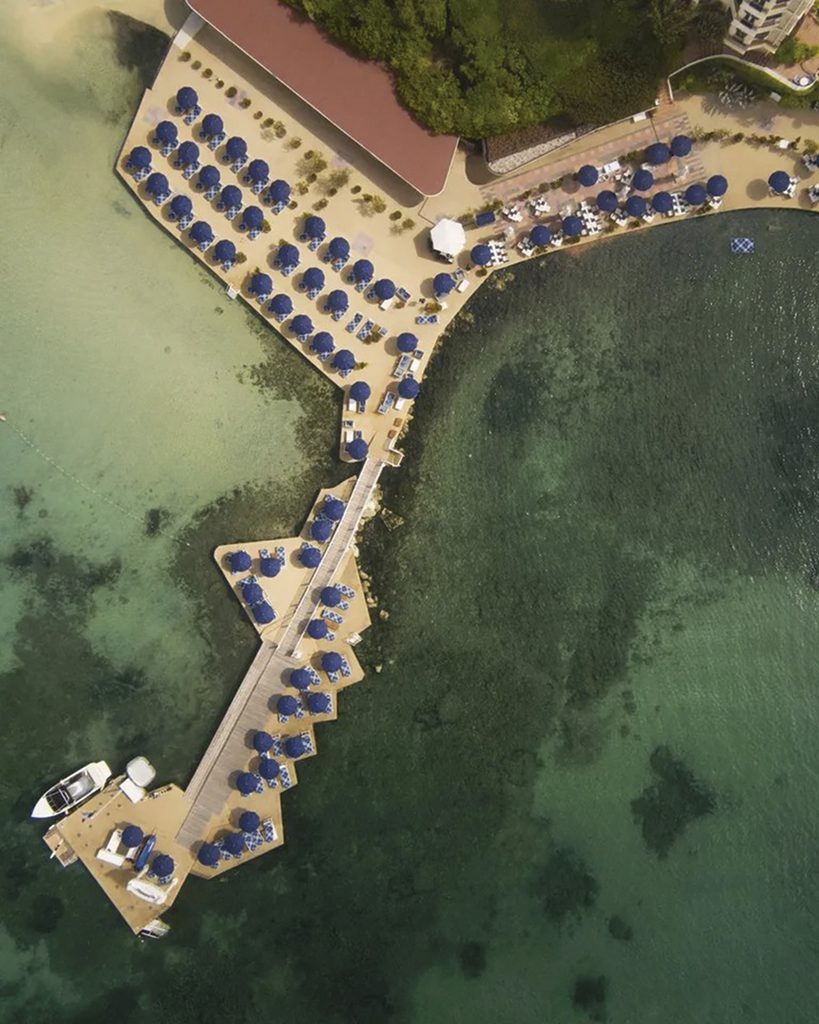
Burberry, Hôtel Belles Rives, Antibes, France
8. Loewe, Paula’s Ibiza, Saint-Tropez, France
Seasonal retail has become an increasingly important component of Loewe’s physical strategy. Its Saint-Tropez presence brings the free-spirited world of Paula’s Ibiza to Place des Lices, combining summer product with womenswear and collections beyond the traditional holiday offer. What makes the strategy particularly interesting is its repeatability. Rather than viewing temporary retail as an occasional marketing intervention, Loewe has built seasonal locations into a wider international retail programme. That allows the brand to follow customers geographically throughout the year, appearing in destinations when demand and visitor profiles are at their strongest. For owners of seasonal destinations, this represents an intriguing alternative to conventional leasing models.
9. Prada, Days of Summer, Formentera, Spain
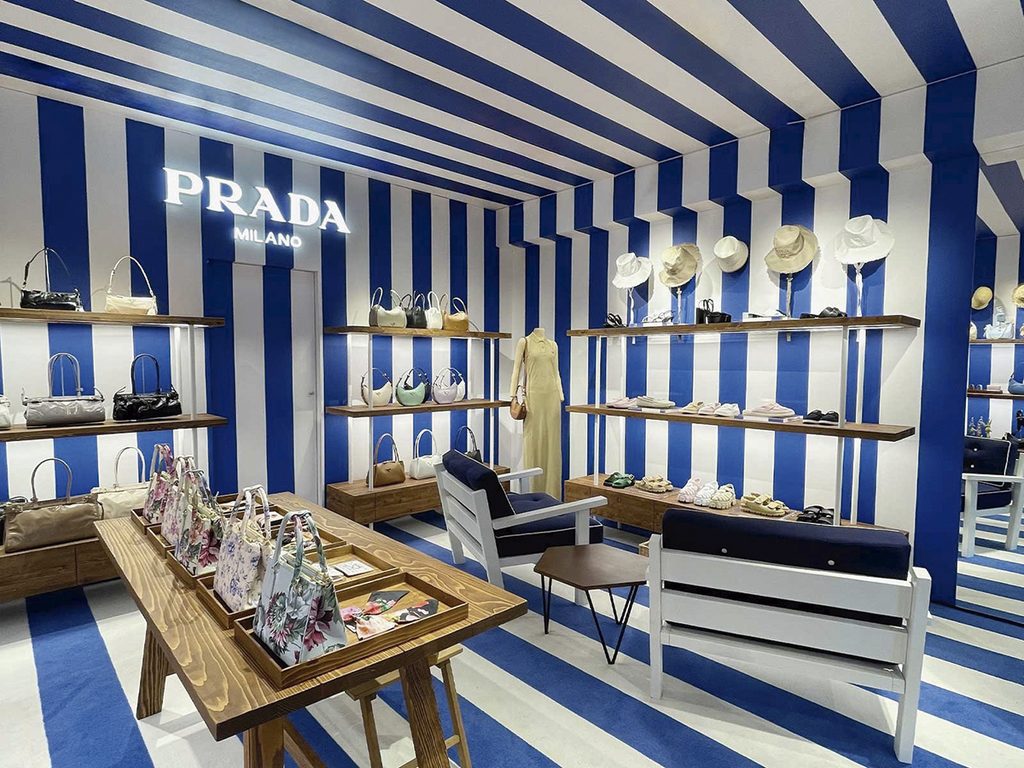
Prada’s return to Formentera for a second summer reinforces the same point. Located at Es More, its temporary boutique presents women’s ready-to-wear and accessories alongside the House’s Days of Summer 2026 collection. Its importance lies partly in the fact that Prada has returned. Successful luxury pop-ups increasingly develop relationships with destinations rather than simply arriving once, creating publicity and disappearing. A recurring seasonal presence can establish familiarity while maintaining the excitement and scarcity associated with temporary retail. It also allows brands to test locations, understand audiences and build relationships without committing immediately to permanent stores. For landlords, that creates a potentially valuable pipeline between activation, seasonal occupation and longer-term tenancy.
10. Ferragamo, Topping Rose House, The Hamptons, New York, US
At the opposite end of the spectrum is Ferragamo’s remarkably short activation at Topping Rose House in Bridgehampton. Running for only a matter of days, the project demonstrated that impact does not necessarily depend on duration. A temporary boutique presenting the Pre-Fall collection was accompanied by a poolside takeover incorporating Ferragamo’s Gancini identity, Italian-inspired drinks and hospitality. The result was less a shop than an invitation into the Ferragamo lifestyle. It also illustrates why the Hamptons, Riviera, Mediterranean islands and other high-value leisure destinations have become so important to luxury houses. Brands are increasingly meeting consumers not only where they live and shop, but where they spend their time.
The New Luxury Landscape
Look across these ten projects and one thing becomes immediately apparent. The luxury pop-up is escaping the store. Beach clubs are becoming boutiques. Hotels are becoming brand worlds. Restaurants are becoming extensions of fashion houses. Swimming pools, boats, terraces and entire buildings are becoming canvases upon which luxury brands tell their stories. And behind the spectacle sits a serious commercial strategy.
Temporary formats allow brands to enter highly desirable locations quickly, follow affluent consumers as they travel, test markets, launch collections, generate social and editorial reach and create experiences that permanent retail environments cannot continually replicate. Scarcity is part of the appeal.
Knowing an experience will disappear gives consumers a reason to visit now – an increasingly powerful proposition in a world where almost everything else is permanently available online.
From Landlord to Creator
For property owners and developers, this evolution presents an opportunity. The traditional landlord-tenant relationship is only one way in which destinations can work with luxury brands. Tomorrow’s partnerships could involve hotel operators, resort owners, restaurants, cultural venues, mixed-use developments, beach clubs and entertainment destinations working directly with brands on temporary interventions. That requires a different mindset.
Instead of asking simply “Who can lease this unit?”, owners may increasingly ask: “What experience could happen here?” The answer might occupy a shop for three months. But equally, it might transform a rooftop for three weeks, a hotel pool for the summer, a waterfront for a month or a restaurant for a season.
The physical store is certainly not disappearing from luxury. If anything, investment in spectacular global flagships demonstrates the continuing importance of physical presence. What is changing is the definition of where that presence can exist. Luxury retail is becoming more fluid, more experiential and increasingly connected with travel, hospitality, culture, food and entertainment.
The brands leading that evolution understand something fundamental about today’s luxury consumer, they are not simply competing for spend; they are competing for time, attention and memory.
This is perhaps why the most exciting luxury store of tomorrow may not look like a store at all.
