

As customers crave experiences like never before, Vicki Lynn, CEO of REIT Innovations and Chris Igwe, VP of REIT Innovations and President of Chris Igwe International take some time out to offer their viewpoint on immersive entertainment and discuss how the sector is evolving.

At REIT Innovations we have been assessing the market of immersive experiences, and in particular, how these can be used to not only enhance retail, but also offer repeat and recurring visits which benefit both the visitors (of all ages) and the venue itself which hosts these experiences.

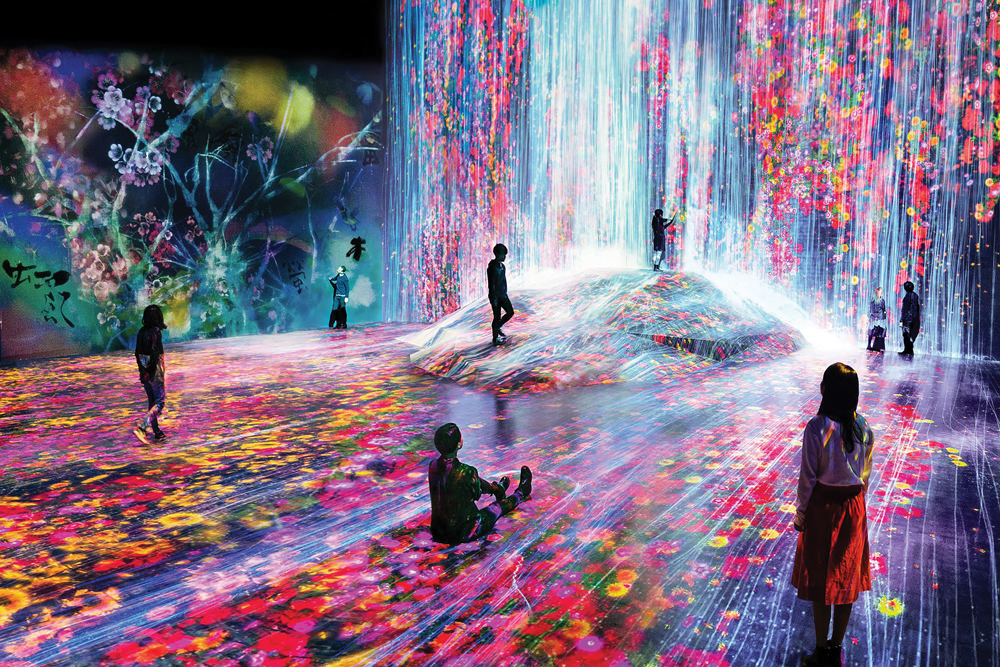
Back in 2001, TeamLab from Tokyo were the first to start this journey into a brave new world that so many have sought to emulate, copy or even better, improve on. Since then TeamLab has been exhibiting worldwide including New York, London, Paris, Milan, Singapore, Beijing and more.
Today immersive entertainment is a veritable industry with shows travelling the world from Van Gogh to Monet and many other painters. However the key word is “Experiences” which need to be as much physical as they are digital.
Changi Airport is a great example of this. Following a joint venture partnership with CapitaLand, the airport has created experiences ranging from weddings and special events to glamping (overnight stays) by the runway, or attractions for children.
In all regions we can find immersive experiences, such as L’Atelier des Lumières in Paris, or a new Batman escape rooms experience at a restructured shopping mall in Paris, in which the mall owner is also invested, as they have the vision to understand that such projects are capital intensive, but the rewards based on the revenue generated are very attractive.
The Middle East has its own share of experiences which offer a physical component, whether it is the Mall of the Emirates and the famed ski slopes as well as the strategic marketing, both corporate and individual that offers a complete experience.
In Brazil, immersive experiences are used by mall owners to drive traffic, create educational offer for schools as well as other adult experiences with shows that vary from the Wonderful Garden of Miro (an interactive playground) to Monet.
We could not conclude without referring to the Metaverse. While this may seem like a leap, the luxury of premium brands’ entrance into this universe cannot be ignored.
Livestreaming continues to grow outside China, the most successful market by far. While it has not been successfully emulated, it is a growing market in the USA in particular. The combination of broadcast facilities, appropriate product and tracking, including sourcing of delivery capabilities, and a robust system to sell are only some of the hurdles to mere rapid growth of livestreaming. Yet the benefits of bringing the products to be sold to the consumers’ phone portal cannot be understated.
One only has to look at the numbers of monthly users on the platforms such as Roblox, Fortnite, Minecraft and others to realise that fashion and the metaverse is the way to bridge the gap between physical and digital.
The past few years has seen a growth in the number of partnerships and activations across platforms from brands like Vans, Nike, Ralph Lauren, Balenciaga, Gucci, Uniqlo and more.
This brings us to the major opportunity in the metaverse due to e-sports and gaming. These communities are growing globally with a consumer that lives in this world of digital, but through gaming and e-sports, can also shop in the physical due to the accessories and products created for both digital and physical worlds.
At REIT Innovations we have observed the markets globally with the intention to understand what works and what does not.
There are many ways to engage today’s consumer. The most successful will be these strategies that engage both digital and physical simultaneously.