

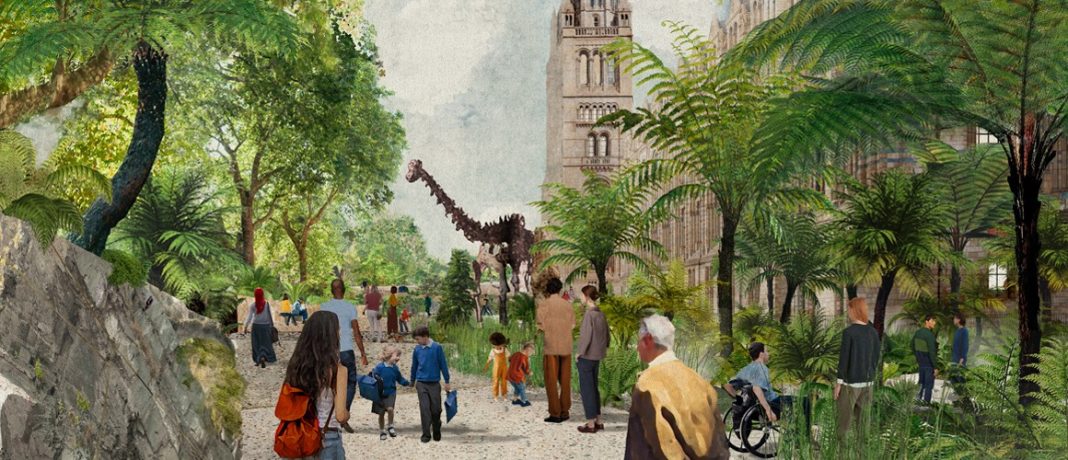
London’s Natural History Museum has received planning permission to transform its five acres of garden as part of the Urban Nature Project.
The plans will see the Royal Borough of Kensington and Chelsea transform its five-acre gardens into an exemplar of urban wildlife research, conservation and awareness – galvanising a far reaching, national drive to reengage people with the natural world and urban biodiversity, which it warns is under threat like never before.
Leading a coalition of museums and wildlife organisations, the Natural History Museum’s Urban Nature Project will not only transform its London gardens into a biodiversity hub, but critically it will create an urban nature movement through a UK-wide learning programme for young people, families and schools. The project will develop and deliver online, onsite and national monitoring programmes and will include an onsite education centre, a range of citizen science programmes and a scientific ‘living lab’ where the Museum’s existing scientific work will continue, and deliver cutting edge research to be shared globally.
Clare Matterson, the Natural History Museum’s Executive Director of Engagement says: “We hope the Urban Nature Project will not only galvanise people to reengage with the nature on their doorsteps, but building on the Museum’s scientific and public work, we want to trigger a movement that will ultimately help reverse these declines.”